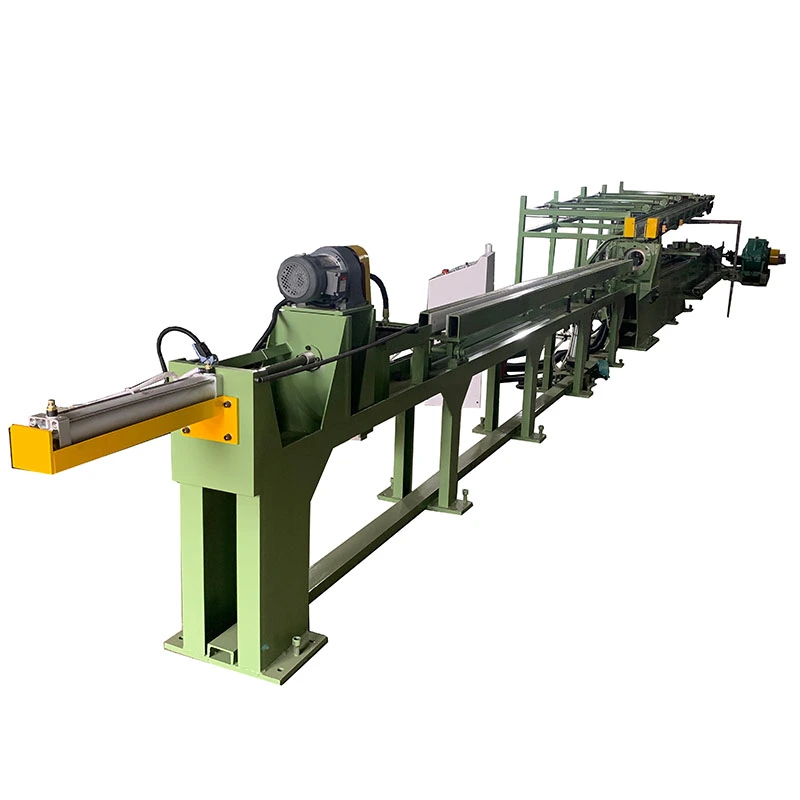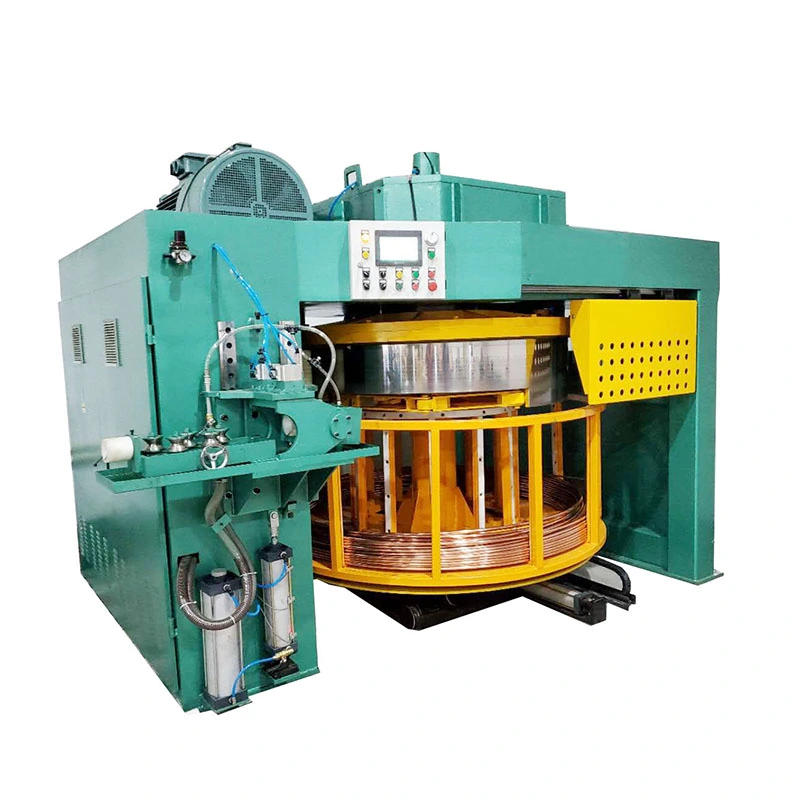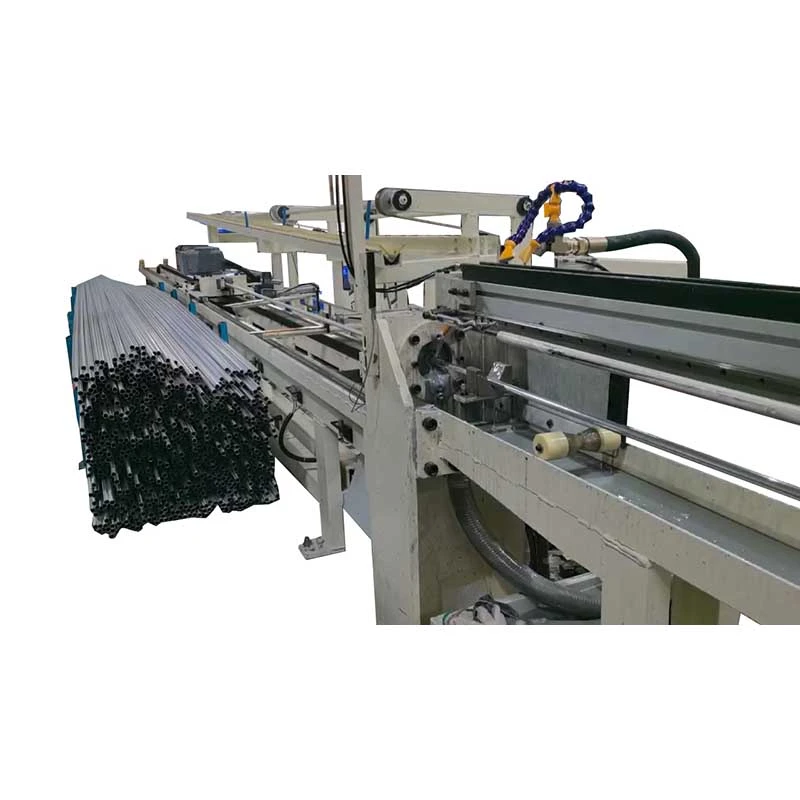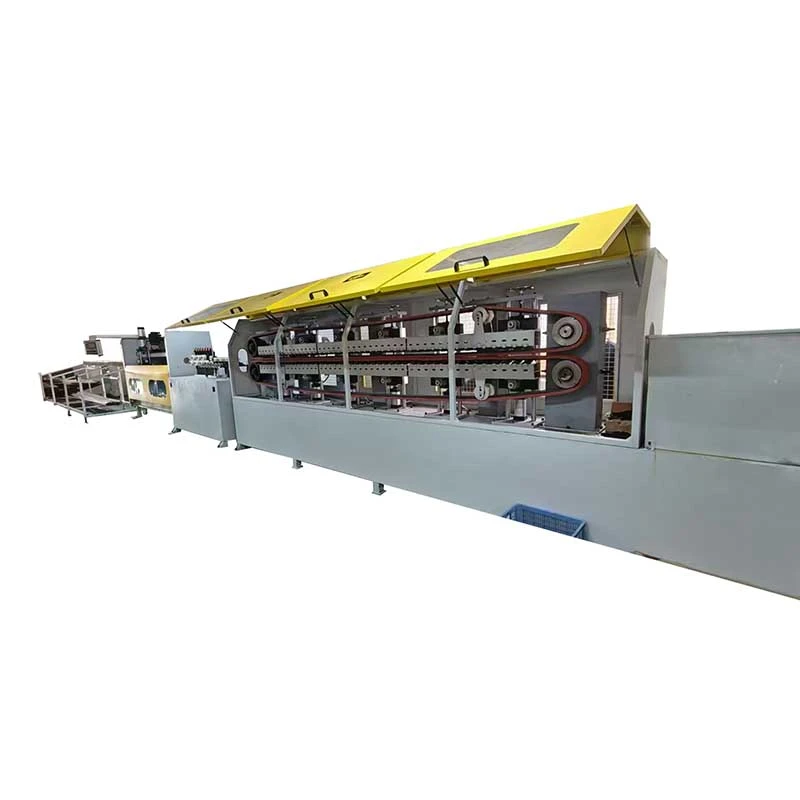

We offer a comprehensive range of precision metal processing equipment, including straightening, cold drawing, pointing, chamfering, cutting, thread rolling machines, and drawing dies, tailored for tube, bar, and wire materials across diverse industries.
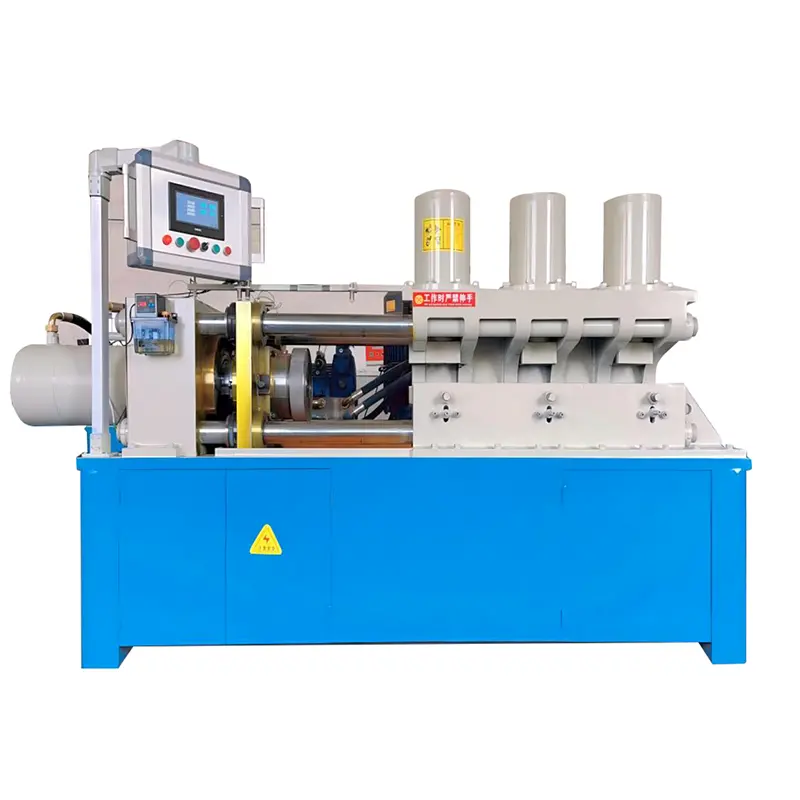
The Carbon Steel Hydraulic One Dies Pointing Machine reduces and forms the end of carbon steel tubes or solid bars before cold drawing. The workpiece is positioned in a forming die, clamped hydraulically, and compressed to a smaller end diameter so it can enter the drawing die or be held by the drawing equipment.
For carbon steel with large outside diameters, thick walls, or high material strength, the forming load can be substantial. This machine uses a high-tonnage hydraulic cylinder to generate the required forming force in a controlled stroke, making it suitable for heavy-duty tube and bar preparation where lighter pointing equipment may not provide sufficient capacity.
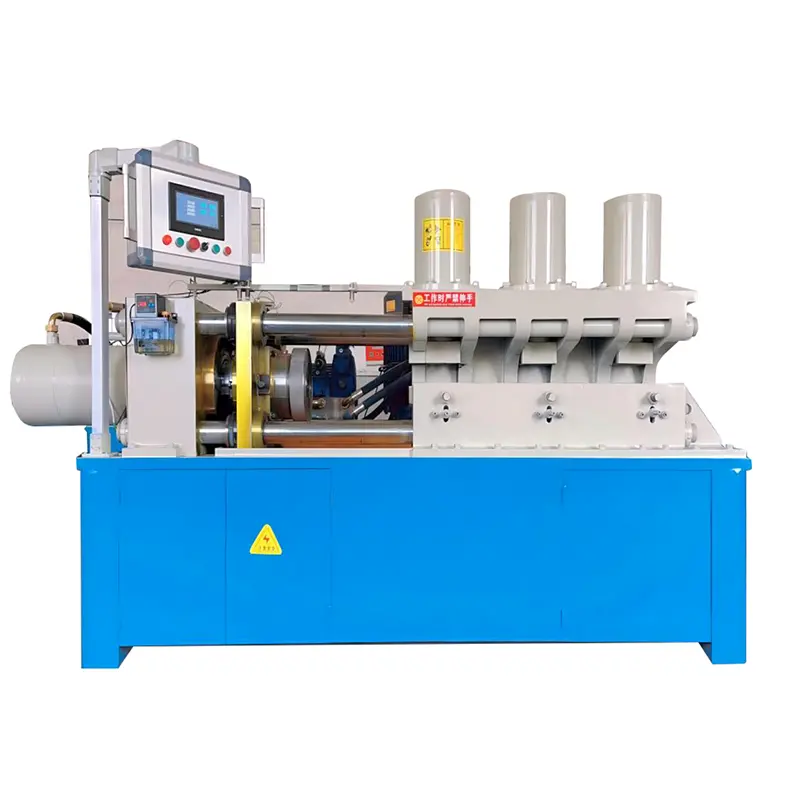
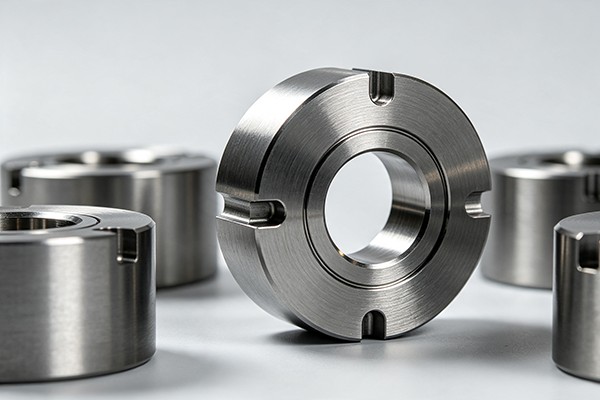
A cold drawing die cannot normally accept the full outside diameter of the incoming tube or bar. One end must first be reduced to form a pointed section that can pass through the die and be gripped by the drawing system. The quality of this pointed section directly affects the first stage of drawing.
For carbon steel tubes, the target pointed diameter is not selected independently from the drawing process. It should be considered together with the drawing die entry, wall thickness, material grade, reduction ratio, gripping method, and required pointing length. An oversized point can make die entry difficult, while excessive reduction can increase local deformation and the risk of cracks or wrinkles.
The tube or bar is inserted to a defined position inside the die. Hydraulic clamping cylinders hold the workpiece against movement while the main hydraulic cylinder drives the forming die. The die compresses the material progressively until the specified end diameter and shape are reached.
After the forming stroke, the die retracts and the clamps release the workpiece. The pointed end is then ready for the next operation, such as cold drawing, gripping, or another tube-forming process.
The forming result depends on more than hydraulic pressure. Material yield strength, outside diameter, wall thickness, reduction ratio, die geometry, die clearance, and positioning length all influence the final shape. For repeat production, keeping these conditions consistent is important for maintaining the same pointed-end dimensions from piece to piece.
Manual or inconsistent end pointing can create different starting conditions for the drawing process. This machine establishes a repeatable forming method for the front end of the workpiece and helps production teams control several common problems:
Inconsistent pointed-end dimensions: Controlled hydraulic movement and fixed die geometry provide a repeatable forming stroke.
Difficult drawing-die entry: The pointed section can be produced to dimensions matched with the downstream drawing die and gripping arrangement.
Uneven deformation: Proper die design and workpiece positioning help control the transition between the original tube diameter and the reduced end.
High forming load: The hydraulic cylinder provides the force required for large-diameter, thick-wall, and higher-strength carbon steel materials.
Unstable downstream drawing: More consistent pointed ends reduce variation in the starting condition of each workpiece.
Material and tooling waste: Correct pointing dimensions reduce the need for repeated preparation or rejection caused by unsuitable end geometry.
For a hydraulic pointing machine, maximum hydraulic pressure is only one part of the machine selection. The actual forming requirement is determined by the material and the amount of deformation required at the tube end.
Higher-strength carbon steel requires more forming force than low-carbon material under the same dimensional reduction. Wall thickness also has a direct effect on forming resistance. A machine selected only by outside diameter may therefore be undersized for a thick-wall tube.
The difference between the original diameter and the pointed diameter determines the amount of deformation. The reduction should be compatible with the material and die geometry. Excessive one-stage reduction can cause local buckling, surface damage, cracking, or an unstable transition area.
The forming die determines the final profile and controls how material flows during compression. Die clearance that is too small can increase forming resistance and wear, while excessive clearance can lead to dimensional variation. For this reason, tooling should be designed around the actual tube diameter, wall thickness, material grade, and required pointed profile.
Pointing length needs to provide enough reduced section for the drawing die and gripping system. It should also allow a controlled transition from the original tube section to the reduced end. The required length should therefore be confirmed together with the downstream drawing equipment rather than treated as an independent machine parameter.
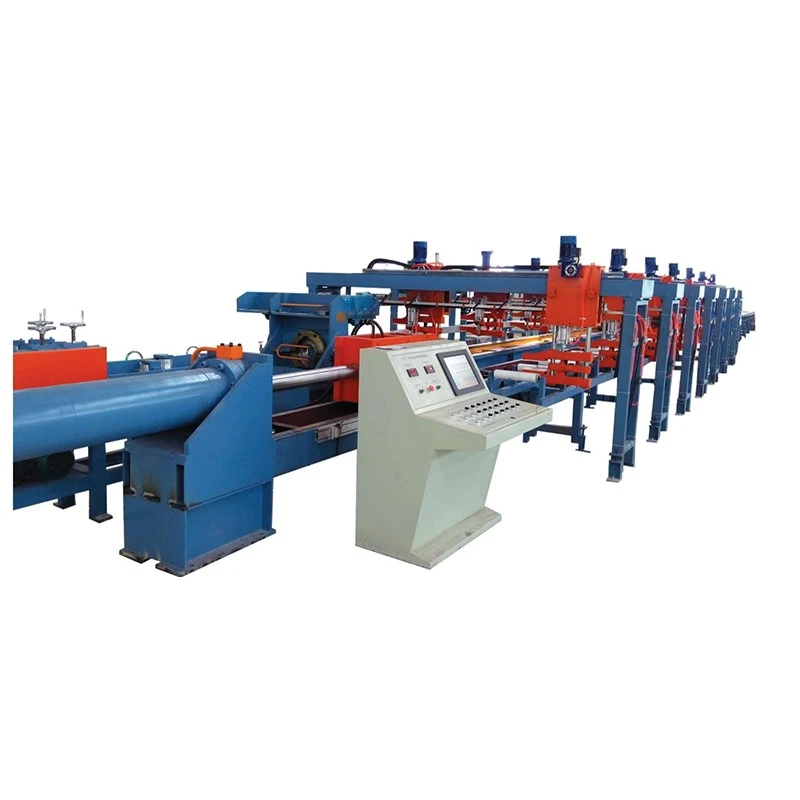
The Carbon Steel Hydraulic One Dies Pointing Machine uses a single-die forming structure combined with hydraulic clamping and a high-tonnage main cylinder. The configuration is intended for applications where substantial end-reduction force is required and where the pointed geometry can be produced through a dedicated forming die.
A PLC-based control system manages the forming sequence, while the hydraulic circuit controls cylinder movement and working pressure. The machine can be configured with different dies for different workpiece sizes. Automatic loading and unloading can also be integrated when the pointing machine is installed as part of a higher-volume production line.
| Item | Parameter |
| Pointing Diameter Range | φ0mm-φ400mm |
| Working Efficiency (excluding rotation time) | 4-7/min |
| Pointing Diameter Cylinder | φ280T |
| Clamping Cylinder | φ200T × 3 |
| Maximum Hydraulic System Pressure | 25 MPa |
| Motor Power | 37 kW / 1460 r/min |
| Overall Dimensions (L × W × H) | 2600mm × 1500mm × 1650mm |
| Machine Weight | 4500kg |
Custom specifications are available for different material grades, workpiece dimensions, pointing requirements, and production layouts. The above data is for reference; actual machine parameters should be confirmed according to the material and forming requirements.
The most useful information for machine selection is not simply the maximum tube diameter. FangRong evaluates the complete forming condition before confirming the machine configuration.
| Required Data | Why It Matters |
| Carbon steel grade | Determines material strength and forming resistance |
| Tube outside diameter | Determines die size and machine working range |
| Wall thickness | Affects forming force and deformation behavior |
| Required pointed diameter | Defines the required amount of end reduction |
| Pointing length | Must match the drawing die and gripping method |
| Workpiece length | Influences positioning and loading arrangement |
| Required output | Determines cycle time and automation requirements |
| Power supply | Used to configure the electrical system for the installation site |
For a quotation, drawings or samples of the required pointed end are useful when the geometry is not defined by a standard dimension. This allows the die configuration and forming sequence to be checked against the actual production requirement.
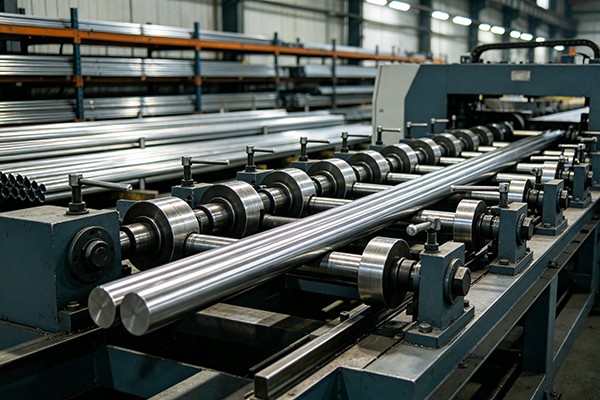
The machine is used where carbon steel tubes or bars require controlled end reduction before a subsequent process. Typical applications include cold drawing of seamless and welded tubes, steel bar processing, automotive tube and component production, oil and gas pipe processing, construction steel products, mechanical components, and general metal fabrication.
Its most relevant application is as the end-preparation stage before cold drawing. In a complete drawing line, the pointing result affects how easily the workpiece enters the drawing die and how reliably the first drawing operation can be started.
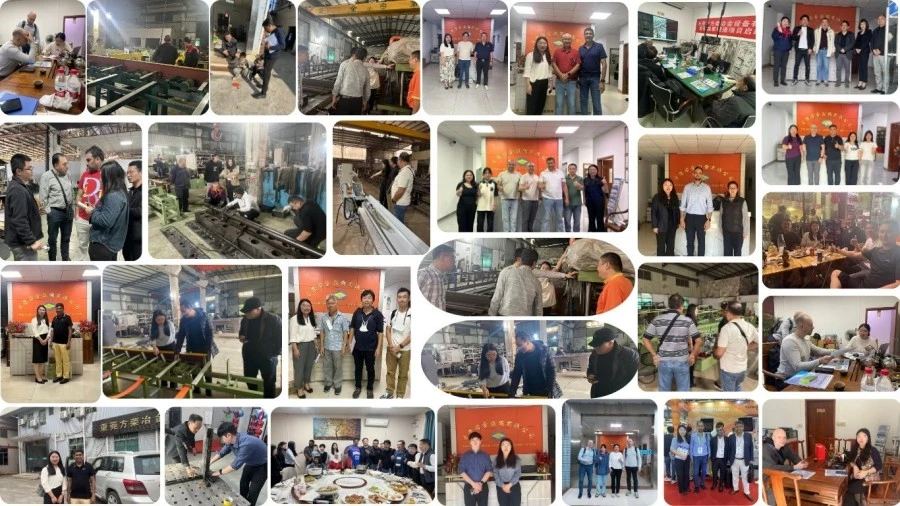
FangRong was established in 1998 and has more than 26 years of experience in the design and manufacture of cold drawing equipment, straightening machines, and related metallurgical machinery. Our experience covers the equipment used before, during, and after tube and bar forming operations, allowing pointing requirements to be considered together with the downstream production process.
FangRong operates two manufacturing facilities: Dongguan Fangrong Metallurgical Equipment Co., Ltd. and Yangjiang Fangrong Machinery Co., Ltd. Equipment has been supplied to more than 10,000 customers across more than 60 industries and exported to more than 60 countries and regions.
For custom pointing equipment, our technical work starts with the workpiece rather than a standard machine model. Material grade, tube dimensions, required pointed geometry, production capacity, die configuration, hydraulic capacity, and connection with the following process are reviewed before the final configuration is confirmed.
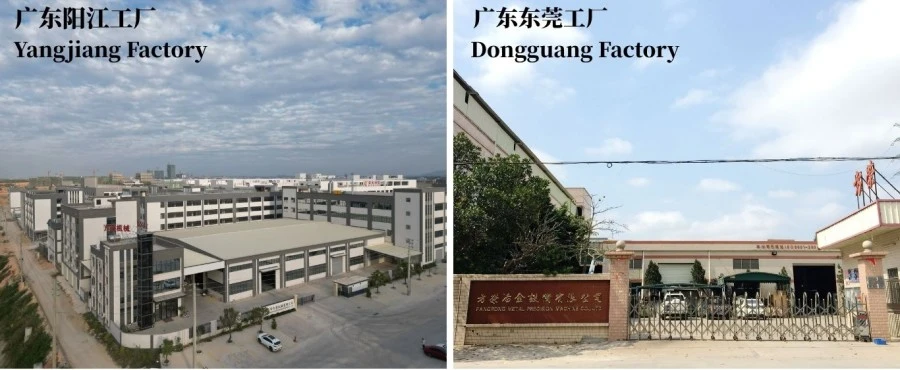
Dongguan Fangrong Metallurgical Equipment Co., Ltd. is located in Dalang Town, Dongguan City and serves as FangRong's headquarters and primary manufacturing base. The facility produces precision cold drawing machines, straightening machines, thread rolling equipment, and related metal processing machinery.
Yangjiang Fangrong Machinery Co., Ltd. is located in Yangdong District, Yangjiang City. The facility expands manufacturing capacity and supports production and delivery for larger equipment projects.
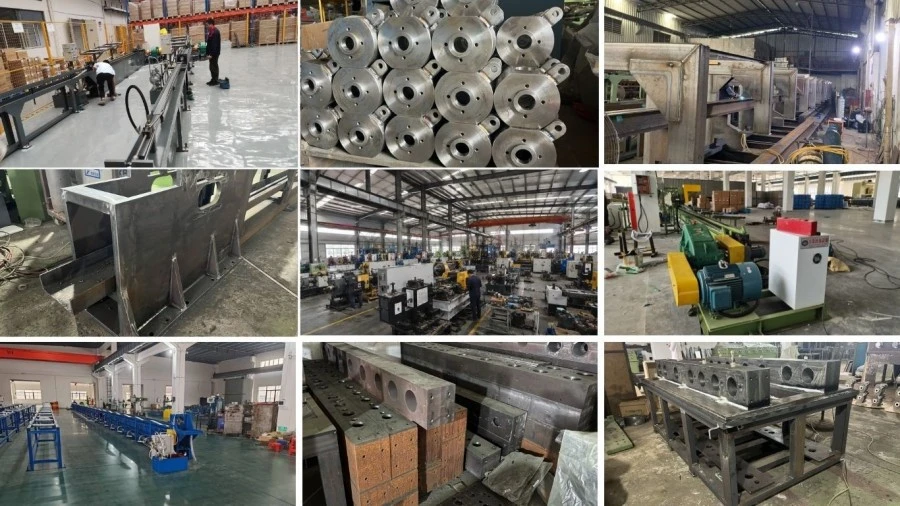
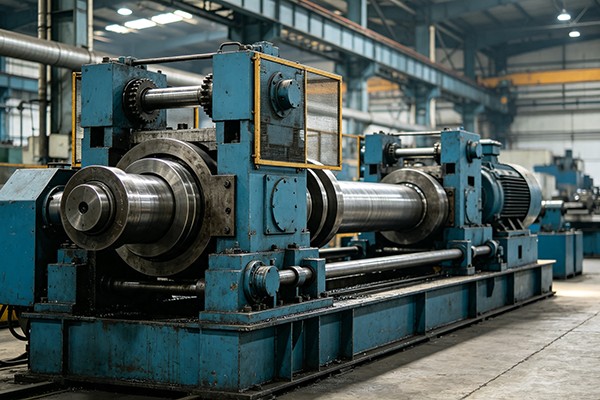
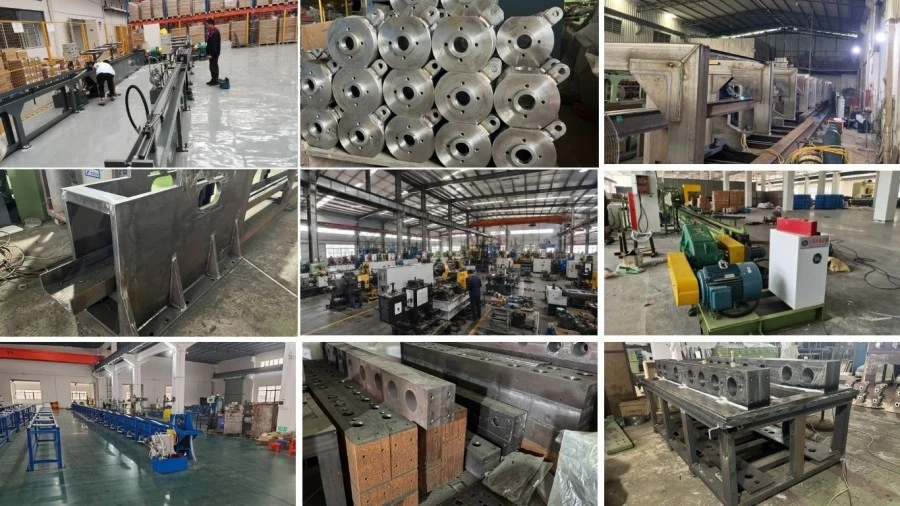
A pointing machine has to withstand repeated forming loads, so the manufacturing process focuses on frame rigidity, cylinder performance, die alignment, hydraulic stability, and repeatable movement rather than appearance alone.
Customer workpiece data is checked first, including material, outside diameter, wall thickness, pointed diameter, pointing length, production rate, and downstream drawing requirements. The mechanical layout, hydraulic circuit, die arrangement, and control sequence are then defined.
Steel plates and structural components are cut and welded according to the machine design. Stress-relief treatment and machining are carried out where required to control deformation and maintain the alignment of the forming components.
Hydraulic cylinders are machined and checked for dimensional accuracy before installation. Forming dies are manufactured according to the required workpiece range and pointed profile. Die material and heat treatment are selected according to the expected forming load and production conditions.
The hydraulic power unit, valve block, cylinders, hoses, and associated piping are installed and checked as a complete circuit. Pressure testing and cylinder movement checks are performed before production trials.
The electrical cabinet and PLC control system are tested through the actual operating sequence, including clamping, die movement, forming, return, and unloading. Interlocks and safety functions are checked before load testing.
The completed machine is tested first without load and then with suitable test material. Formed end dimensions, machine movement, hydraulic pressure, cycle time, and operating stability are checked against the agreed requirements.
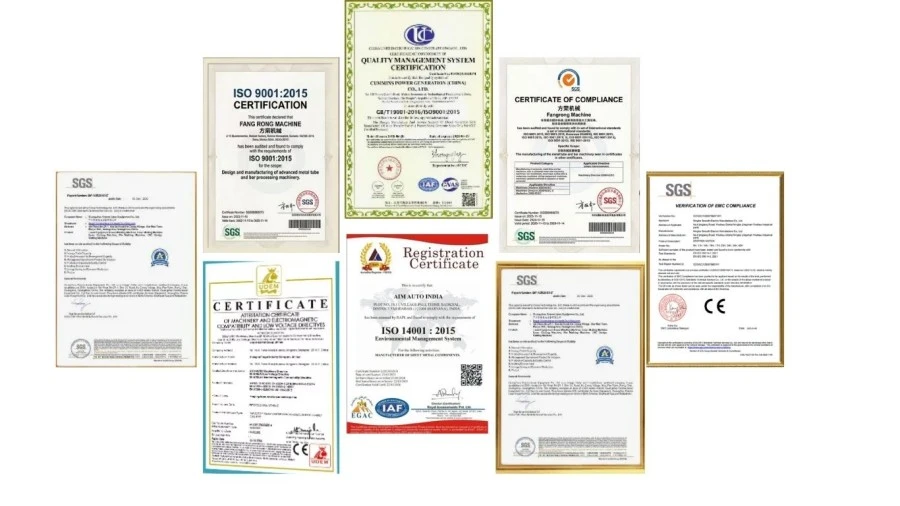
ISO 9001:2015: Quality management system covering design, production, installation, and service. Certificate No. UQ231211R1.
CE Mark: Machine configuration complies with applicable Machinery Directive 2006/42/EC requirements, including specified safety functions such as emergency stops, two-hand controls, and light curtains.
SGS Inspection: Independent inspection services are available for machine performance and safety-related requirements.
Patents: FangRong holds 32 invention patents and more than 100 utility model patents. Examples include 2013207829011 for a chain tensioning device, 2008300532117 for a multi-strand die holder, and ZL2015 2 0842922.7 for a quick-change mandrel system.
Before shipment, the Carbon Steel Hydraulic One Dies Pointing Machine is checked against the confirmed configuration and prepared according to its transport requirements. Hydraulic and electrical components are protected against damage during handling and transportation, while removable tooling and accessories are packed separately where necessary.
For overseas projects, shipment preparation can be coordinated according to the customer's installation conditions, power supply, workshop layout, and unloading arrangements.
1. What materials can this hydraulic one-die pointing machine process?
The machine is designed primarily for carbon steel tubes, seamless steel pipes, welded steel pipes, solid steel bars, and other ferrous metal materials. Other materials can be evaluated according to their strength, dimensions, and forming requirements.
2. What tube diameter can the machine process?
The reference specification lists a pointing diameter range of φ0mm-φ400mm. The practical working range depends on the tube or bar diameter, wall thickness, material grade, pointed diameter, and required forming length.
3. Can it process both tubes and solid bars?
Yes. The machine can be configured for tubes or solid bars with suitable forming dies. Tooling should be selected according to the workpiece geometry and material.
4. How do you determine whether one-die pointing is suitable?
The decision depends on the workpiece diameter, wall thickness, material strength, required reduction, pointed profile, production volume, and downstream drawing process. These parameters should be reviewed together rather than selecting a machine only by diameter.
5. What information is required for a quotation?
Please provide the material grade, tube or bar type, outside diameter, wall thickness, required pointed diameter, pointing length, workpiece length, required production capacity, and local power supply. A drawing or sample of the pointed end is helpful for customized tooling.
6. Can the pointing die be customized?
Yes. Dies can be designed for different tube and bar dimensions, pointed diameters, pointing lengths, and end profiles. Multiple die sets can also be supplied for different products.
7. Can automatic loading and unloading be added?
Yes. Automatic loading and unloading can be integrated according to the production layout and required cycle time. The automation level is normally determined after the workpiece loading method and upstream and downstream equipment are confirmed.
8. What is the standard production lead time?
Standard machines are typically delivered within 30-60 working days after order confirmation. Customized machines may require additional time depending on tooling, hydraulic configuration, automation, and testing requirements.
9. What is included with the Carbon Steel Hydraulic One Dies Pointing Machine?
The standard package generally includes the main machine, standard die set, hydraulic system, electrical control cabinet, operation manual, and basic maintenance tools. Additional dies and optional accessories can be supplied according to the project.
10. What warranty is provided?
The standard warranty is 12 months from machine installation. Technical support and spare parts service remain available after the warranty period.
11. Do you provide installation and operator training?
Yes. FangRong provides operation manuals, online technical support, remote commissioning, and overseas installation and operator training when required.
12. Can you confirm the machine model from our tube specifications?
Yes. Send the material grade, tube diameter, wall thickness, required pointed diameter and length, workpiece length, production target, and drawing process parameters if available. FangRong's technical team can review the forming requirements and recommend the appropriate machine and die configuration.
Address
NO.163,Shatong Road,Shabu 2nd Industrial Zone, Dalang Town, Dongguan City, Guangdong, China