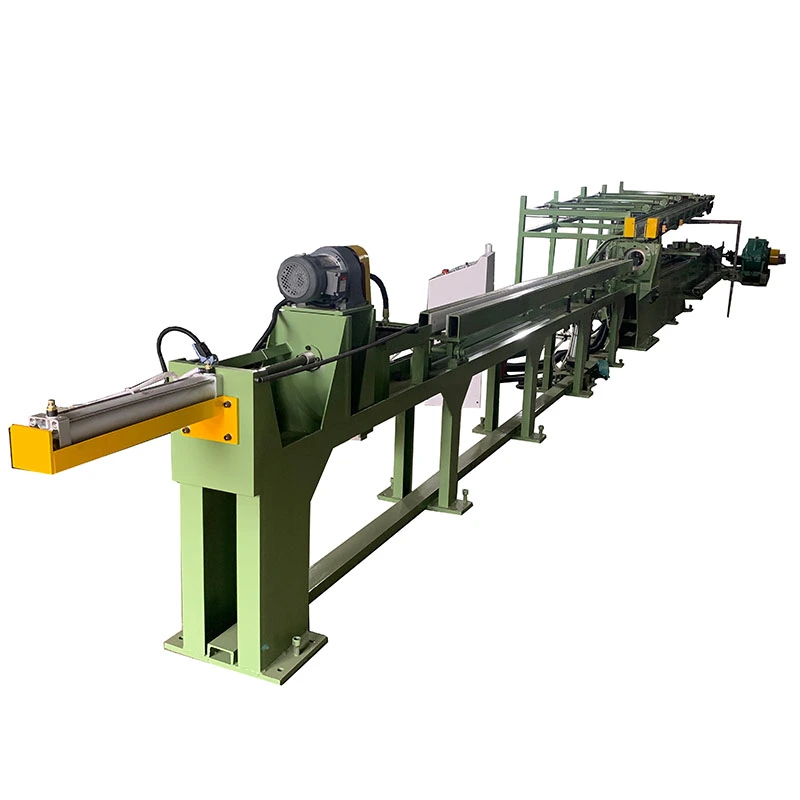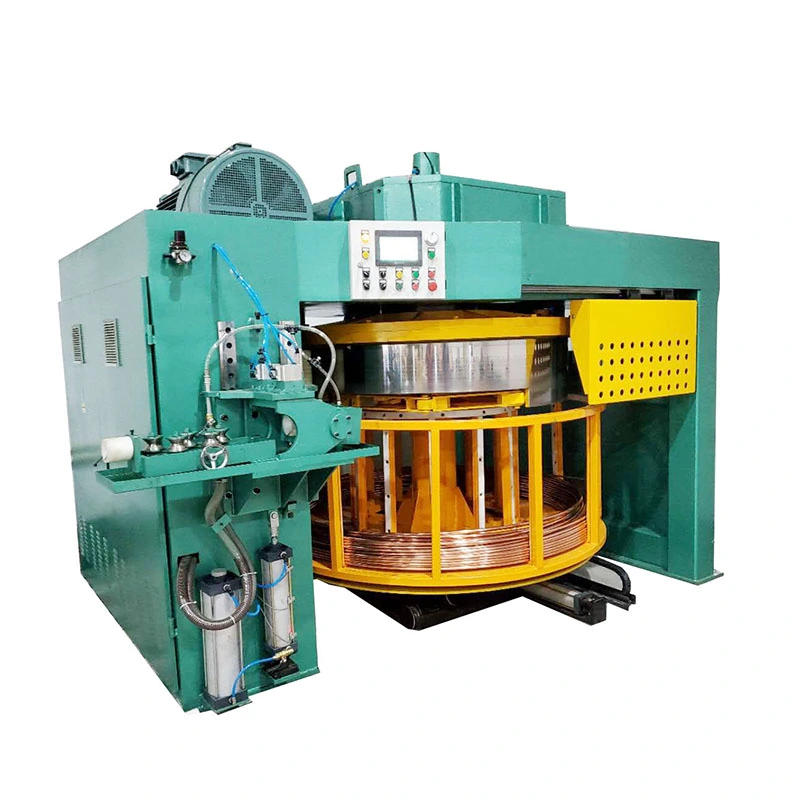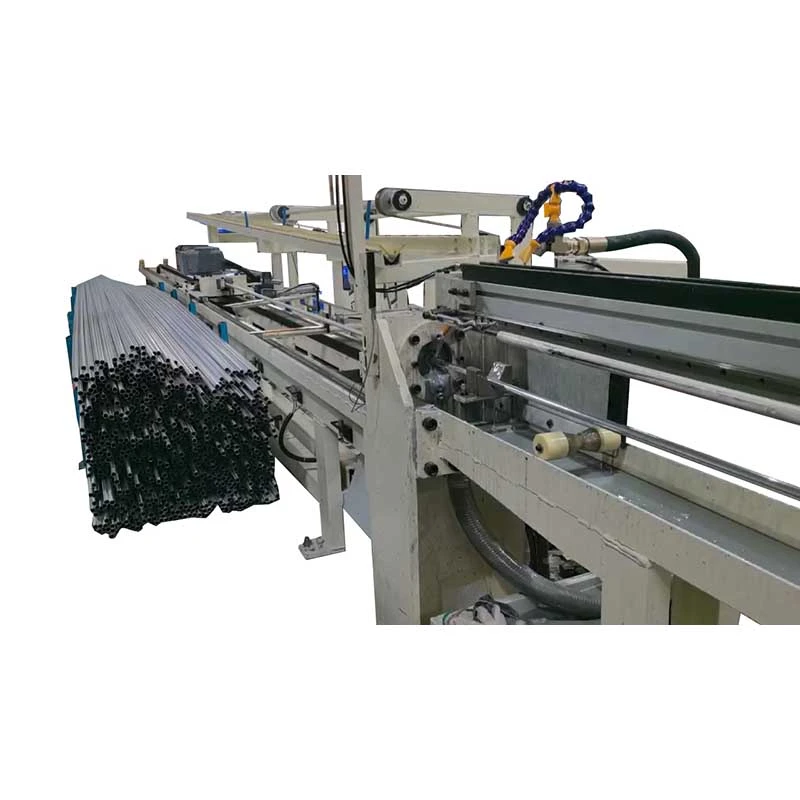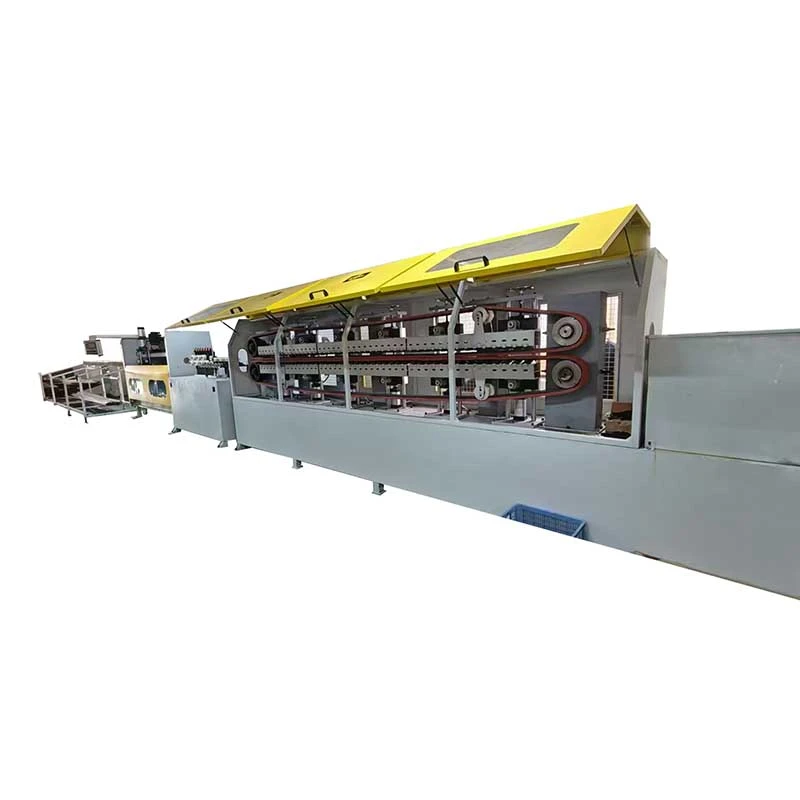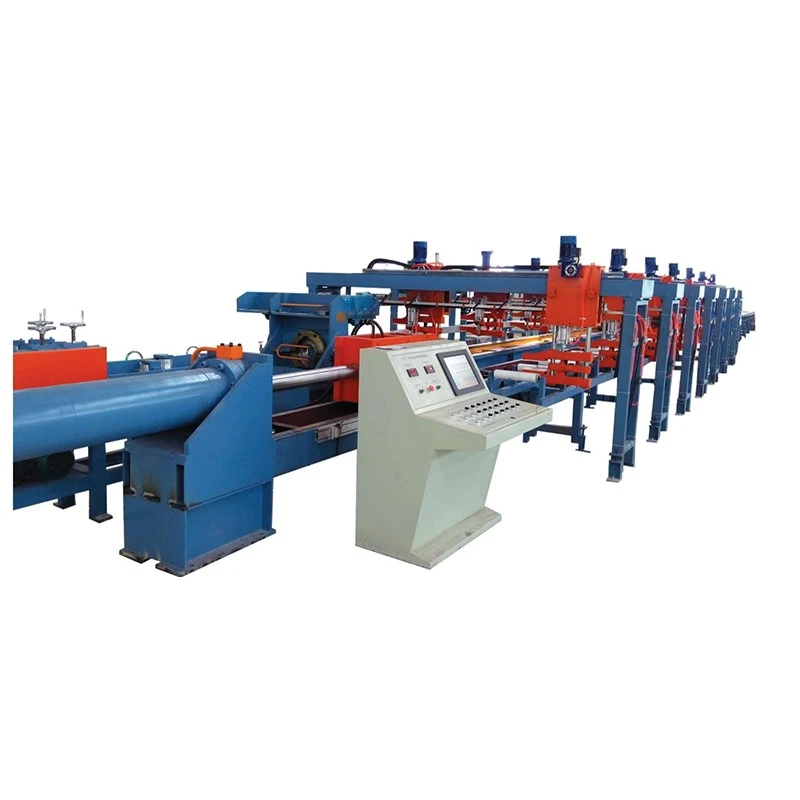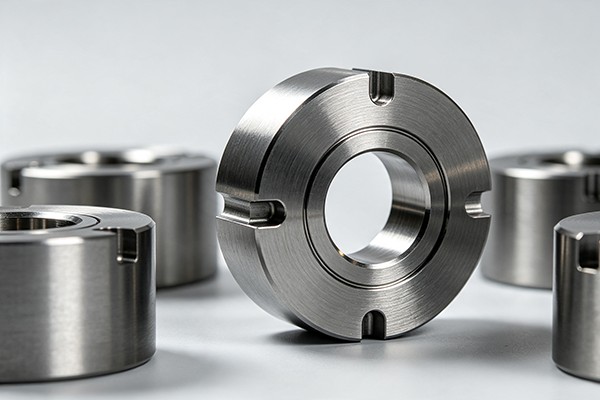
We offer a comprehensive range of precision metal processing equipment, including straightening, cold drawing, pointing, chamfering, cutting, thread rolling machines, and drawing dies, tailored for tube, bar, and wire materials across diverse industries.
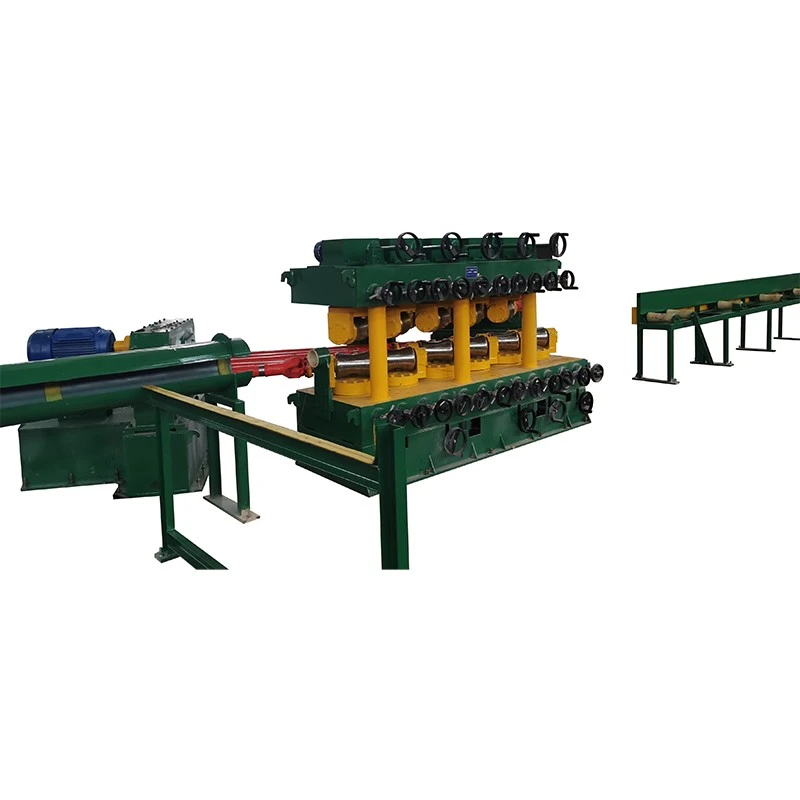
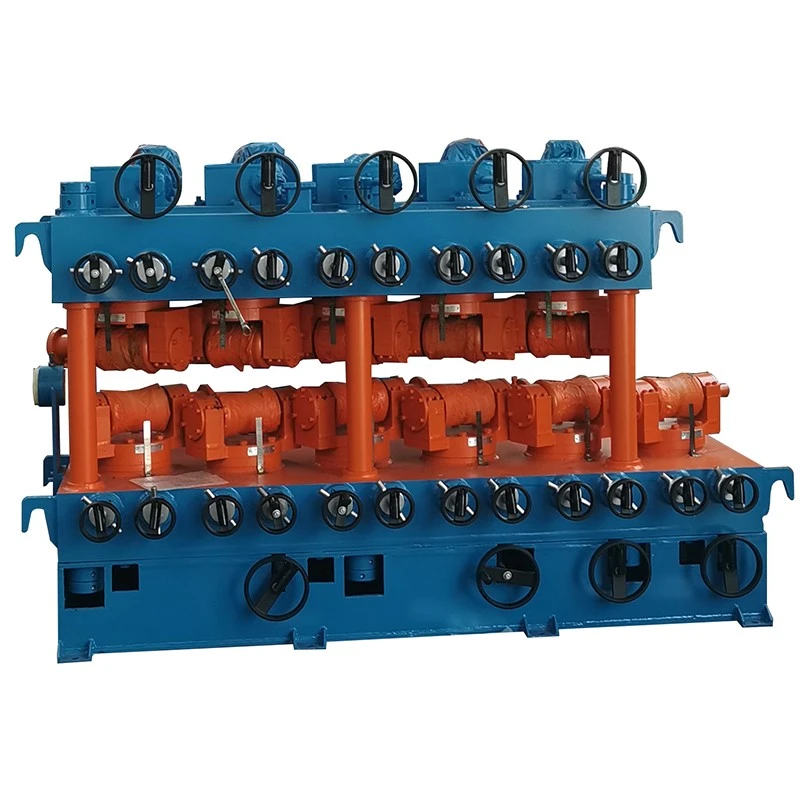
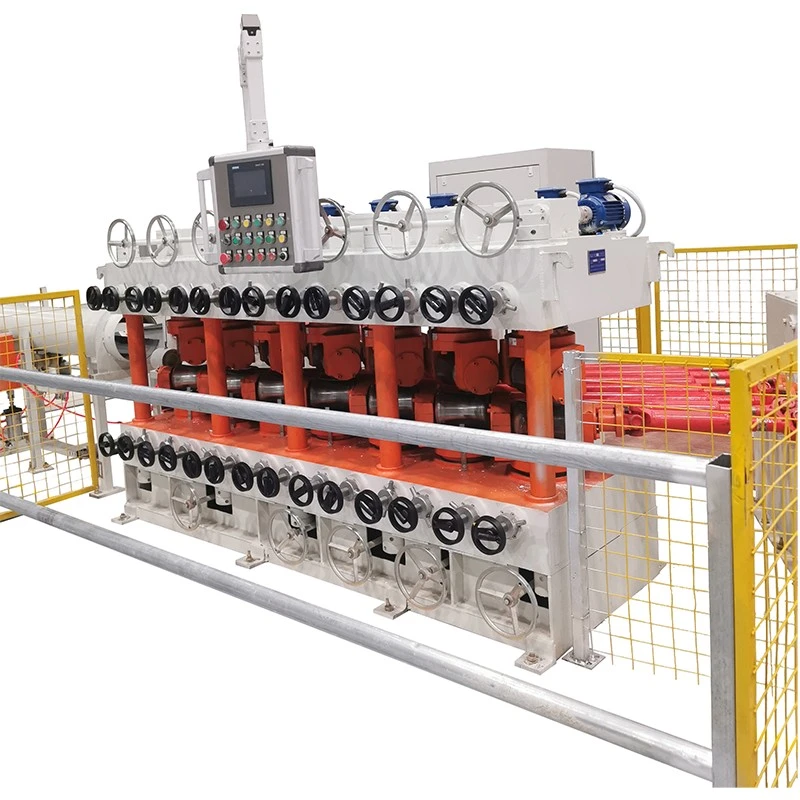
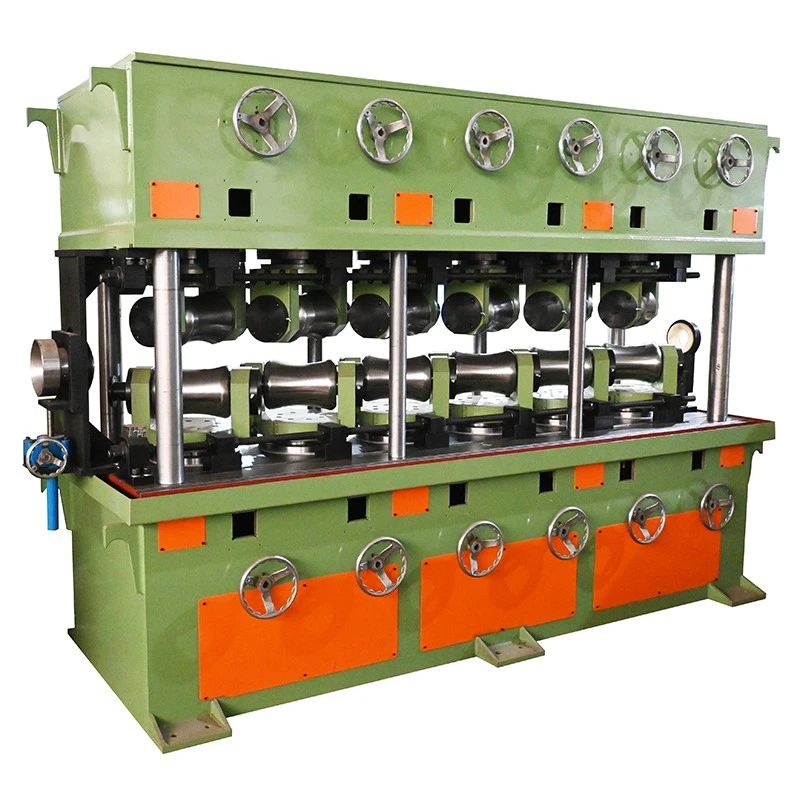
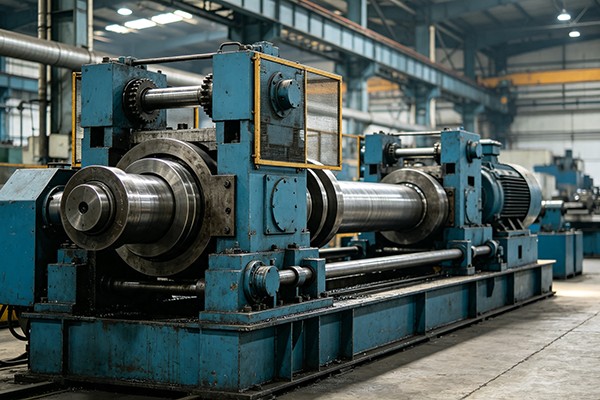
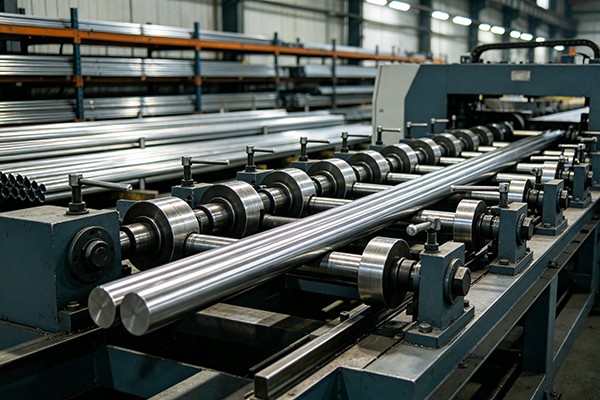
When tube diameter and wall thickness increase, straightening becomes a problem of force, support, and controlled roller adjustment—not simply adding more rollers. FangRong Vertical Multi-Rollers Straightening Machines are designed for medium and large diameter tubes and solid bars, with models from FR-20 to FR-1100 covering tube diameters from φ5mm to φ1100mm and solid bars from φ5mm to φ500mm.
The vertical arrangement provides a practical working layout for large and heavy sections, while the multi-roller system distributes correction over several contact points. Depending on the machine size, FangRong configurations use 6+1 to 10+1 rollers, with roller dimensions ranging from φ68×90mm to φ820×1450mm.
For heavy-wall pipe, the machine structure and drive capacity become especially important. The FR-1100, for example, is designed for φ508–1100mm tubes with wall thickness up to 60mm and φ300–500mm solid bars. Its approximately 300-ton machine weight reflects the structural rigidity required for this class of work rather than simply the size of the material opening.
A production shop rarely straightens one diameter forever. Changing from one tube size to another requires the roller gap and contact position to be reset accurately; otherwise, insufficient correction may leave residual curvature, while excessive pressure can distort the section or mark its surface.
FangRong vertical multi-roller machines use motorized roller-gap adjustment with digital readout. This allows the operator to set the roller position more consistently during changeovers instead of relying entirely on manual adjustment and visual estimation. Roller tilt angles can be adjusted from approximately 27° to 36° to adapt the correction condition to different products.
| Model | Tube Range | Solid Bar Range | Main Drive | Machine Weight |
|---|---|---|---|---|
| FR-180 | φ80–180mm | φ80–95mm | 90kW × 2 | Approx. 27T |
| FR-1100 | φ508–1100mm | φ300–500mm | Up to 280kW | Approx. 300T |
The difference between these two Vertical Multi-Rollers Straightening Machines illustrates why a large-diameter straightener cannot be treated as an oversized version of a small machine. The FR-180 is intended for medium-large sections, while the FR-1100 belongs to heavy-duty pipe and structural processing, where roller size, frame rigidity, drive power, lifting mechanism, and foundation requirements all become part of the machine design.
Working speeds are available from approximately 10–40m/min. Higher speed can improve throughput when the incoming material is already reasonably uniform and only moderate correction is required. For heavily bent, high-strength, or thick-wall material, a more controlled speed and roller setting may be necessary to obtain stable straightness without over-correcting the section.
Depending on machine configuration and material conditions, straightness can reach approximately 0.3–0.8mm/m. The achievable result depends on tube diameter, wall thickness, material strength, initial curvature, roller adjustment, and the required finished tolerance.
Main drive configurations range from 2.2kW × 2 on smaller machines to heavy-duty systems using motors up to 110kW × 2, while lifting motors range from 0.75kW to 5.5kW. The lifting system is important when large roller assemblies need to be positioned repeatedly during product changeover.
This configuration is suited to applications such as seamless steel pipes, oil country tubular goods, heavy structural sections, and large-diameter drawn products. Where the straightening operation follows cold drawing, the vertical straightener can be integrated with a FangRong Cold Drawing Machine to create a continuous forming and correction route.