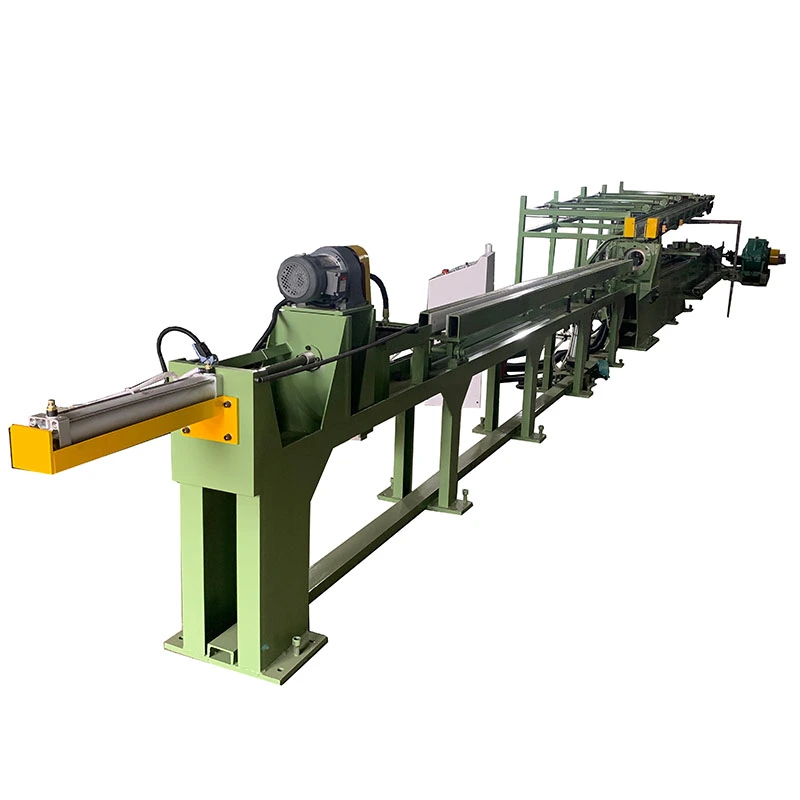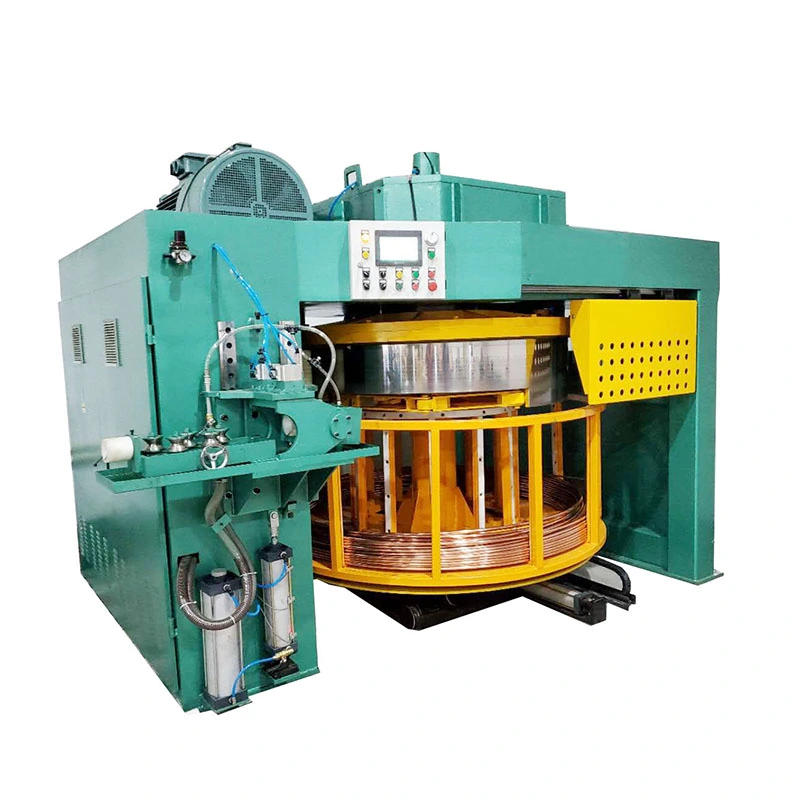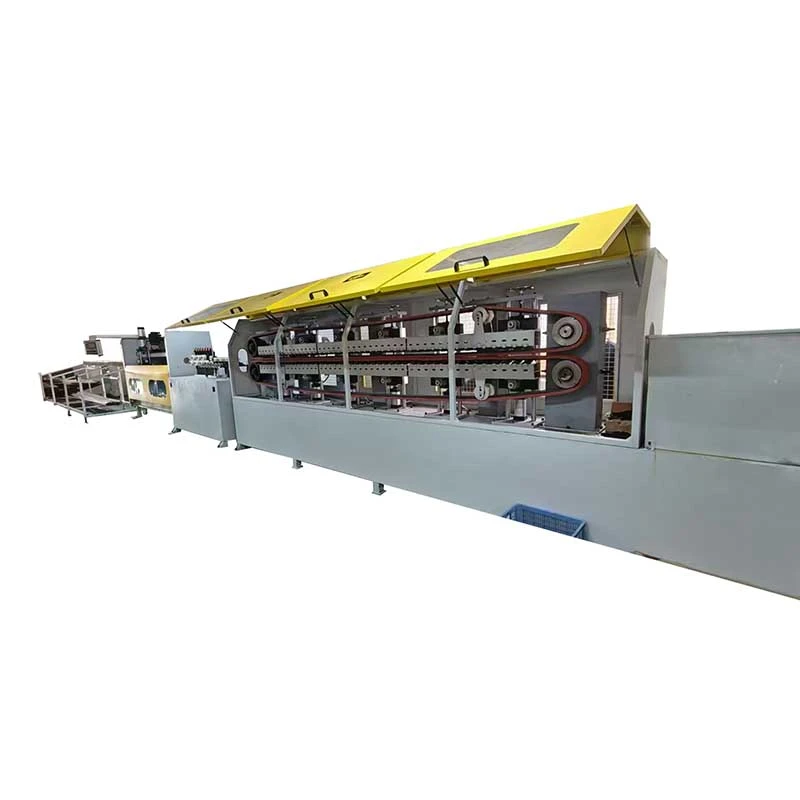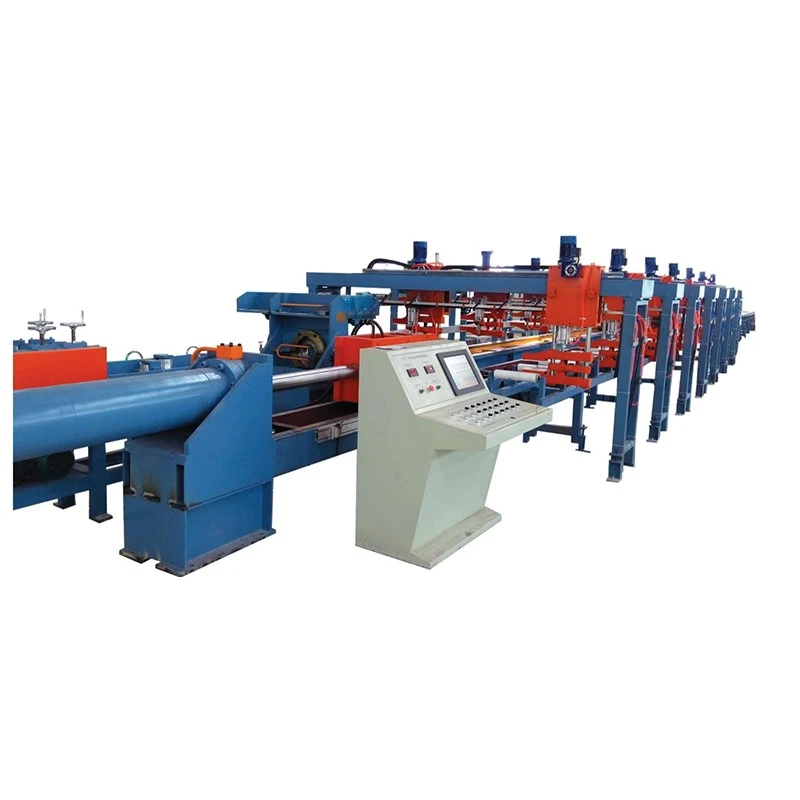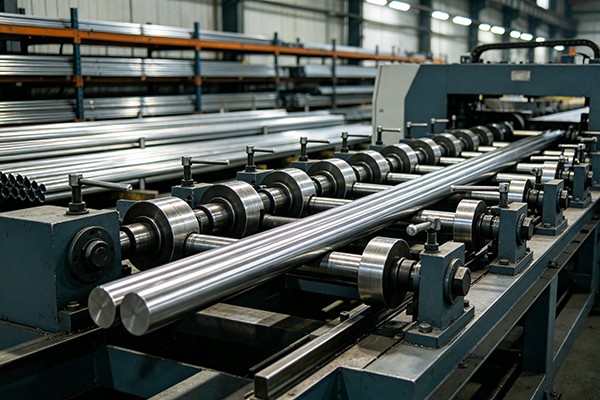

We offer a comprehensive range of precision metal processing equipment, including straightening, cold drawing, pointing, chamfering, cutting, thread rolling machines, and drawing dies, tailored for tube, bar, and wire materials across diverse industries.
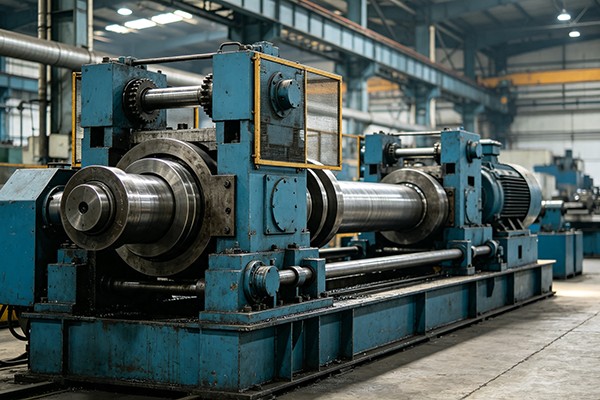
FangRong's Rack-Pinion Cold Drawing Machine is built for precision drawing where short working lengths, fast acceleration and accurate positioning are more important than very long drawing strokes. The rack-and-pinion drive transfers the servo motor's motion directly to the drawing carriage, providing controlled movement with low mechanical play and repeatable positioning.
The FR-50 provides 50kN drawing force with a 4m effective drawing length and a 2m core-rod stroke. A 30kW Inovance servo motor drives a planetary right-angle gearbox with a 1:15 ratio. Drawing speed is continuously adjustable from 0–40m/min, while carriage return speed reaches 0–30m/min.
This configuration is useful when the machine has to accelerate, stop and reverse repeatedly without losing positional accuracy. The rack-and-pinion transmission avoids the long flexible chain path found on conventional chain drawbenches, while pre-loaded bearings and anti-backlash transmission components help control mechanical clearance. Positioning repeatability can reach ±0.05mm under suitable operating conditions.
FR-50 key specifications: 50kN drawing force, 4m effective drawing length, 2m core-rod stroke, 0–40m/min drawing speed and up to 0–30m/min carriage return speed.
For tube drawing, productivity is affected not only by the drawing stroke but also by how quickly the core rod can be prepared for the next cycle. The FR-50 includes automatic core-rod threading and a pneumatic wedge-type jaw system to reduce manual intervention during loading and clamping.
Internal and external lubrication can also be configured for tube drawing with an internal diameter of ≥16mm. This is important for applications using a plug or mandrel, where lubrication conditions directly affect drawing load, die wear and tube surface quality.
The machine is particularly suited to medical tubing, aerospace hydraulic lines and precision automotive components, where consistent movement and repeatable positioning can be more important than maximum pulling capacity. It is also a practical choice when available workshop space is limited; the FR-50 has a compact layout with a centre height of 800mm.
For long products requiring extended drawing strokes or very high pulling forces, a chain or hydraulic drawbench may be more appropriate. Rack-and-pinion equipment makes more sense when the production cycle is relatively short and the process benefits from servo-controlled speed and positioning.
| Item | Rack-Pinion | Chain-Type |
|---|---|---|
| Drive | Rack and pinion with servo motor | Chain and reducer |
| Typical Strength | Positioning, acceleration and speed control | Heavy pulling and longer drawing strokes |
| Drawing Speed | 0–40m/min on FR-50 | Depends on machine model |
| Drawing Length | 4m effective length on FR-50 | Longer strokes available on many models |
| Best Fit | Precision tubes and short-cycle production | General bar and tube drawing, higher-load production |
The comparison is mainly about the production process, not which transmission is universally better. If the job requires a 4m-class drawing length, frequent speed changes and tight positioning, the rack-pinion arrangement has a clear advantage. If the priority is maximum pulling capacity or a much longer stroke, a conventional chain or hydraulic machine may provide a better match.
A Mitsubishi PLC with HMI coordinates the drawing sequence, while the servo drive provides variable speed control for the carriage. This allows drawing and return speeds to be set according to the material and tooling rather than running the machine at one fixed speed.
Servo control is useful when the drawing cycle includes frequent acceleration, deceleration and return movements. The speed can be adjusted to suit the material, reduction and tooling conditions, while the PLC manages the sequence and positioning requirements.
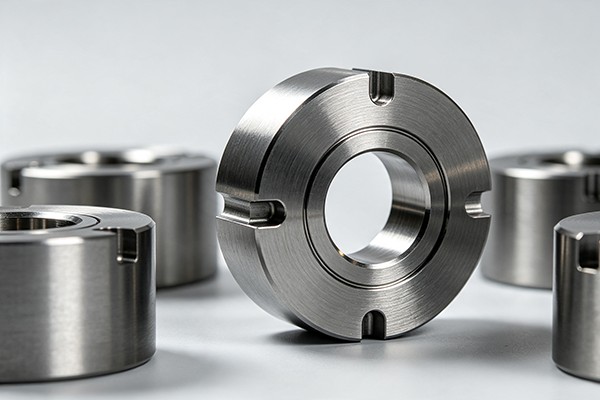
For a precision tube line, the machine can be combined with FangRong's Drawing Dies, including diamond tooling, and a Pointing Machine for material preparation. The resulting setup keeps the tooling, feeding and drawing motion matched to the dimensional requirements of the finished tube or bar.
The rack-and-pinion configuration is therefore best considered as a precision-oriented drawing solution rather than a general replacement for every type of drawbench. The correct choice depends on the required drawing force, working length, material, production cycle and positioning accuracy.
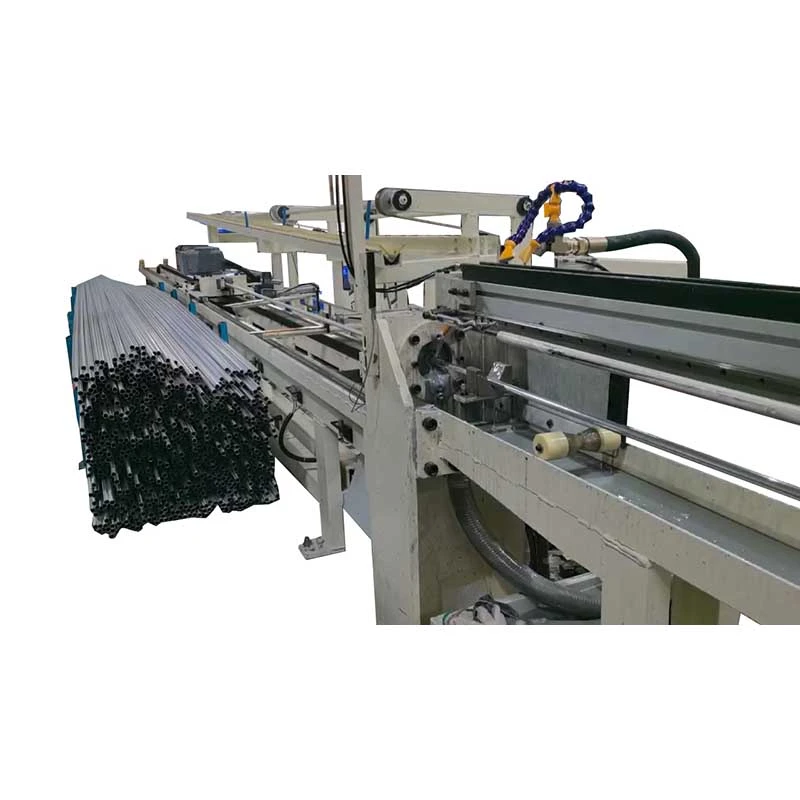
The FR-50 Automatic Rack-Pinion Cold Drawing Machine is a 50 kN servo-driven drawbench for precision tube and bar drawing. It uses rack-and-pinion transmission with a 30 kW Inovance servo motor, providing stable speed control and reduced vibration. Suitable for copper, aluminum, stainless steel and carbon steel applications.