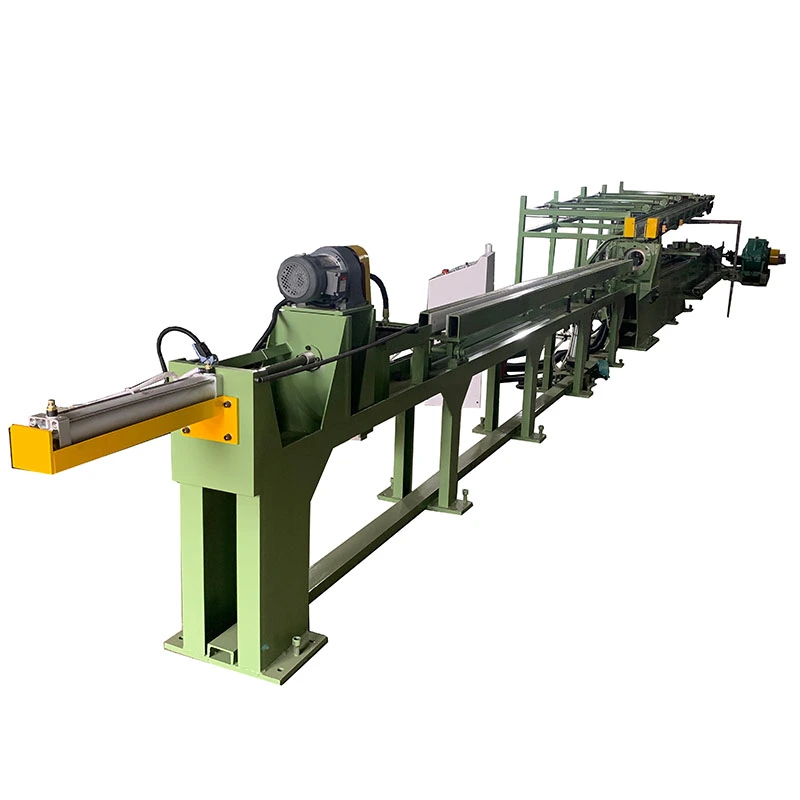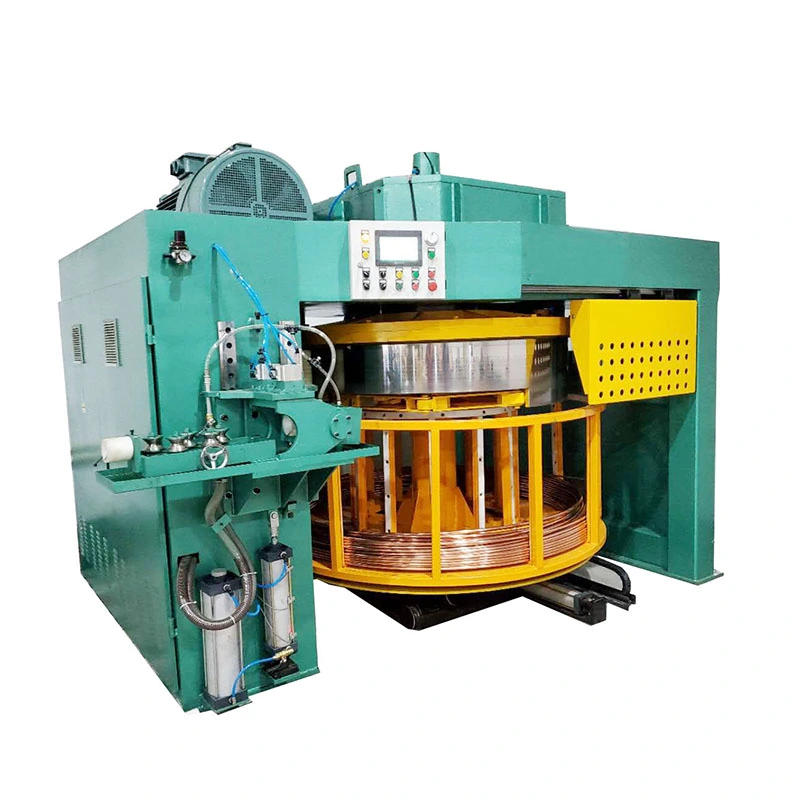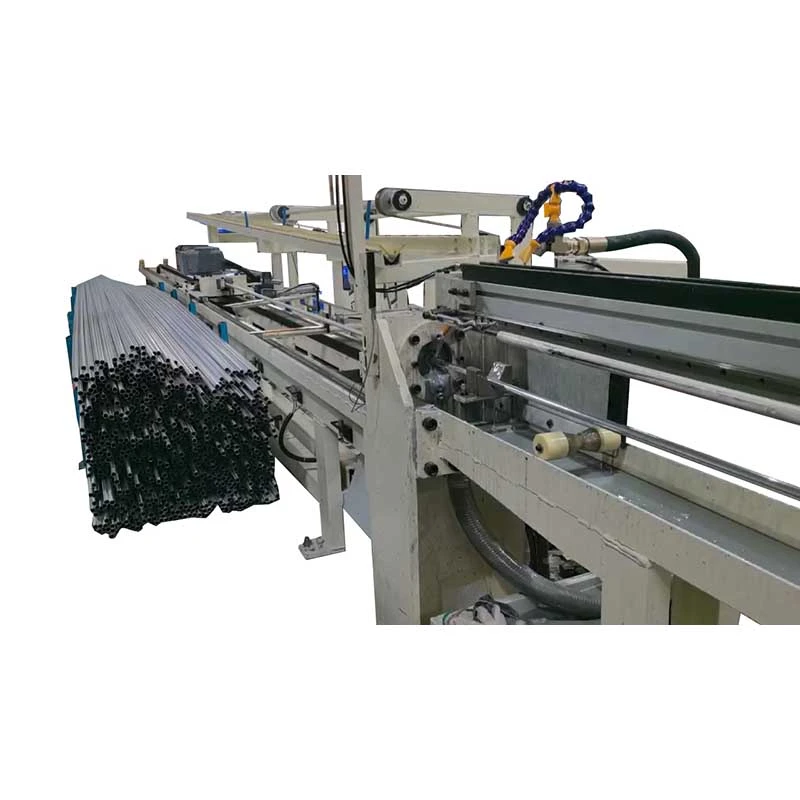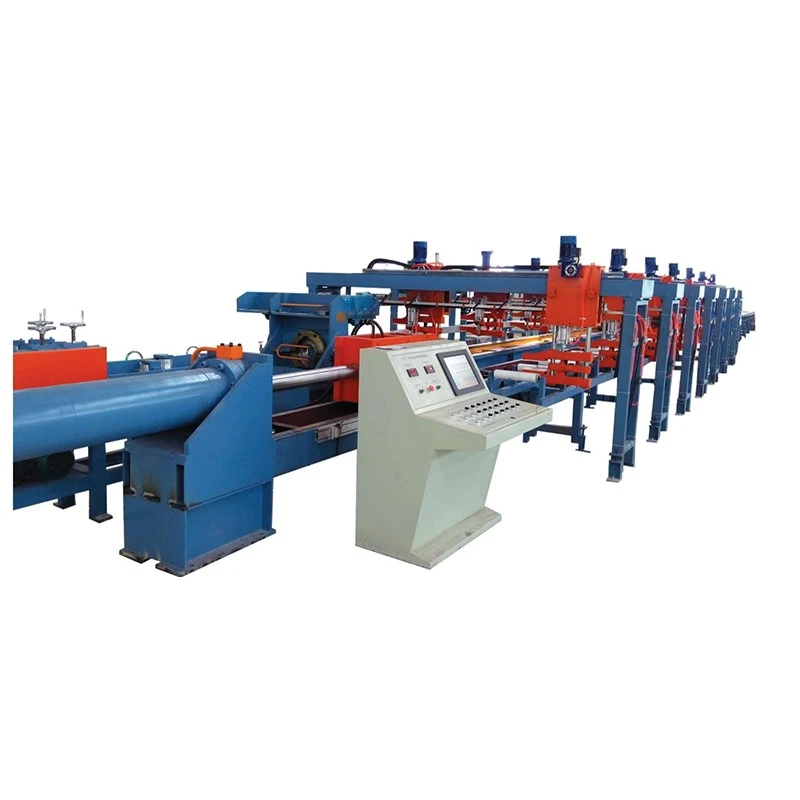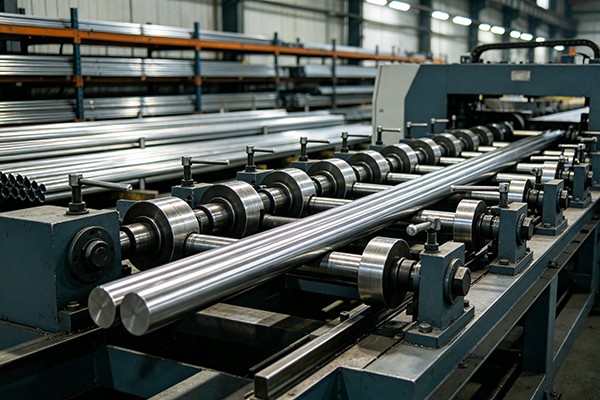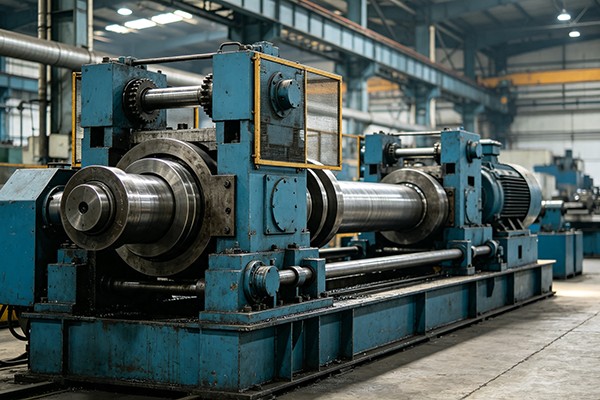

We offer a comprehensive range of precision metal processing equipment, including straightening, cold drawing, pointing, chamfering, cutting, thread rolling machines, and drawing dies, tailored for tube, bar, and wire materials across diverse industries.
FangRong's Crawler-Type Cold Drawing Machine uses an endless track to grip and pull the material continuously. Unlike a conventional chain drawbench that relies on a carriage moving back and forth, the crawler system maintains contact with the workpiece throughout the pulling zone. This makes it particularly suitable for long coils, continuous material and higher drawing speeds.
The crawler does not need to release the material and return a carriage after every drawing stroke. Multiple pairs of cylinders press wear-resistant rubber pads against the workpiece, creating a long contact area for pulling. Hydraulic track tension keeps the gripping pressure relatively stable as the material passes through the machine, helping reduce slipping and uneven feeding.
This arrangement is useful when production involves long lengths of wire, tube or strip and the interruption of a conventional reciprocating drawbench would limit output. It is especially relevant to electrical wire, welding wire and cable shielding tubes, where continuous feeding is more valuable than the flexibility of processing individual short bars.
Continuous drawing is the main advantage. A crawler system is most useful when the incoming material can be fed continuously and the downstream process can also keep pace with the drawing speed. For short bars or frequent size changes, a conventional chain or hydraulic drawbench may still be more practical.
The three crawler models cover material diameters from approximately φ5 to φ40mm, with pulling forces of 10–50kN and maximum drawing speeds of about 80–100m/min. Main motor power ranges from 15kW to 37kW.
The FR-16 uses 8 pairs of cylinders, an 80mm crawler width and a 1800mm contact length. The FR-25 uses 10 cylinder pairs, a 100mm track width and a 2500mm contact length. For larger material, the FR-38 uses 12 cylinder pairs, a 120mm crawler width and a 3500mm contact length.
| Model | Material Diameter | Pulling Force | Main Motor | Cylinder Pairs | Contact Length |
|---|---|---|---|---|---|
| FR-16 | φ5–16mm | 10kN | 15kW | 8 pairs | 1800mm |
| FR-25 | φ10–25mm | 30kN | 22kW | 10 pairs | 2500mm |
| FR-38 | φ10–40mm | 50kN | 37kW | 12 pairs | 3500mm |
| Item | Crawler-Type Drawing | Chain Drawbench |
|---|---|---|
| Material Feeding | Continuous | Intermittent |
| Pulling Method | Continuous track grip | Moving carriage and chain |
| Suitable Material | Long coils, wire, continuous tube | Bars, tubes and cut lengths |
| Drawing Speed | Up to about 80–100m/min | Depends on machine and process |
| Production Character | High-speed continuous production | Flexible batch production |
| Best Used When | Continuous feeding and high output are required | Different sizes, short bars or higher drawing forces are involved |
The crawler is not automatically a replacement for a chain drawbench. If the product is supplied as short individual bars or requires very high drawing force, a chain or hydraulic drawbench may be the more practical choice. Crawler equipment has a clear advantage when continuous material and cycle speed are the main production constraints.
At high line speeds, slipping between the track and material can quickly affect surface quality and dimensional consistency. FangRong uses a hydraulic tensioning system to maintain track pressure and wear-resistant rubber pads to provide distributed contact. The long gripping section also reduces the need to rely on excessive local pressure at a single point.
Material surface and grip force need to be considered together. Pad condition, hydraulic pressure and incoming material condition all affect traction. For softer copper or aluminum, the gripping force needs to be controlled carefully so that sufficient traction is achieved without marking the material.
Crawler drawing is commonly considered for electrical wire drawing, welding wire production and cable shielding tubes. Where the drawn material needs to be collected continuously, a Rewinding Machine can be placed after the drawing unit to form a complete drawing-and-spooling process.
For factories moving from intermittent drawing to continuous production, the main question is not simply how much pulling force the machine provides. The more important consideration is whether the incoming material, required reduction, target speed and downstream winding process can all operate continuously. That is where a crawler-type line can offer a practical advantage over a conventional reciprocating drawbench.
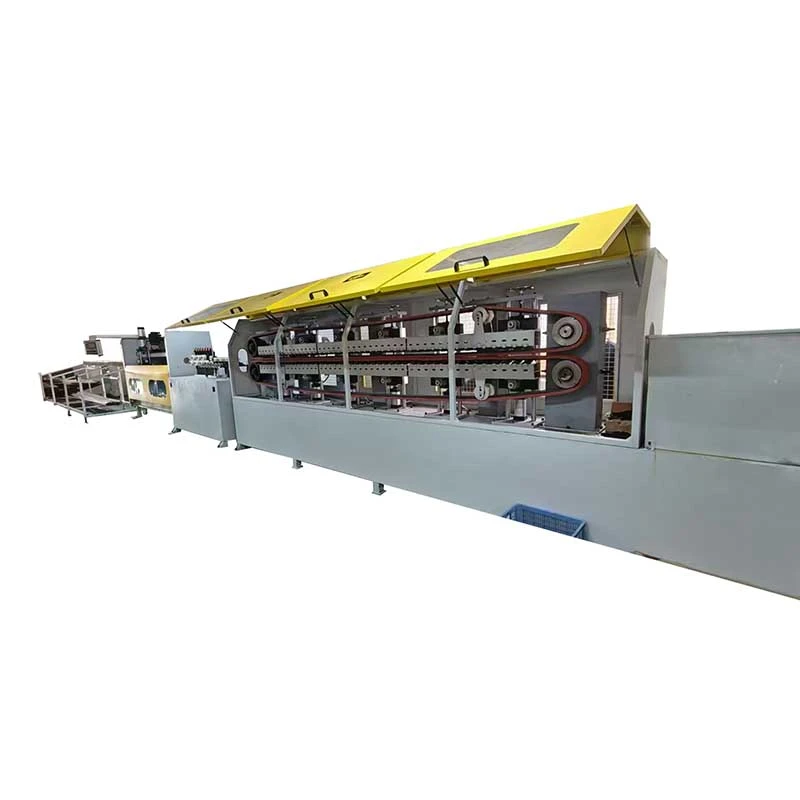
The Automatic Crawler-Type Cold Drawing Machine to Coil is designed for continuous drawing and coiling of small-diameter metal tubes. With drawing forces of 10–50 kN and speeds up to 100 m/min, the crawler-track drive provides stable pulling and continuous operation. It handles tube diameters of φ5–40 mm and feeds drawn material directly into the coiler, reducing cutting, handling, and storage. Suitable for copper, aluminum, stainless steel, and carbon steel tubes used in HVAC, automotive, electrical, and general engineering.