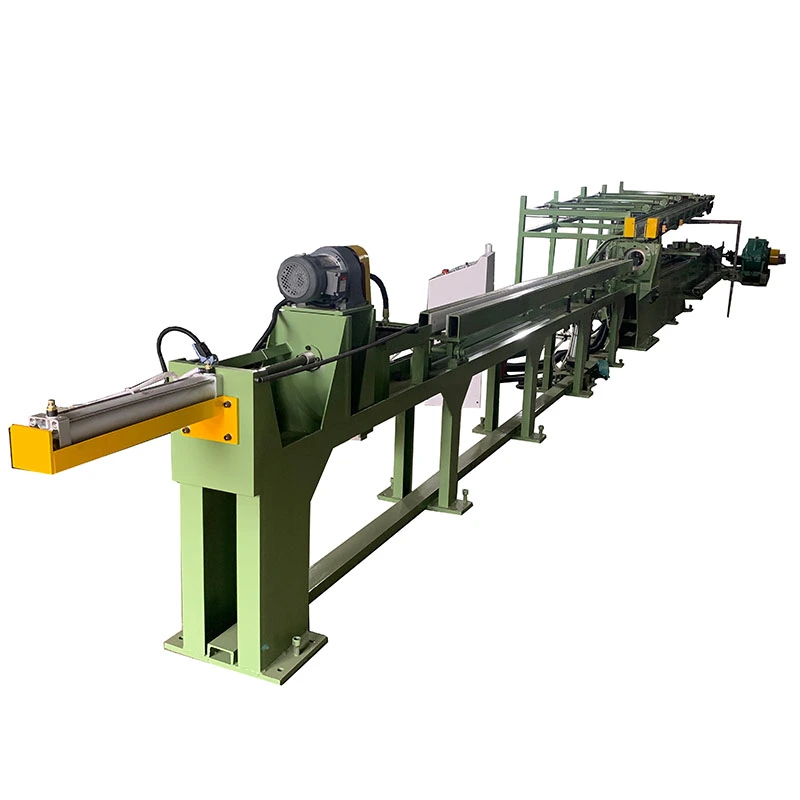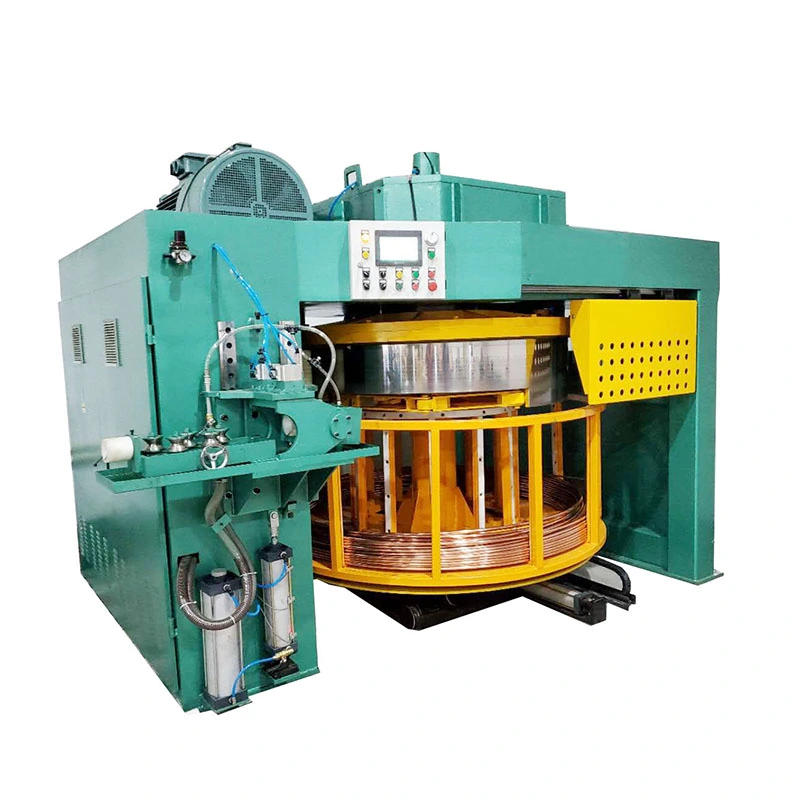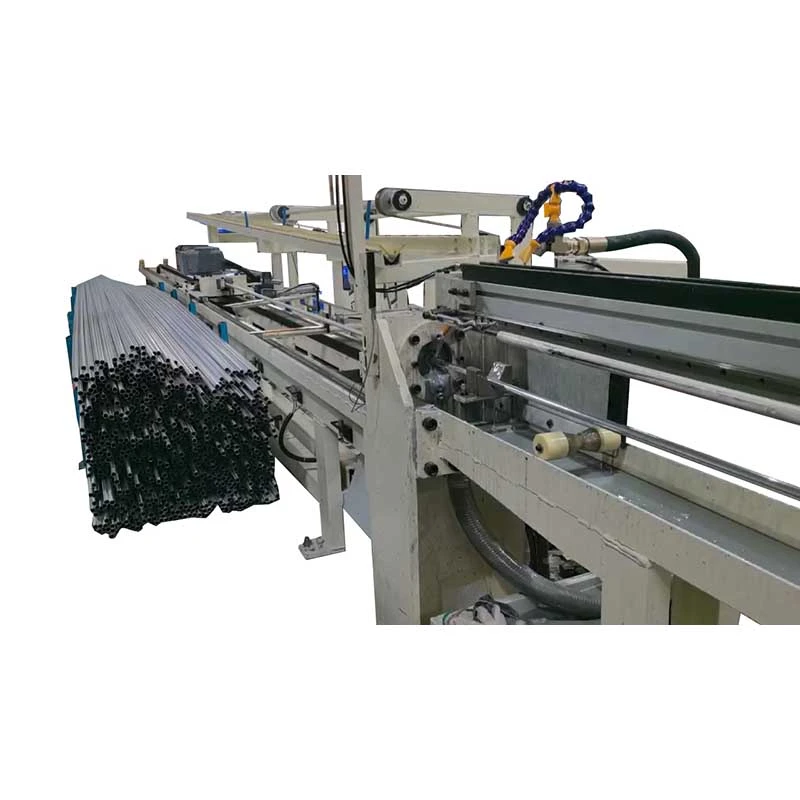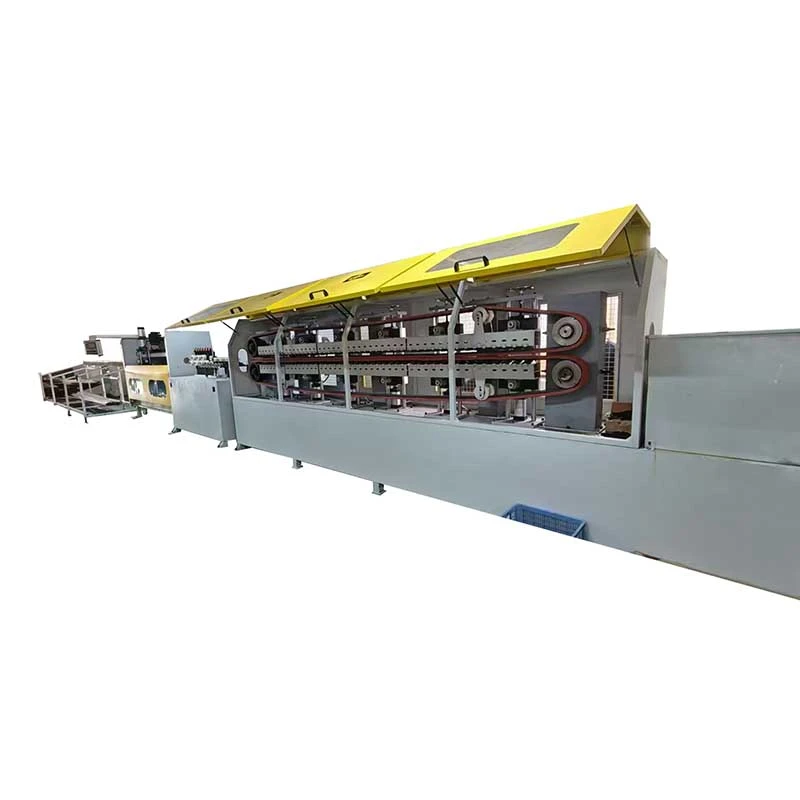

We offer a comprehensive range of precision metal processing equipment, including straightening, cold drawing, pointing, chamfering, cutting, thread rolling machines, and drawing dies, tailored for tube, bar, and wire materials across diverse industries.
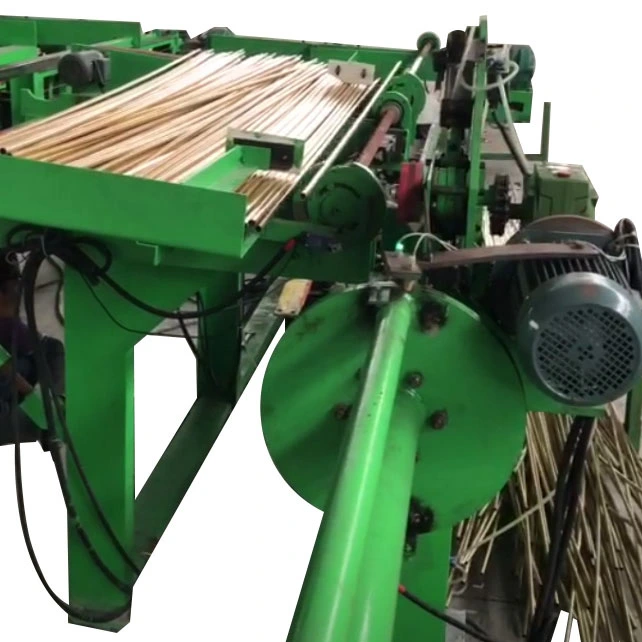
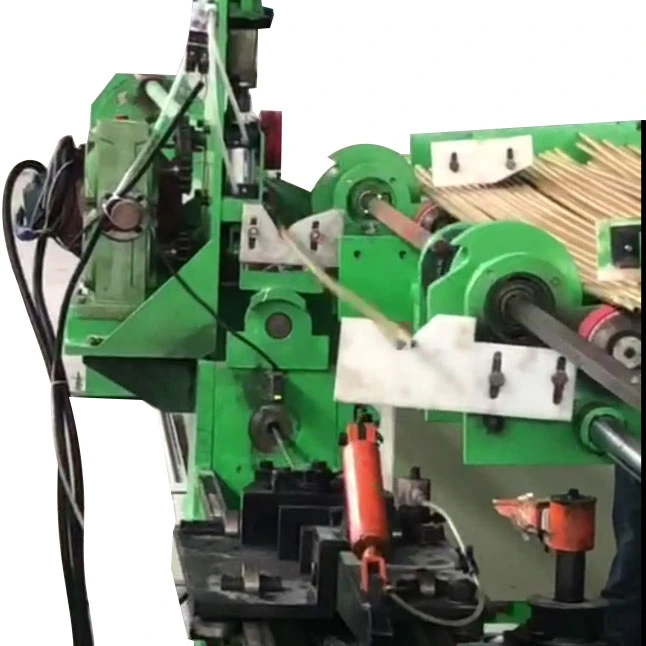
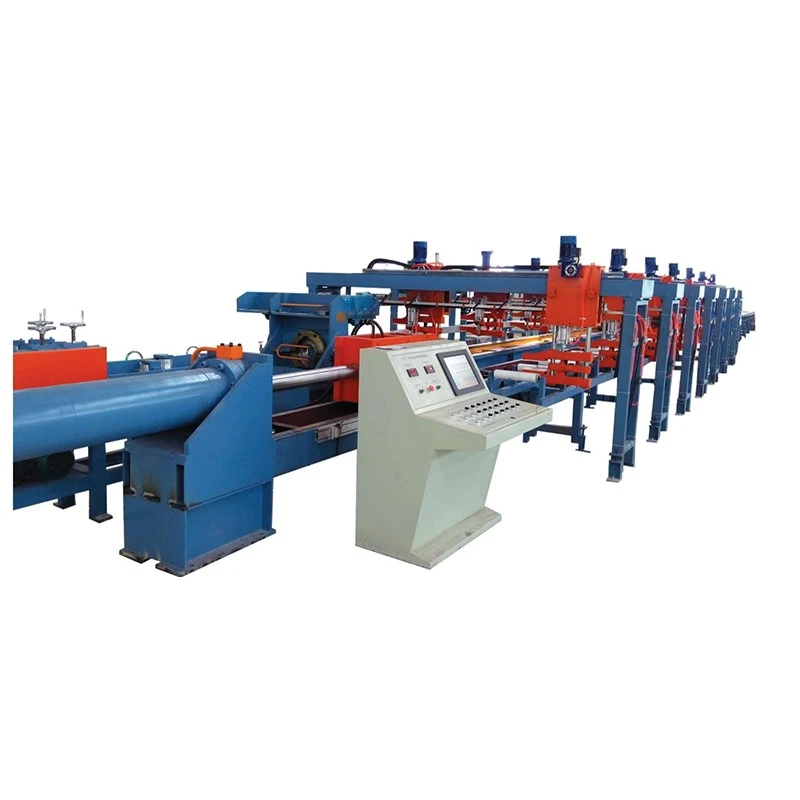
The Three Lines Automatic Rotary Cold Drawing Machine is built for manufacturers that need higher drawing output without adding three separate production lines. Its three-strand rotary indexing system positions and feeds three tubes or bars for successive drawing, while the double-chain drive keeps the pulling load balanced across all strands. Models from FR-50 to FR-120 provide 5–20 tons of drawing capacity, speeds up to 28 m/min, and strokes up to 9 m. Automatic feeding, clamping, drawing, and unloading reduce operator involvement and make the machine suitable for carbon steel, alloy steel, stainless steel, copper, and aluminum tubes and bars.
The Three Lines Automatic Rotary Cold Drawing Machine is designed for manufacturers that need higher output from small- and medium-diameter tubes or bars without installing three separate drawbenches. It draws three workpieces simultaneously through three parallel dies, while the motorized rotary back bench prepares and indexes the next workpieces for the following cycle.
The main production problem is not simply drawing force. In high-volume tube production, loading, positioning and carriage return can consume a significant part of the cycle. This machine addresses that bottleneck by combining three-strand drawing, rotary indexing, automatic clamping, drawing and carriage return in one production system. The result is higher output per machine and less manual handling.
FangRong FR-series machines are available from 5 to 20 tons drawing force, with drawing speeds of 25-28 m/min and drawing strokes of 7-9 m. Tube-drawing configurations can be equipped with an internal mandrel to control internal diameter and wall thickness.
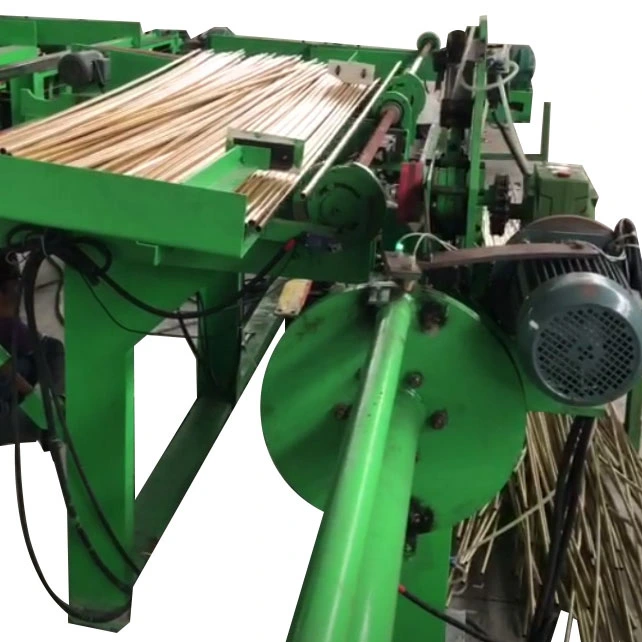
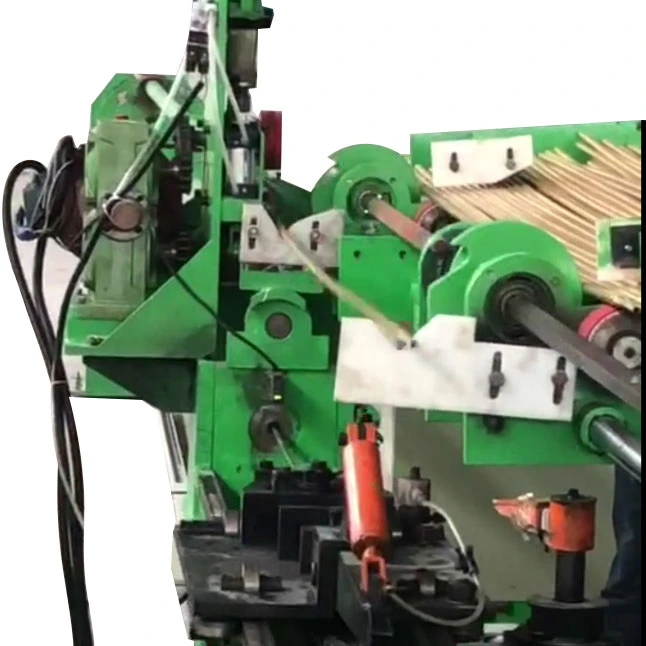
A conventional single-line drawbench processes one workpiece per drawing stroke. When production demand increases, the usual options are to add more machines, increase shifts or accept longer lead times. Adding machines increases floor space, operators, auxiliary equipment and maintenance points.
The three-line configuration instead combines three drawing positions in one machine. The rotary back bench is particularly useful where the same tube or bar specification is produced repeatedly. Workpieces can be positioned before the drawing cycle is completed, reducing the amount of time spent waiting for manual loading and alignment.
For example, a copper tube producer using an FR-76 configuration for air-conditioning tubing can run three tubes in each drawing stroke instead of processing them sequentially. In this application, the rotary indexing function is more important than simply increasing drawing speed because production volume is strongly affected by loading and positioning time.
1. Rotary loading
Tubes or bars are placed on the rotary back bench. The motorized indexing mechanism positions the next workpieces accurately with the three drawing lines.
2. Feeding and pointing
The workpieces are fed toward the dies and clamped. Pointing may be performed before drawing to reduce the tube or bar end sufficiently for reliable die entry. An integrated pointing unit can be specified where the production process requires it.
3. Three-strand drawing
The drawing carriage pulls three workpieces through their respective dies at the same time. A double-chain drive distributes the pulling load across the carriage and reduces the risk of uneven loading between the three drawing positions.
4. Product discharge
After the drawing stroke is completed, the finished workpieces are discharged and the carriage returns to its starting position.
5. Rotary indexing and repeat
The back bench indexes the next prepared workpieces into position and the next drawing cycle begins.
The PLC and HMI control feeding, clamping, drawing, indexing and carriage return. Single-, double- and three-strand operation can be configured according to production requirements.
Three-strand drawing is valuable when the same product is manufactured in large quantities. If production consists mainly of small batches with frequent size changes, the productivity advantage is smaller because setup and tooling changes become a larger part of total production time.
Rotary indexing is most useful when loading time is a recurring bottleneck. A rotary bench allows the next workpieces to be positioned more efficiently, which is particularly useful for long-stroke production where manual preparation between cycles would otherwise reduce machine utilization. For low-volume production, this feature may have less impact on overall cost.
Double-chain transmission becomes more important as drawing force increases. Balanced pulling helps keep the carriage and die positions aligned. This matters when three strands must maintain similar dimensional results; it is less critical for very light-duty applications where drawing force is low.
Internal mandrel drawing is important when both outside diameter and inside diameter or wall thickness must be controlled. For applications where only the outside diameter is critical, mandrel equipment may not be necessary.
1. Three Tubes or Bars Drawn in One Stroke
Three identical workpieces are processed simultaneously, increasing output per drawing cycle without adding three independent machines. An automotive component supplier, for example, can use the configuration for repeated production of small-diameter tube components where cycle volume is more important than frequent product changes.
2. Motorized Rotary Indexing Back Bench
The rotary bench reduces manual repositioning between drawing cycles and keeps the next workpieces ready for alignment. This is particularly useful for HVAC and refrigeration tube production, where long production runs make every reduction in non-drawing time significant.
3. Double-Chain Drive
Two chains transfer the drawing load to the carriage, helping distribute force more evenly across the three drawing positions. In steel tube production, this becomes important when higher drawing forces could otherwise increase alignment errors, uneven die loading or variation between strands.
4. Drawing Speed up to 28 m/min
FR-50 and FR-76 are rated at up to 28 m/min, while FR-100 and FR-120 are rated at 25 m/min. High speed is useful when the upstream process can continuously supply material and downstream handling can keep pace. It is not automatically better for every product because lubrication, material grade, reduction per pass and surface requirements can limit the practical drawing speed.
5. Mandrel Drawing for Tube Dimensions
The mandrel supports control of the tube inside diameter and wall thickness during drawing. This is relevant for hydraulic tubes, precision stainless steel tubing and other products where dimensional consistency inside the tube is as important as the outside diameter.
6. Quick Carriage Return
A separate return motor brings the carriage back after the drawing stroke. This reduces the non-productive portion of the cycle, which becomes increasingly important when the machine is running long production shifts.
7. Flexible Strand Operation
The Three Lines Automatic Rotary Cold Drawing Machine can be configured for single-, double- or three-strand production. Three-strand operation is preferred for high-volume orders, while single-strand operation can be useful during trials, smaller orders or process verification.
8. PLC and HMI Control
The control system coordinates feeding, clamping, drawing, rotary indexing, discharge and carriage return. This reduces dependence on manual sequencing and makes the operating cycle easier to monitor and repeat.
Do not select a drawbench only by the nominal tonnage. The required drawing force depends on the material grade, starting dimensions, finished dimensions, area reduction, friction, lubrication and number of strands running simultaneously.
For a three-strand machine, the available drawing force must cover the combined requirement of all three workpieces. A 5-ton model may be sufficient for three small tubes with moderate reduction, while higher-tonnage models are more appropriate for larger sections, higher-strength steels or demanding reductions.
Stroke is important when producing long drawn products. A longer stroke can reduce the number of drawing cycles required for a given finished length, but it also increases machine footprint. Drawing speed should therefore be evaluated together with material handling, lubrication and downstream cutting capacity rather than considered as an isolated number.
| Technology Parameter | FR-50 | FR-76 | FR-100 | FR-120 |
| Max. drawing force (tons) | 5 | 10 | 15 | 20 |
| Max. drawing stroke (m) | 7 | 8 | 8 | 9 |
| Drawing speed (m/min) | 28 | 28 | 25 | 25 |
| Carriage return motor (kW) | 0.75 | 0.75 | 1.1 | 2.2 |
| Reducer model | ZQ550 | ZQ650 | ZQ850 | ZQ1000 |
| Chain pitch | 2.5" | 3" | 4" | 3" double-row |
| Main motor power (kW) | 22 | 30 | 45 | 55 |
| Overall dimensions L × W × H (mm) | 17000 × 1300 × 1600 | 17500 × 1350 × 1600 | 18000 × 1400 × 1600 | 23000 × 2200 × 1800 |
Standard configuration: drawing machine, main drive motor, reducer, double-chain transmission, drawing carriage, rotary indexing back bench, triple die holder, PLC control system and HMI. Mandrel equipment is supplied for tube-drawing configurations.
Optional equipment: pointing unit, customized stroke, additional feeding and discharge automation, tooling and application-specific mandrel systems.
Used for shock absorber tubes, steering column tubes, drive-shaft components and other repeat-production tubular parts. A tier-1 automotive supplier using an FR-100 three-line rotary drawbench can process three tubes per stroke, reducing the need to operate several single-line machines in parallel. The rotary loading system is particularly useful when the same tube specification is produced continuously.
Copper and aluminium tubes for heat exchangers and air-conditioning systems benefit from high throughput and repeatable dimensional control. In a copper tube production scenario, an FR-76 can process three tubes simultaneously while the rotary bench prepares the next set, reducing loading-related downtime.
Small-diameter cylinder tubes require controlled outside dimensions and, in many applications, consistent wall thickness. An FR-120 can be selected when the combined drawing force of three steel tubes requires a higher-capacity machine. The double-chain arrangement helps maintain balanced loading between the three strands.
Copper and aluminium tubular components, cooling tubes and other conductive sections can be processed where repeatability and production volume justify multi-strand drawing. For small hollow sections, three-strand operation can increase output without requiring three complete drawbench installations.
Stainless steel precision tubes and hypotubes require tighter process control than general structural tubing. A medical tubing production scenario may use an FR-50 for three-strand drawing of small stainless steel tubes, with alignment and mandrel control becoming more important than maximum drawing force.
The Three Lines Automatic Rotary Cold Drawing Machine can also be applied to precision bearing tubes, instrumentation tubes, small structural hollow sections and other repeat-production tube or bar applications where three identical workpieces can be drawn in parallel.
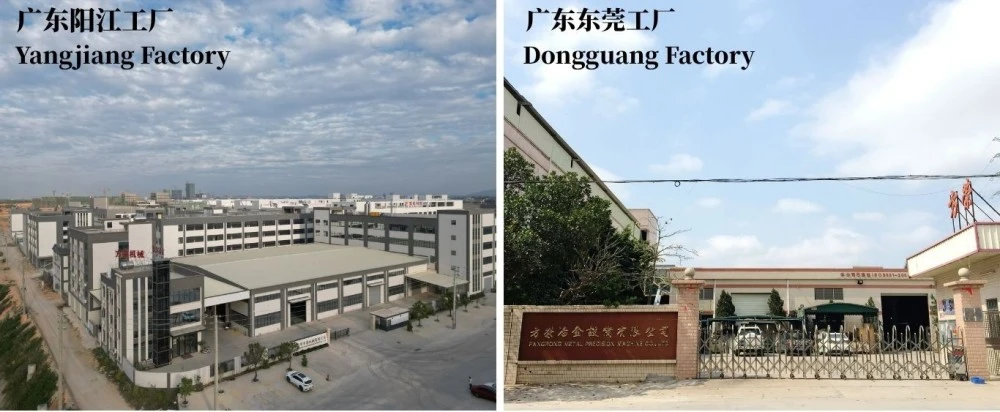
Dongguan Fangrong Metallurgical Equipment Co., Ltd. and Yangjiang Fangrong Machinery Co., Ltd. support machine manufacturing, assembly, testing and delivery. The production process focuses on the parts that directly affect three-line drawing accuracy: guide rails, die-holder alignment, carriage structure, chain transmission and rotary indexing.
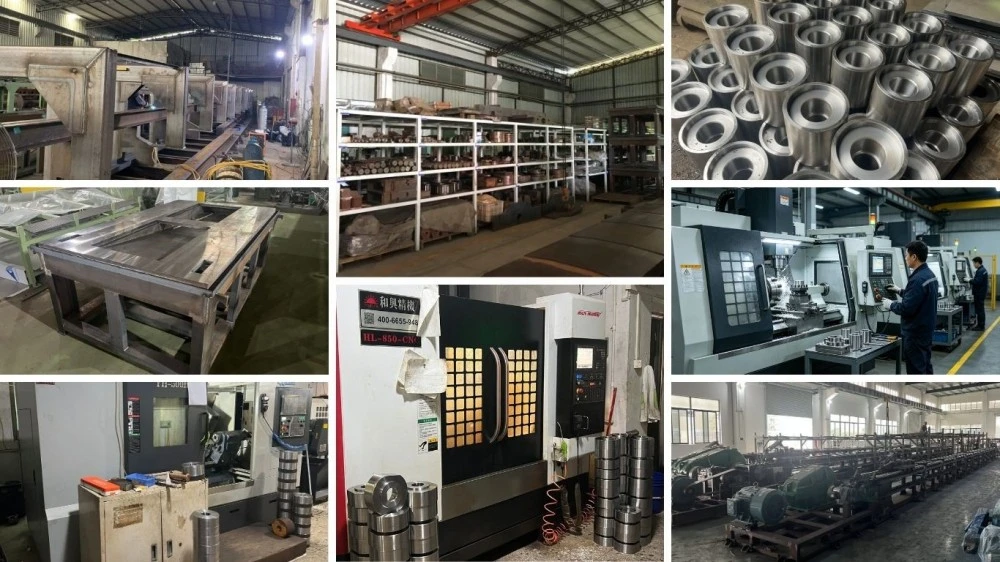
1. Application engineering — Drawing force, pass schedule, die arrangement, mandrel requirements and rotary indexing sequence are determined from the customer's material and finished dimensions.
2. Material inspection — Main structural and transmission components are checked before machining and assembly.
3. Precision machining — Guide rails, die holders and other alignment-critical components are machined to the required dimensional tolerances.
4. Drive and carriage assembly — Gearbox, chains, sprockets, carriage and tensioning components are assembled and checked before final integration.
5. Three-line alignment — The three drawing positions are aligned to reduce variation caused by inconsistent die positioning.
6. PLC and HMI commissioning — Drawing, clamping, indexing, discharge and return sequences are tested.
7. Drawing test — Where customer samples are available, all three lines can be tested simultaneously to evaluate drawing force, speed consistency and dimensional results.
8. Final inspection — Mechanical operation, electrical safety, chain tension, lubrication, oil leakage and finished product dimensions are checked before shipment.
For a three-line drawbench, checking whether the machine simply runs is not enough. The important factory acceptance points are whether the three drawing positions operate consistently, whether the carriage remains properly aligned under load, whether the rotary bench indexes accurately and whether the finished products from the three strands meet the required dimensions.
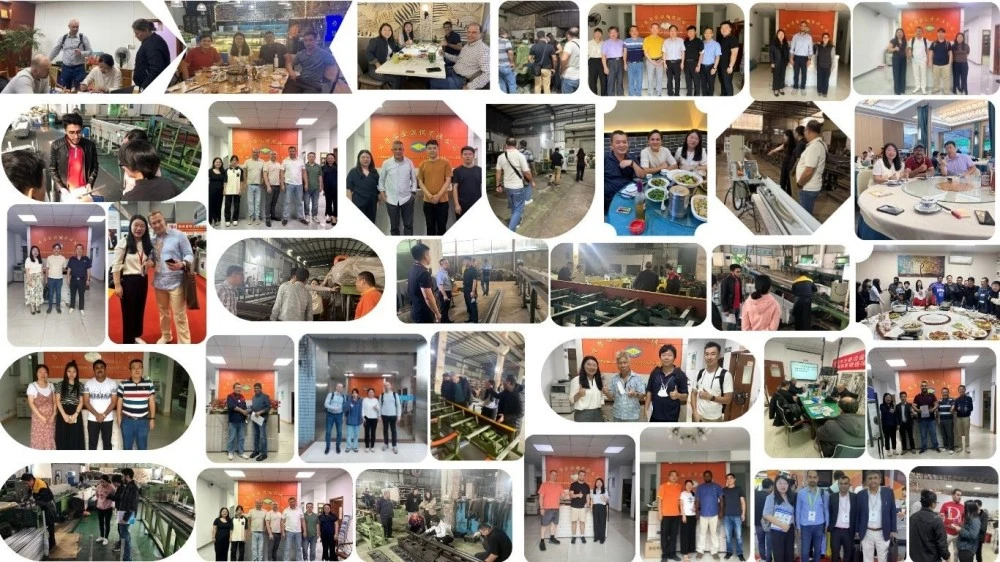
Drawbench engineering since 1998
FangRong has developed cold drawing equipment since 1998, with experience in mechanical transmission, multi-strand drawing, die alignment and automated handling.
Multi-line production experience
The three-line design requires more than simply adding two additional dies. Force distribution, carriage rigidity, die alignment and synchronization all affect whether the three strands produce comparable results. These factors are considered during machine configuration.
Application-based engineering
Model selection is based on material, starting dimensions, finished dimensions, reduction and required output. Customers can provide tube or bar specifications for drawing-force calculation and machine selection before ordering.
Factory acceptance testing
Machines are inspected before shipment, with attention to three-line synchronization, mechanical operation, electrical controls and drawing performance. Customer material can be used for testing when samples are provided in advance.
Installation and commissioning
Support covers foundation drawings, installation supervision, commissioning, operator training, spare parts and remote troubleshooting.

ISO 9001:2015 — Quality management system covering relevant design, manufacturing and service processes. Certificate No. UQ231211R1.
CE Marking — Standard FR models are supplied for conformity with applicable European machinery safety requirements. The supplied machine documentation identifies the applicable directives, standards and conformity assessment basis for the ordered configuration.
SGS Inspection — Third-party inspection can be arranged according to project requirements and agreed inspection scope.
Patent-backed machine design — FangRong has developed patented technologies covering areas such as chain tensioning, multi-strand die holding and quick-change mandrel systems.
Important for EU buyers: CE compliance should be evaluated against the complete machine configuration and the regulations applicable at the time of placing the machine on the EU market. The exact Declaration of Conformity and applicable EN standards should be confirmed with the quotation and technical documentation.
MOQ: 1 set. For repeat purchases or multiple-machine projects, tiered pricing can be quoted according to quantity and configuration.
| Order Quantity | Pricing | Notes |
| 1 set | Standard unit price — quoted | Suitable for one-machine projects |
| 2-4 sets | Volume price — quoted | Price depends on identical or customized configurations |
| 5+ sets | Project price — quoted | Special pricing available for batch orders |
Delivery for standard orders: approximately 30-60 days for standard FR-50 and FR-76 configurations, subject to final specifications, production schedule and payment terms.
Delivery for higher-capacity standard orders: approximately 90-120 days for FR-100 and FR-120, depending on configuration and production schedule.
Expedited orders: an accelerated production schedule can be evaluated before order confirmation. The actual expedited lead time depends on machine model, customization, component availability and factory capacity and should be confirmed in the purchase contract rather than advertised as a fixed number.
For an accurate quotation, provide the material grade, starting OD and wall thickness, finished OD and wall thickness, tube or bar length, required output, number of drawing passes and destination port. These parameters determine machine tonnage, tooling and production configuration.
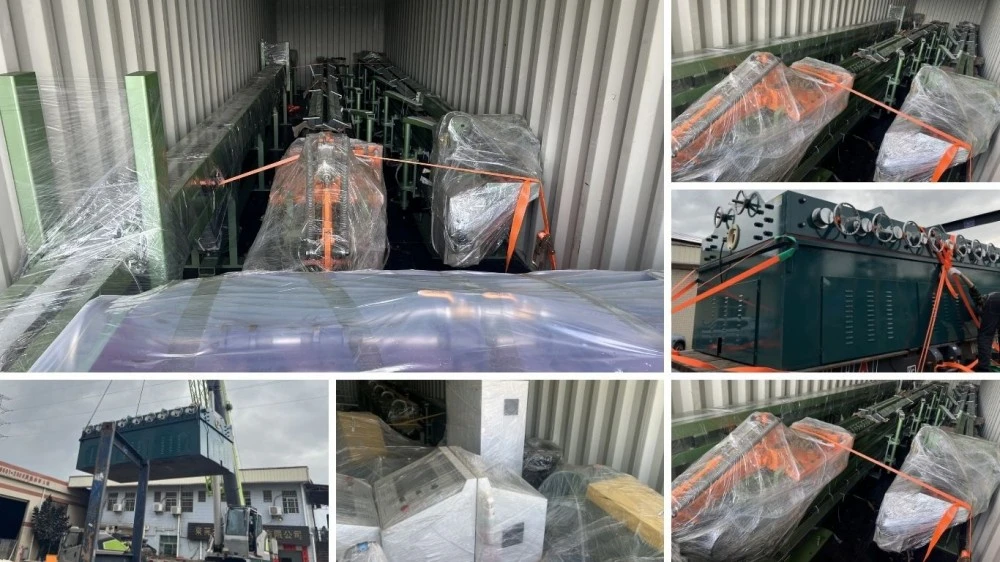
The Three Lines Automatic Rotary Cold Drawing Machine is prepared for international transport with export packaging, moisture protection and corrosion protection for exposed machined and mechanical components. Large assemblies may be separated where required by container dimensions and transport arrangements.
Before shipment, the packing list, machine dimensions, gross weight and loading arrangement should be confirmed because the FR-series machines are long equipment with overall lengths of approximately 17-23 meters. Container selection and factory loading therefore need to be planned before shipment rather than after the machine is completed.
Model selection mainly depends on the workpiece diameter, material, required reduction per pass, drawing force and production volume. FR-50 and FR-76 are suitable for smaller tube and bar sizes, while FR-100 and FR-120 are intended for larger diameters and higher drawing loads. For an accurate recommendation, provide the material grade, starting diameter, finished diameter, wall thickness and required output.
The machine can process three workpieces during the same drawing cycle, making it useful when production volume is high but the factory does not want to install three separate drawbenches. The rotary indexing system transfers the next workpiece into the drawing position, reducing repeated loading and unloading between cycles. The actual productivity advantage depends on material, drawing length, reduction and loading time.
The machine can be configured for carbon steel, stainless steel, copper, aluminium and selected alloy materials. Material strength and ductility determine the required drawing force, die design and allowable reduction. For example, stainless steel normally requires more controlled reduction and lubrication than softer copper or aluminium alloys.
Typical reductions are around 25–35% for carbon steel and 15–25% for stainless steel and other higher-strength alloys, depending on the starting condition, tube geometry, tooling and lubrication. The maximum practical reduction should be calculated from the actual material and dimensional requirements rather than selected only from the machine's nominal drawing force.
Yes, when the correct die, mandrel, material preparation and lubrication conditions are used. The three-line configuration is designed for repeatable tube and bar drawing, while final dimensional accuracy also depends on incoming material tolerances and tooling condition. For applications requiring tight ID, OD or wall-thickness control, the required tolerance should be specified before quotation.
The standard configuration can include the main drive system, gearbox, double-chain drawing mechanism, drawing carriage, three-line die holder, mandrel system, rotary bench, PLC and HMI control system. Tooling configuration should be confirmed according to the customer's tube or bar dimensions and material. Special mandrels, dies or automatic handling equipment can be specified when required.
Typical production time is about 30–60 days for FR-50 and FR-76 models and about 90–120 days for larger FR-100 and FR-120 machines. These periods can change according to machine configuration, tooling, automation and factory production load. If an expedited order is required, the available production slot should be confirmed before the purchase order is issued.
Provide the material grade, tube or bar type, starting and finished dimensions, drawing length, required reduction, target production capacity, tooling requirements and power supply. For commercial quotation, the supplier should also confirm the MOQ, quantity-based unit price, FOB price and named departure port, standard or expedited delivery time, warranty terms and included spare parts. This prevents the quoted machine configuration from being different from the production requirement.
Address
NO.163,Shatong Road,Shabu 2nd Industrial Zone, Dalang Town, Dongguan City, Guangdong, China