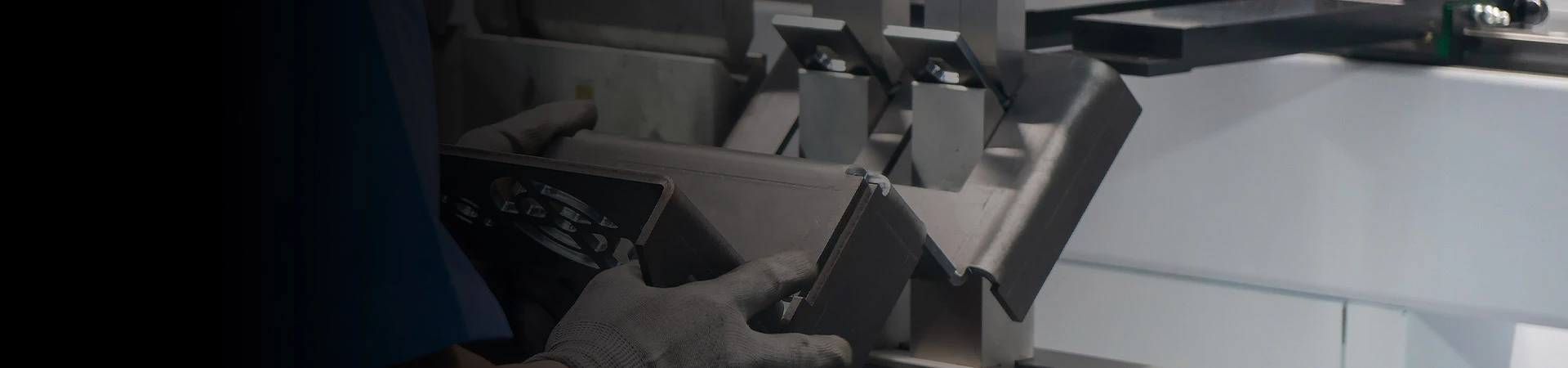
We offer a comprehensive range of precision metal processing equipment, including straightening, cold drawing, pointing, chamfering, cutting, thread rolling machines, and drawing dies, tailored for tube, bar, and wire materials across diverse industries.
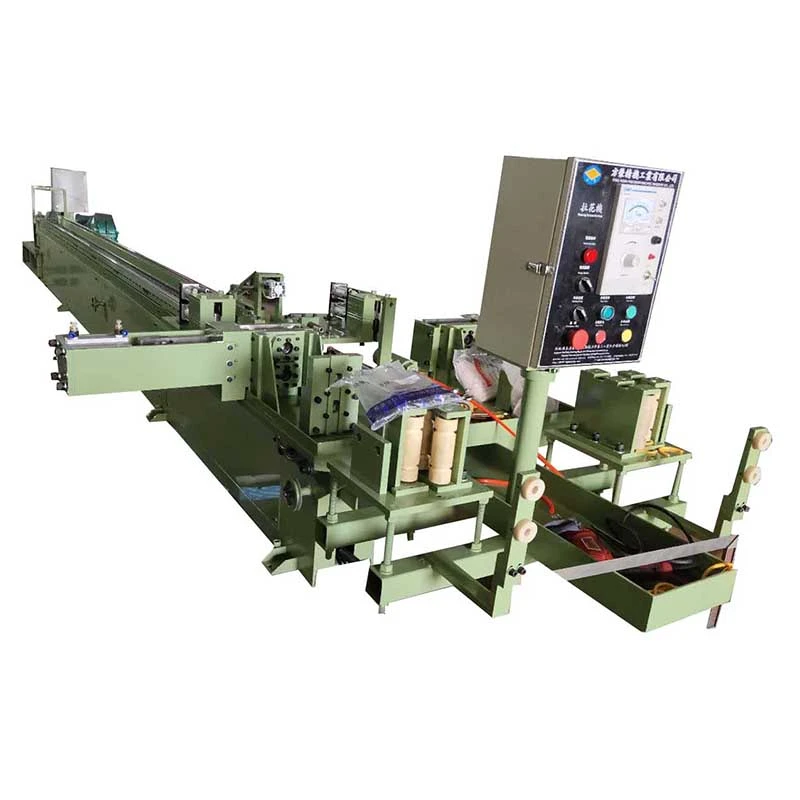
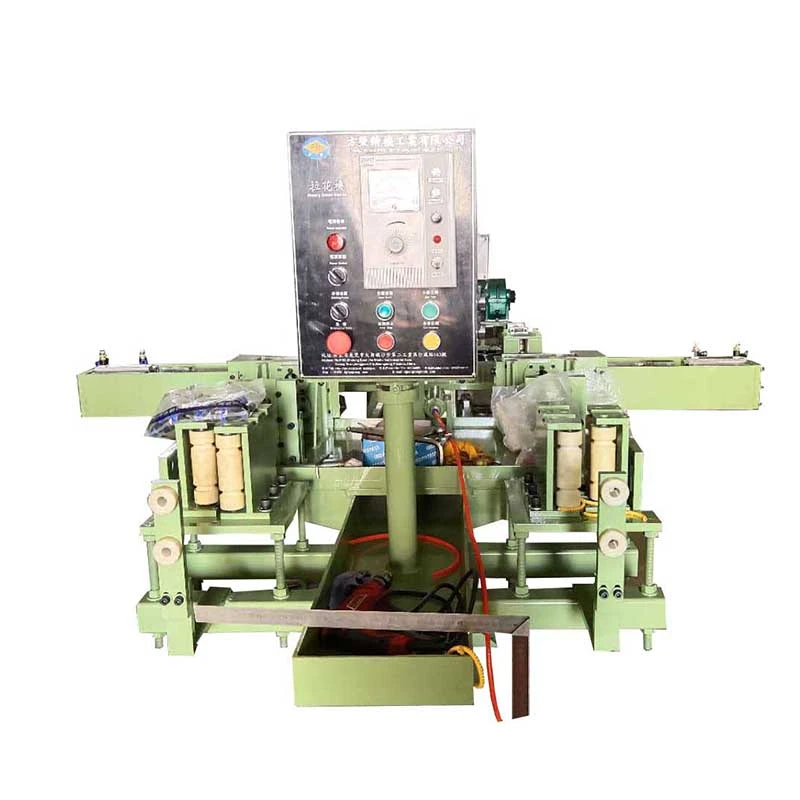
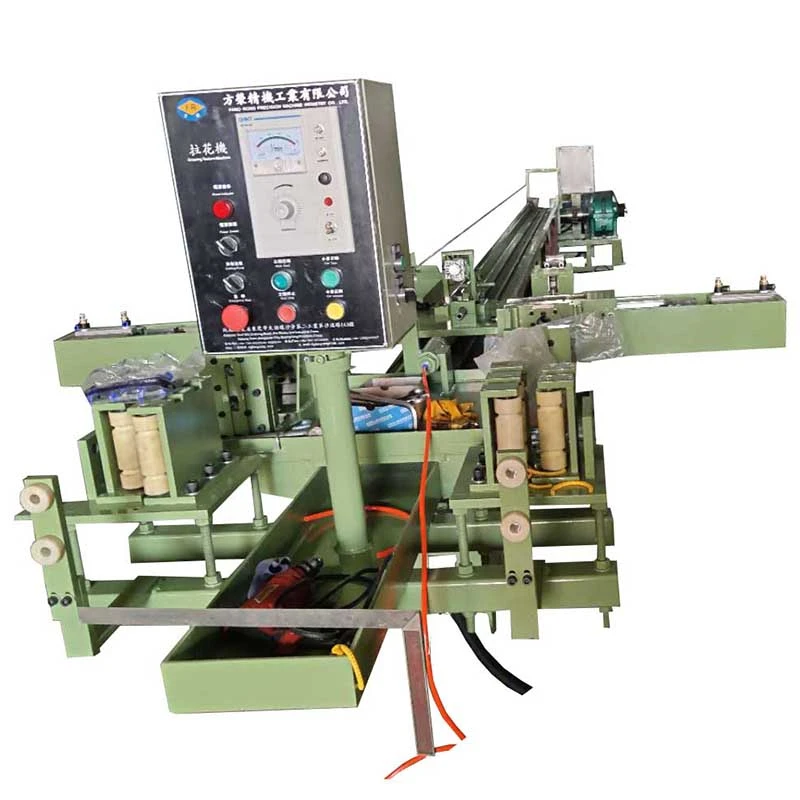
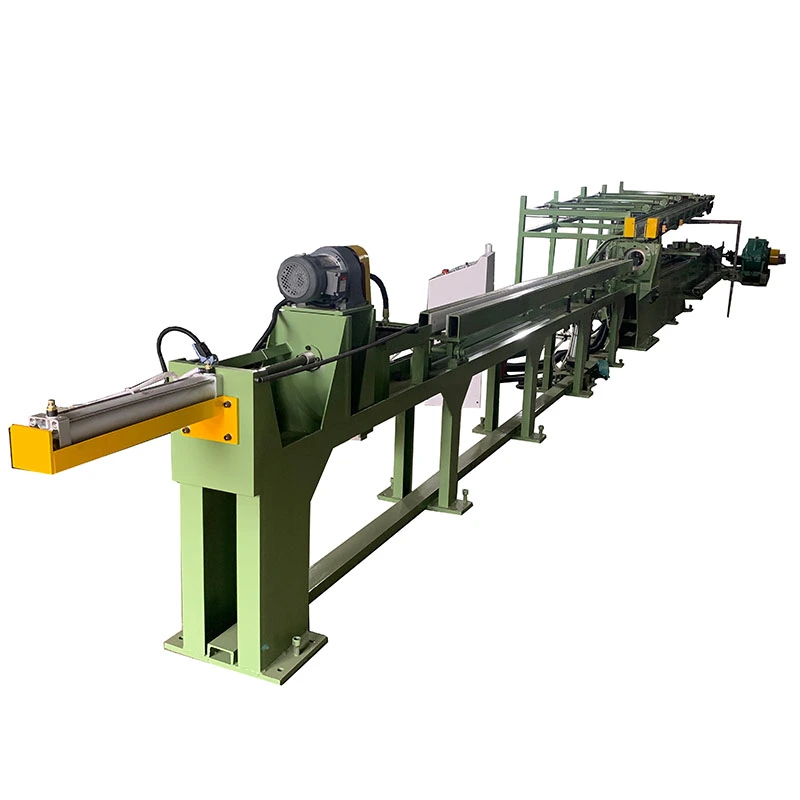
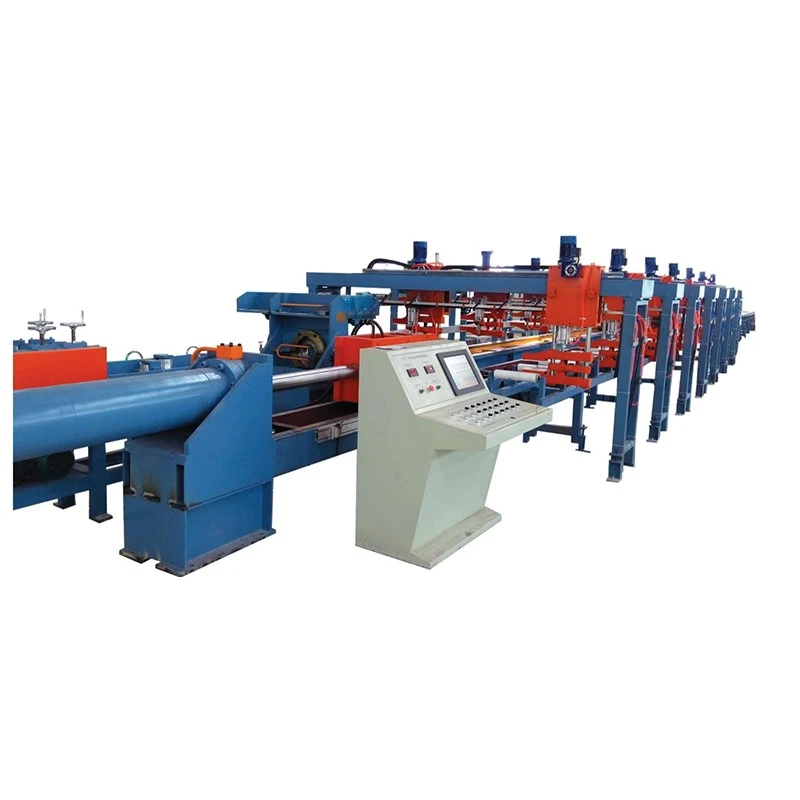
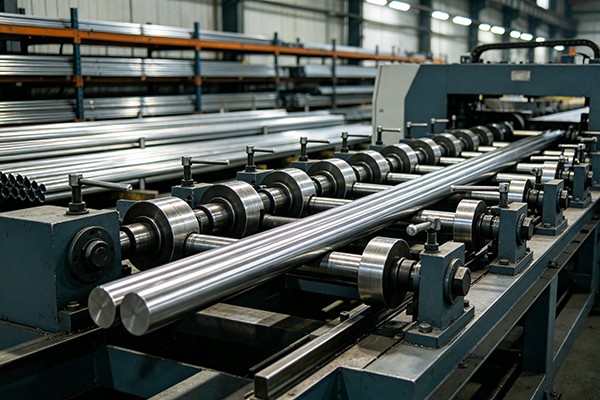
The Four Lines Cold Drawing and Cutting Machine combines cold drawing with automatic fixed-length cutting in one continuous process. It can process 2 or 4 tubes or bars simultaneously, with drawing forces of 10–50 kN and effective strokes up to 7 m. Available in hydraulic, pneumatic, and saw-cutting configurations, it handles carbon steel, stainless steel, copper, aluminum, and alloy tubes or bars up to Ø25 mm. In-line cutting reduces handling and labor while maintaining consistent finished lengths.
The Four Lines Cold Drawing and Cutting Machine combines cold drawing with automatic fixed-length cutting, so tubes or bars can be drawn to the required size and cut into finished lengths without transferring the material to a separate cutting machine. It is intended for production lines where the same tube or bar size is produced repeatedly and cutting accuracy, handling time, and output are more important than flexibility for many different product sizes.
The main production problem it addresses is the extra operation after conventional cold drawing. A standard drawbench produces long drawn tubes or bars that must be measured, transferred, and cut separately. This adds handling, floor space, labour, and opportunities for length variation or surface damage. By placing the cutting unit directly after the drawing section, the FR series completes both operations in one production flow.
FangRong offers three standard configurations. The correct model depends mainly on tube diameter, material strength, required number of strands, and cutting method rather than simply choosing the machine with the highest drawing force.
FR-16 Hydraulic uses 10 kN drawing force and hydraulic cutting for two tubes up to Ø15 mm. It is suitable when stable cutting force is more important than maximum strand count.
FR-16 Pneumatic is available for two tubes up to Ø15 mm or four tubes up to Ø12 mm, with 10/20 kN drawing force and pneumatic cutting. The four-line configuration is useful for high-volume small-diameter copper, aluminium, and other relatively easy-to-cut products.
FR-25 Saw Cutting provides 50 kN drawing force and processes two tubes up to Ø25 mm. The saw is the more appropriate choice when diameter, wall thickness, or material hardness makes pneumatic or hydraulic shearing unsuitable.
For example, a copper tube producer making repeated air-conditioning tube lengths can use the FR-16 Pneumatic in four-line mode to draw and cut four small tubes during the same production cycle. In this application, the value of four-line operation is not simply a higher machine specification; it is the reduction in handling and the ability to produce multiple finished lengths per carriage cycle.
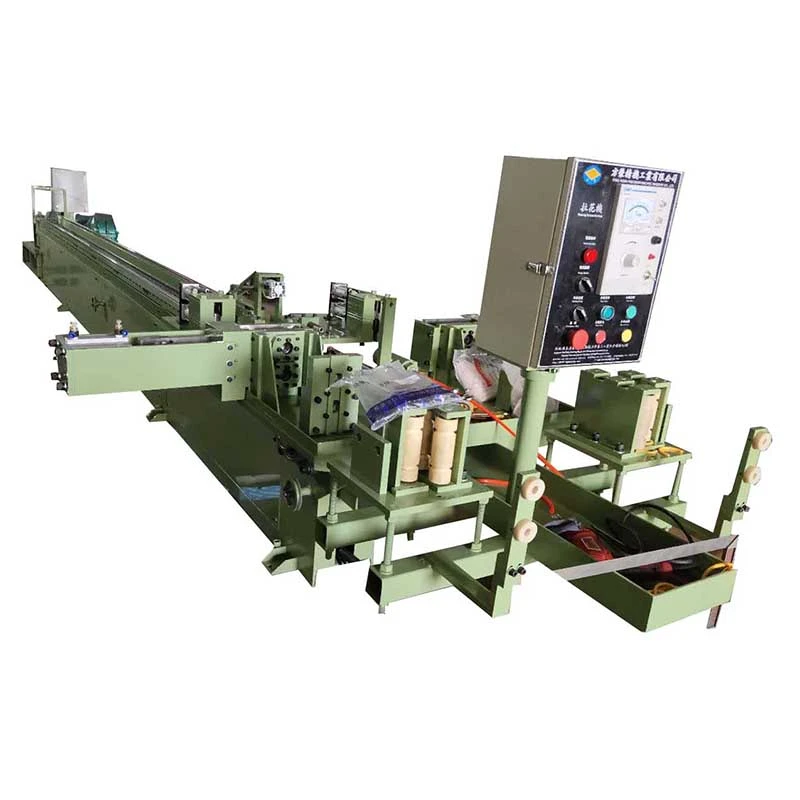
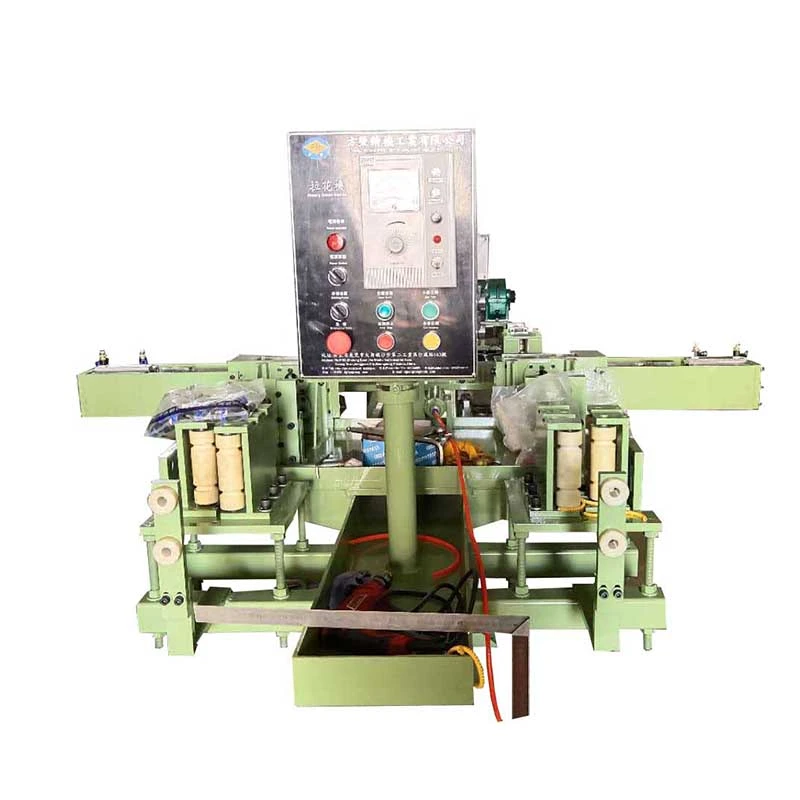
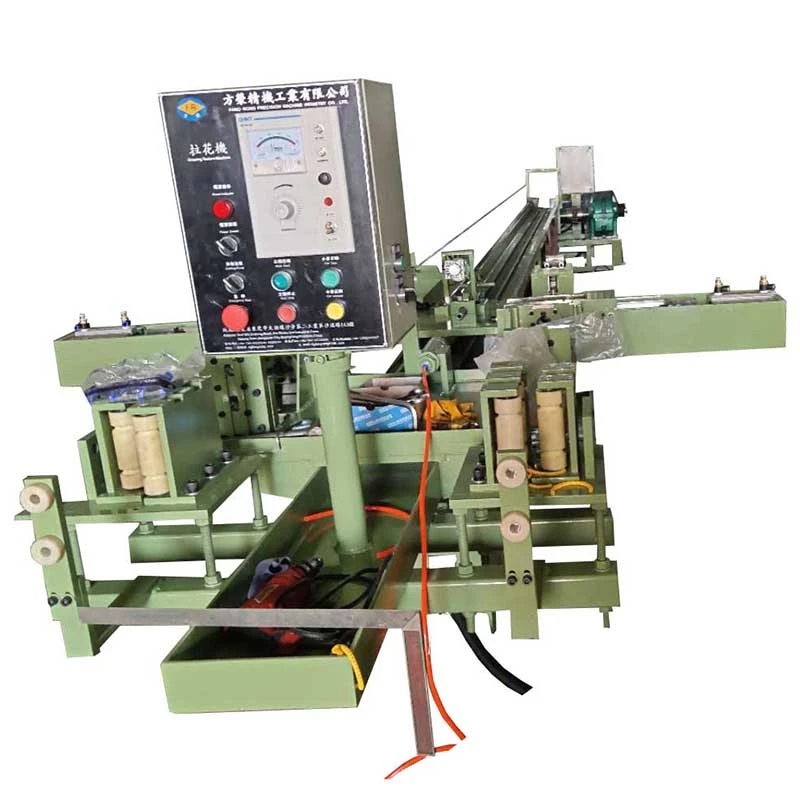
The production sequence is designed around one question: how can the drawn product reach the required finished length without being moved to another machine?
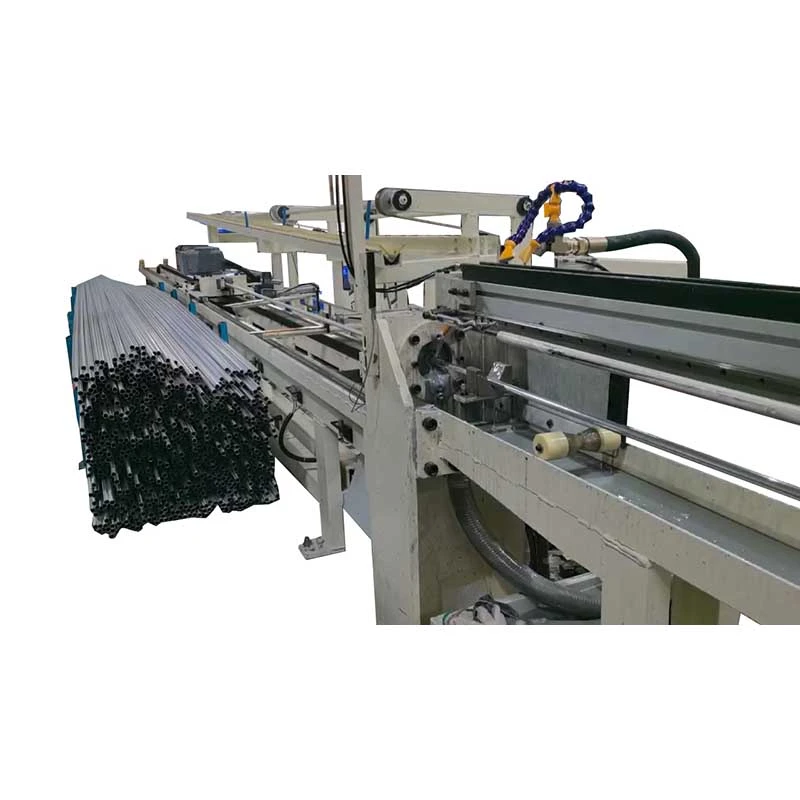
1. Loading: Tubes or bars are placed on the feed rack. In multi-strand production, two or four workpieces are aligned with their respective dies.
2. Pointing: The leading end is reduced so it can pass through the drawing die and be gripped by the drawing carriage. Pointing can be performed by a separate machine or by an integrated pointing arrangement where specified.
3. Cold drawing: The carriage pulls the pointed workpieces through the dies. The chain drive, reduction gearbox, and main motor provide the required pulling force. Correct die alignment is particularly important here because poor alignment can increase die wear and affect tube straightness and dimensional consistency.
4. Length measurement and cutting: The drawn material is measured and the PLC triggers the hydraulic, pneumatic, or saw cutting unit when the preset length is reached.
5. Discharge: Finished pieces are transferred to the receiving rack for inspection, bundling, or the next operation.
For a production line making 2 m or 3 m HVAC tubes, automatic length measurement is more useful than simply increasing drawing speed. If the finished tubes feed directly into bending, flaring, or assembly, repeated length variation can create downstream adjustment or rejection. The integrated cutting system therefore targets a production-control problem as much as a labour-saving problem.
Long drawn products require secondary cutting.
A conventional drawbench may leave the operator with long finished tubes that still need to be measured and cut. The FR series performs cutting immediately after drawing, removing one transfer between machines.
Repeated products need repeatable lengths.
When the same length is produced hundreds or thousands of times, manual measurement becomes a significant source of variation. PLC-controlled length setting reduces dependence on operator judgement. The actual achievable tolerance should be confirmed against the material, diameter, cutting method, feed condition, and required finished tolerance before ordering.
Small-diameter products limit single-strand productivity.
For Four Lines Cold Drawing and Cutting Machine that can be drawn with relatively low force, increasing the number of strands can produce a greater output improvement than installing a much larger drawbench. This is why the FR-16 Pneumatic is offered in four-line operation for tubes up to Ø12 mm.
Extra handling can damage finished surfaces.
Moving long drawn tubes from a drawbench to a separate cutting machine creates additional contact points and handling. An integrated discharge and cutting arrangement reduces these transfers, which is useful for surface-sensitive stainless steel, copper, and aluminium products.
Choose FR-16 Hydraulic when you need two-line production up to Ø15 mm and prefer hydraulic cutting for controlled cutting force. For stainless steel or other materials where cutting resistance is a concern, confirm the required cutting force from the actual tube wall thickness and material grade rather than selecting by outside diameter alone.
Choose FR-16 Pneumatic when output per machine hour is a priority for small-diameter products. The four-line version is particularly relevant to copper and aluminium tube production, where the drawing force per strand remains within the machine capacity and the smaller tube diameter permits multiple strands.
Choose FR-25 Saw Cutting when the product reaches Ø25 mm or when the material and wall thickness make sawing more suitable than shearing. A steel tube producer, for example, may accept the slower cutting action of a saw because clean separation of a harder material is more important than achieving the shortest cutting cycle.
Automatic fixed-length cutting
The cutting unit is installed directly after the drawing section. This is most useful for repetitive production lengths because the operator does not need to measure and transfer every drawn tube before cutting. Hydraulic, pneumatic, and saw cutting are available according to the model.
2-line or 4-line drawing
Multiple tubes are processed in parallel. Four-line production can increase output without increasing the machine footprint in proportion to output. It is most effective when the product diameter and drawing force allow all strands to run within the Four Lines Cold Drawing and Cutting Machine's rated capacity.
PLC and HMI control
The PLC manages the drawing cycle, length setting, cutting trigger, and discharge sequence. Operators can change production settings from the HMI instead of repeatedly adjusting mechanical measuring arrangements.
Chain-driven drawing carriage
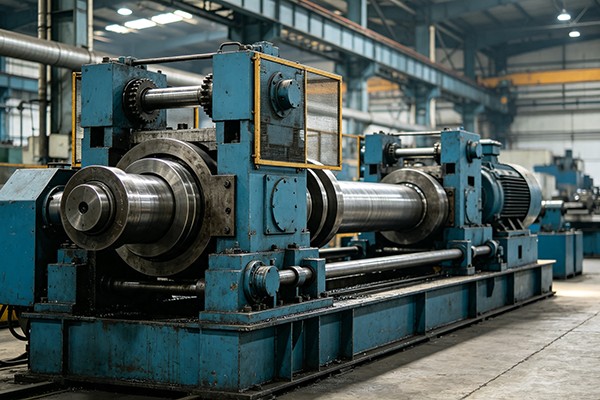
The drawing carriage uses a chain drive with a matched reduction gearbox. The FR-16 uses a ZQ400 gearbox and 2" chain, while the FR-25 uses a ZQ500 gearbox and 2.5" chain. These specifications matter when assessing pulling capacity and service requirements, but they should be evaluated together with material strength, reduction ratio, and die design.
7 m standard effective stroke
The standard effective drawing travel is 7 m. This is relevant when planning the available incoming tube length, finished length, die arrangement, and production cycle. A longer stroke should not be assumed to increase output automatically because loading, pointing, drawing reduction, and cutting time also affect cycle productivity.
Integrated material handling
The feed rack, drawing section, cutting unit, and receiving rack are arranged as one production flow. For applications such as HVAC tubes that move directly into bending or assembly, reducing intermediate handling can simplify the production layout.
| Technology parameter | FR-16 Hydraulic | FR-16 Pneumatic | FR-25 Saw Cutting |
| Max. drawing force | 10 kN | 10 / 20 kN | 50 kN |
| Number of tubes per drawing cycle | 2 | 2 / 4 | 2 |
| Max. drawing diameter | Ø15 mm | Ø15 mm / Ø12 mm | Ø25 mm |
| Effective drawing travel | 7 m | 7 m | 7 m |
| Reduction gearbox | ZQ400 | ZQ400 | ZQ500 |
| Chain size | 2" | 2" | 2.5" |
| Main motor | 7.5 kW | 7.5 kW | 22 kW |
| Cutting system | Hydraulic | Pneumatic | Saw |
| Dimension L×W×H | 10000 × 1800 × 1500 mm | 10000 × 1800 × 1500 mm | 12000 × 2900 × 1500 mm |
The figures above define the standard machine configurations. They should not be used alone to calculate production capacity. Actual output depends on material grade, incoming diameter and wall thickness, drawing reduction, number of passes, lubricant condition, finished length, pointing time, die design, and cutting cycle.
For a quotation, provide the material grade, outside diameter, wall thickness or solid-bar size, target finished size, drawing reduction, finished length, required strands, daily or monthly output, and available power supply. FangRong can then verify drawing force and recommend the appropriate cutting configuration.
Copper and aluminium tubes for air-conditioning and refrigeration systems are a natural application for multi-line drawing because many products use relatively small diameters and are produced in repeated lengths. The FR-16 Pneumatic four-line configuration can draw and cut four tubes in parallel when the tube size and reduction remain within the rated capacity.
Production scenario: A copper tube producer making repeated air-conditioner tube lengths can replace a separate cutting station with the integrated cutting unit. The main benefit is not simply machine automation; it is removing the measurement, transfer, and secondary cutting stages between drawing and the next operation.
Precision tubes for automotive components may require controlled outside diameter and repeatable cut lengths before bending, machining, or assembly. Stainless steel fuel lines, brake tubing, and other small-diameter products can benefit from automatic length control when the same part number is produced continuously.
For automotive production, the more important purchasing question is the required dimensional tolerance after drawing rather than the maximum drawing diameter listed in the catalogue. Die design, reduction per pass, incoming tube condition, and straightness requirements should therefore be confirmed during technical evaluation.
Small stainless steel tubes used for medical and instrumentation components require controlled dimensions and repeatable lengths. An FR-16 Hydraulic two-line machine can be considered when cutting force and controlled processing are more important than maximum strand count.
Production scenario: For hypotubes used in catheter assemblies, automatic fixed-length cutting removes manual trimming from the production route. The machine should be evaluated with the actual tube specification because thin-wall tubing can require different drawing and cutting conditions from conventional structural tubes.
Small copper products and conductive tubes can benefit from multi-strand drawing when the material is ductile and the required dimensions are within the FR-16 range. Pneumatic cutting is particularly relevant where a fast cutting cycle is preferred for soft non-ferrous materials.
The FR-25 Saw Cutting configuration is intended for applications requiring higher drawing force and larger diameters up to Ø25 mm. It is more suitable for harder steel or alloy products where saw cutting provides the required separation performance.
Production scenario: A steel tube producer making repeated blanks for subsequent machining can use the FR-25 to draw and saw-cut the tubes before the machining stage. In this case, the saw is selected because material hardness and section size can be more important than achieving the shortest cutting cycle.
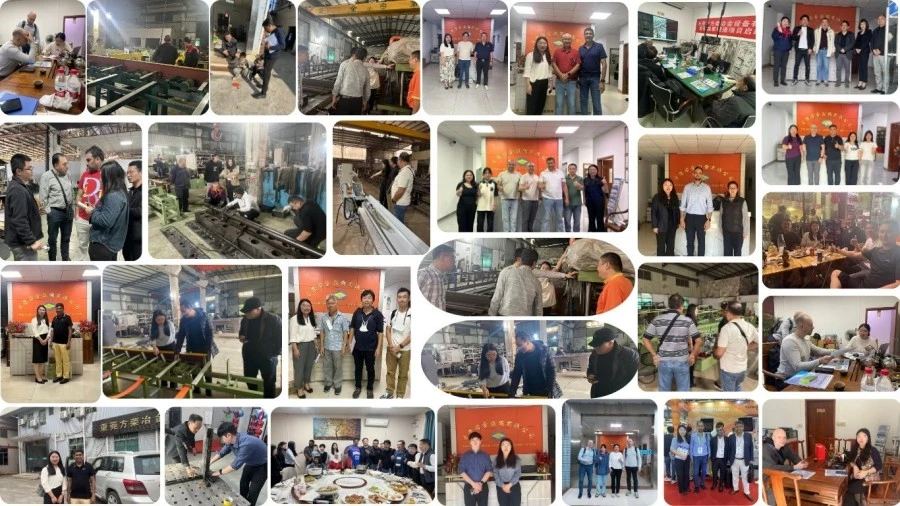
FangRong has been manufacturing drawbenches since 1998, with engineering work covering cold drawing, straightening, pointing, and related bar and tube finishing equipment. The company operates manufacturing facilities in Dongguan and Yangjiang and supplies equipment to overseas customers.
The important point for a drawbench buyer is not the number of machines produced but whether the manufacturer can verify the machine against the customer's actual tube or bar. For this reason, the production process includes mechanical assembly, electrical integration, PLC programming, and machine testing before shipment.
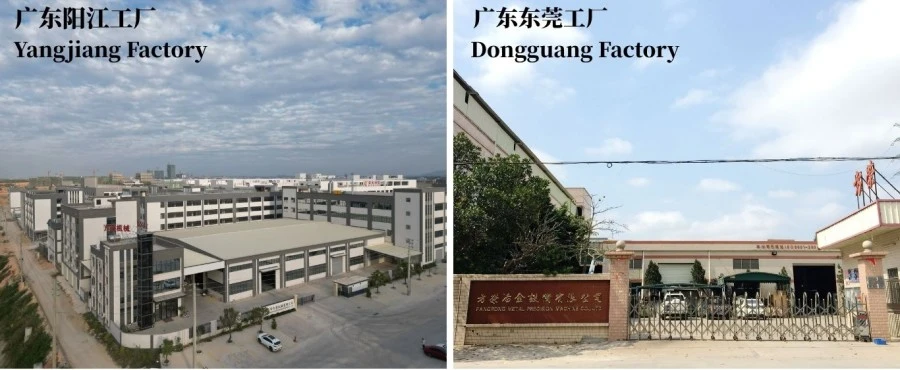
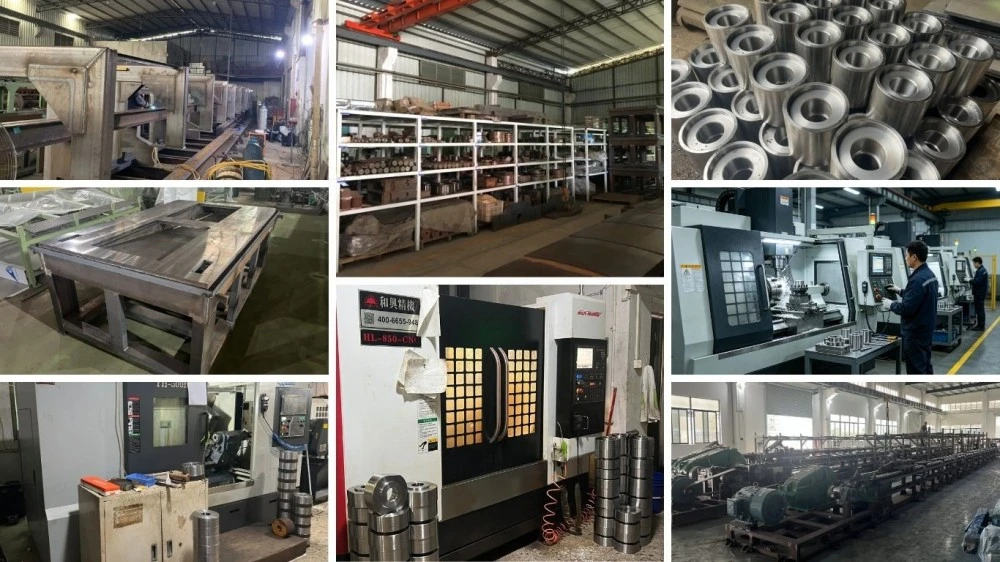
Order engineering: Die holders, cutting arrangements, strand layout, and automation are configured according to the product specification.
Component inspection: Main structural and transmission components are inspected before assembly.
Machining and alignment: Guide rails and die-holder components are machined to the specified dimensional and alignment requirements.
Mechanical assembly: Gearbox, chain, carriage, die holder, cutting system, and receiving system are assembled and checked before final integration.
Electrical and PLC integration: The control system is programmed for the required drawing, length measurement, cutting, and discharge sequence.
Factory acceptance testing: Machines are run before shipment. Where customer samples are provided, actual tubes or bars can be used to verify drawing operation, cutting sequence, and finished dimensions.
This testing is particularly useful for first-time buyers because the machine can be evaluated against the actual material and product specification before installation at the customer's plant.
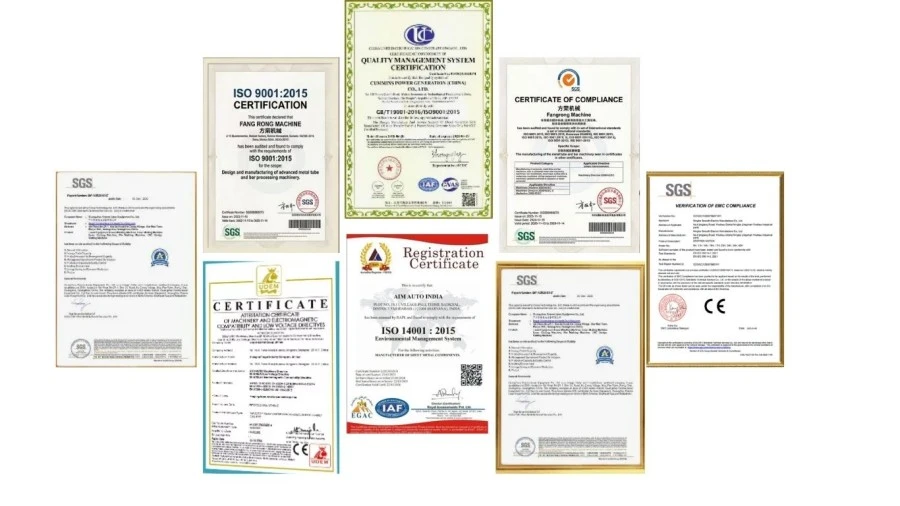
ISO 9001:2015: FangRong operates a quality management system covering the relevant design, manufacturing, installation, and service activities. Certificate No. UQ231211R1 is provided in the supplied company information.
CE marking: Standard FR-series machines can be supplied with CE conformity documentation for the applicable European machinery and electrical safety requirements. The exact standards and conformity documents should be confirmed for the ordered machine because the applicable requirements depend on the final machine configuration and destination market.
Electrical and machinery safety: Where required by the project, the machine can be specified against applicable standards such as EN ISO 12100 for machinery risk assessment and EN 60204-1 for electrical equipment of machines. The final compliance standard list should be stated in the technical agreement rather than assumed from the product name.
SGS inspection: Third-party inspection can be arranged when required by the buyer. SGS inspection is an inspection service and should not be confused with a product certification mark.
UL requirements: UL is not listed as a standard certification for the standard FR-series configuration in the supplied specifications. If the machine is being installed in North America and the purchaser requires UL-recognized components or a UL-compliant control panel, this requirement should be specified before electrical components are purchased.
The Four Lines Cold Drawing and Cutting Machine is industrial equipment and is normally quoted according to the final configuration rather than as a single fixed online price. The number of drawing lines, cutting method, tooling, electrical standard, automation requirements, and destination can all change the final machine cost.
| Order quantity | Price basis | Typical quotation arrangement |
| 1 set | Single-machine order | Individual configuration quotation |
| 2-4 sets | Small batch order | Volume price available according to the same or mixed configuration |
| 5+ sets | Project or batch order | Project-based quotation and production schedule |
MOQ: 1 set. For industrial drawbenches, ordering more than one machine may qualify for a different unit price, but the actual tier price should be confirmed in the commercial quotation rather than inferred from the catalogue.
FOB: FOB pricing can be quoted with the agreed port of shipment stated on the proforma invoice and sales contract. Because FangRong has manufacturing facilities in Guangdong, the exact FOB port should be confirmed with the sales team according to the final factory loading location and shipping arrangement. The quotation should explicitly state the named port, for example FOB [agreed China port], rather than using “FOB China” without a port name.
Standard order lead time: FR-16 standard configurations typically require 30-60 days after technical confirmation and receipt of the agreed payment.
FR-25 or customized order lead time: typically 90-120 days, depending on the cutting system, electrical configuration, tooling, automation, and other project requirements.
Expedited order: An accelerated production schedule can be evaluated for urgent projects subject to current workshop capacity, component availability, and configuration. An expedited lead time should be confirmed in writing before order placement; it should not be assumed that an urgent order can use the standard 30-60 day schedule.
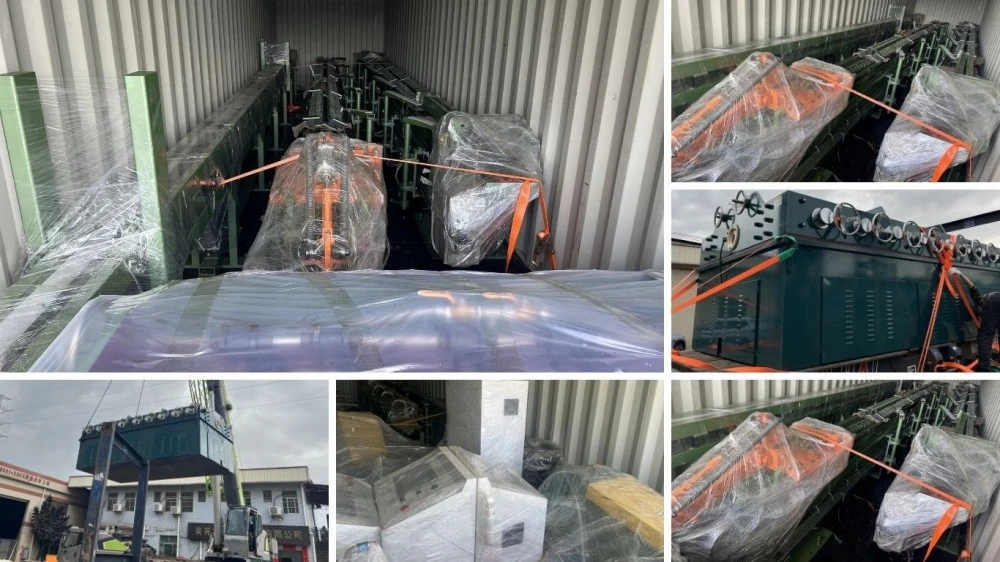
The Four Lines Cold Drawing and Cutting Machine is prepared for export shipment with protective packaging suitable for long-distance transportation. The packaging method should account for the machine's dimensions, electrical cabinet, hydraulic or pneumatic components, and corrosion-sensitive surfaces.
Before shipment, the purchaser should confirm the packing list, machine dimensions, lifting points, electrical requirements, foundation drawings, spare parts, and installation documentation. This information is particularly important for the FR-25 because its standard dimensions are approximately 12,000 × 2,900 × 1,500 mm.
The main selection factors are tube or bar diameter, material strength, number of lines, and cutting method. The FR-16 Hydraulic is suitable for 2-line production up to Ø15 mm where hydraulic cutting is preferred. The FR-16 Pneumatic supports 2 lines up to Ø15 mm or 4 lines up to Ø12 mm, making it suitable when higher output is more important. The FR-25 Saw Cutting provides up to 50 kN drawing force and handles products up to Ø25 mm, with saw cutting suited to applications requiring a mechanical saw rather than hydraulic or pneumatic cutting.
Yes. The FR-16 Hydraulic and FR-25 Saw Cutting models are configured for 2-line production, while the FR-16 Pneumatic can be configured for either 2 or 4 lines. A 4-line configuration increases output when the tube diameter and drawing force requirements are within the machine's working range. It is not simply a matter of adding more lines; the die setup, material, diameter reduction and available drawing force must all be matched to the production requirement.
Provide the material grade, starting outside diameter, finished diameter, tube or bar type, wall thickness if applicable, required finished length, required daily or monthly output, and the required number of production lines. For tubes, the material condition and reduction schedule are also important because excessive reduction in one pass can increase drawing force and affect surface quality. These parameters are used to determine the suitable model, die arrangement, drawing force and cutting configuration.
The cutting length is controlled through the machine's PLC system together with length detection and the feeding or drawing sequence. Actual cutting accuracy depends on material elasticity, straightness, drawing conditions, cutting method and machine setup. For applications such as HVAC tubes or components that require consistent assembly length, the final tolerance should be confirmed from the actual material and target length before ordering rather than relying on a generic accuracy figure.
Yes, the machine can be configured for different metal products, including carbon steel, alloy steel, stainless steel, copper and aluminum. However, the same configuration should not be assumed suitable for every material. Stainless steel and high-strength alloys generally require greater drawing force and more careful reduction control, while copper and aluminum may require different die materials and lubrication conditions to protect the surface finish. Material grade and size should therefore be confirmed during machine selection.
The four-line cold drawing and cutting machine is primarily designed to integrate cold drawing with automatic fixed-length cutting. If the incoming tube or bar cannot be inserted through the drawing die directly, pointing or end preparation may be required before drawing. Whether a separate pointing machine is needed depends on the starting material, end condition and die design. The complete process can be evaluated when the customer's raw material samples and drawing schedule are provided.
Hydraulic and pneumatic cutting are suitable for automated fixed-length production where fast cycle operation and integration with the drawing sequence are required. Pneumatic cutting is particularly useful in the FR-16 four-line configuration where production output is a priority. Saw cutting provides a different cutting method and is used on the FR-25 model, which has a higher drawing-force capacity and supports larger products up to Ø25 mm. The best option depends on material, diameter, end-face requirements and downstream machining.
Before ordering, confirm the product material and dimensions, drawing reduction, finished length, required output, number of simultaneous lines, cutting method, electrical requirements, installation conditions and automation requirements. For export projects, also confirm the agreed Incoterm and shipment port, delivery schedule, spare-parts package, commissioning method and applicable safety or electrical requirements such as CE documentation. Providing actual tube or bar samples is recommended when tight dimensional or surface requirements are involved.
Address
NO.163,Shatong Road,Shabu 2nd Industrial Zone, Dalang Town, Dongguan City, Guangdong, China