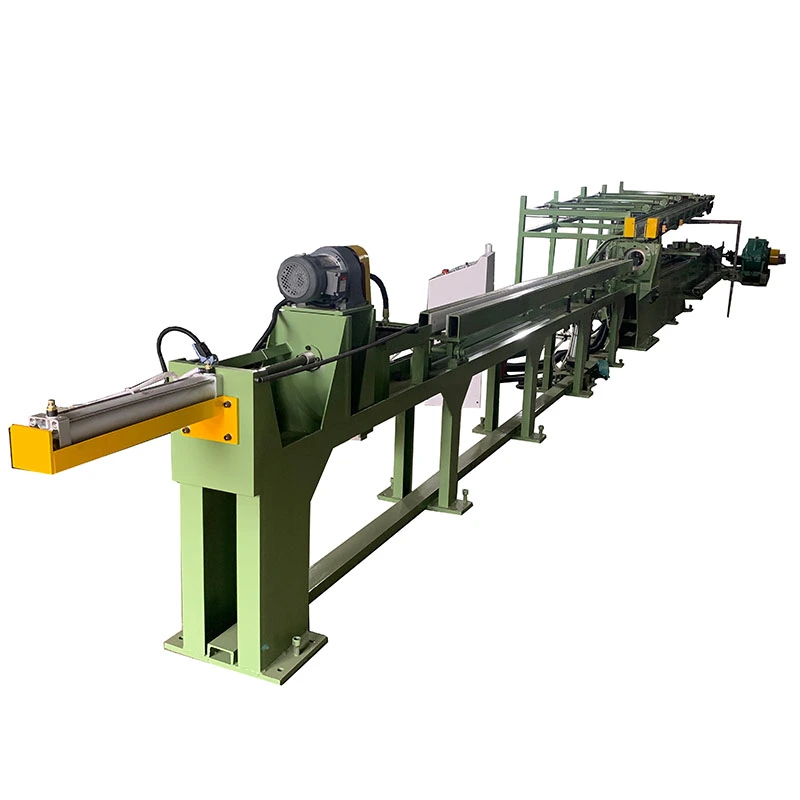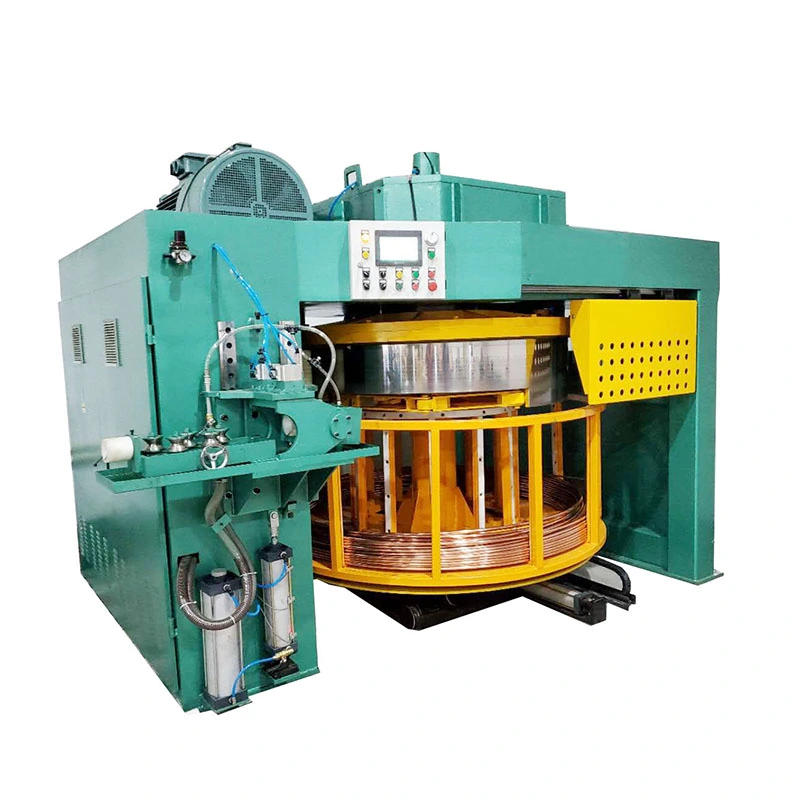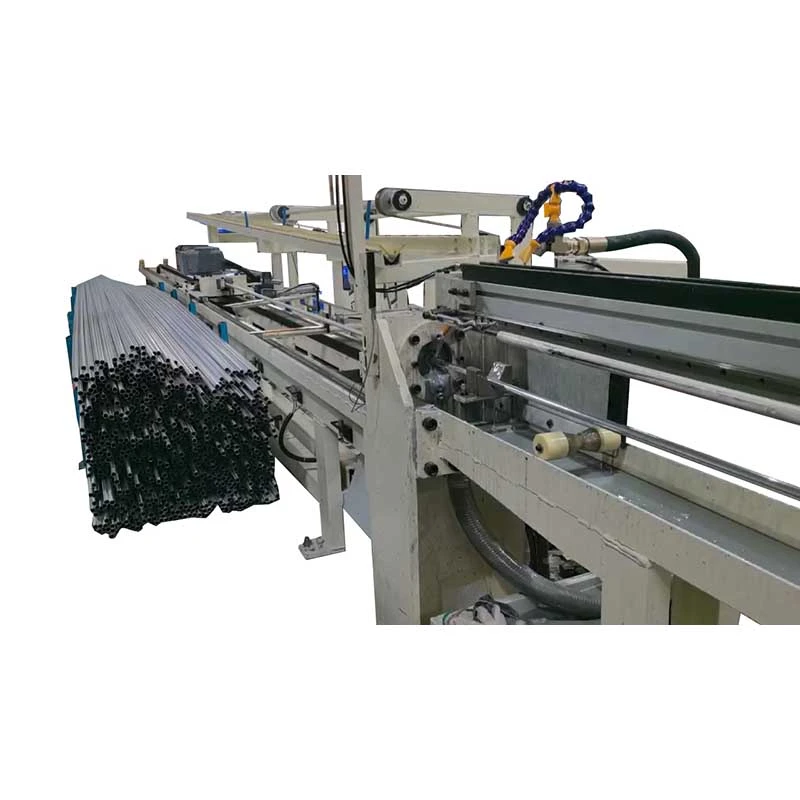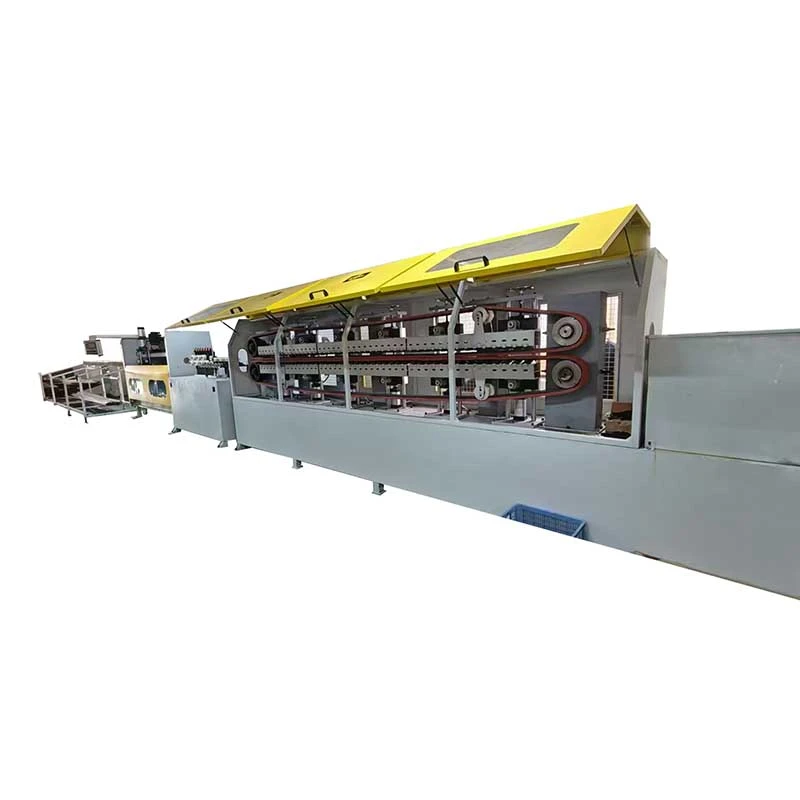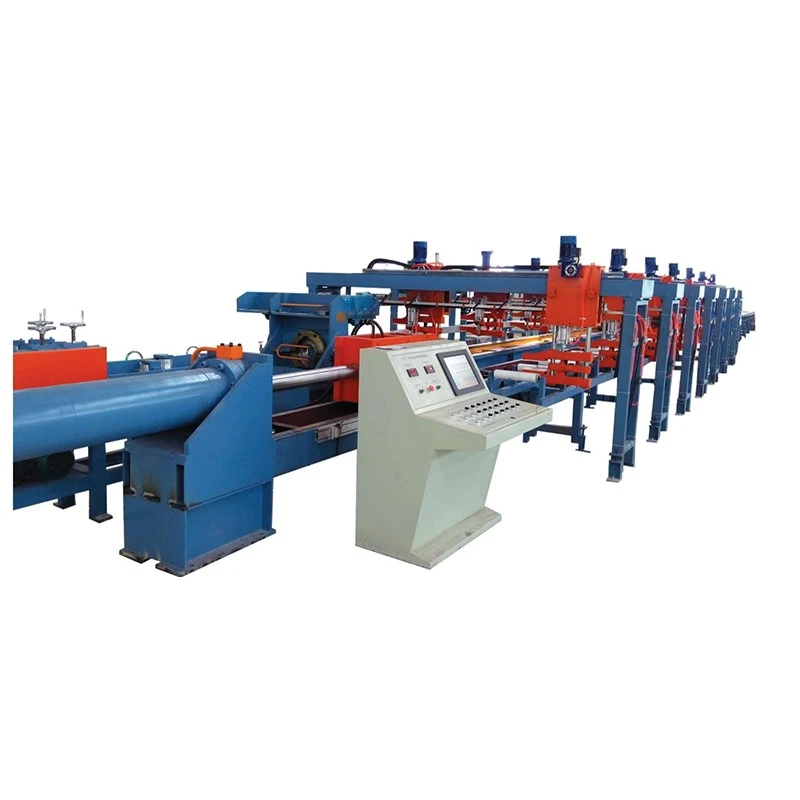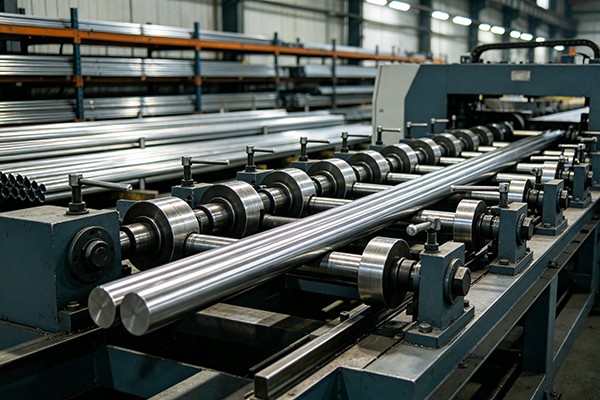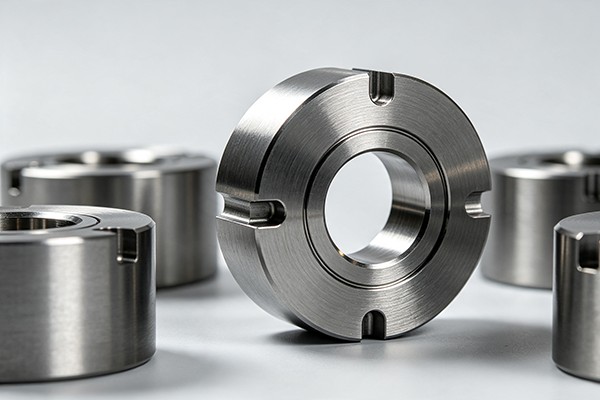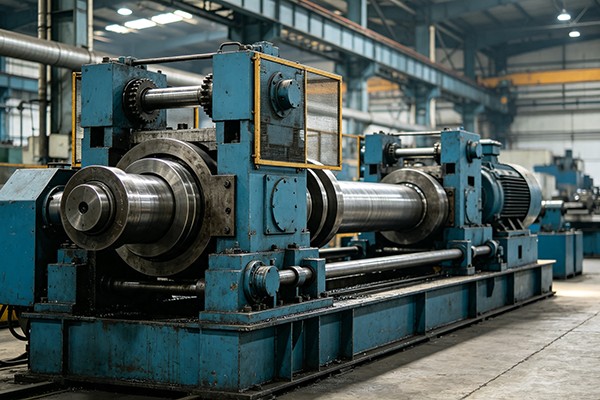

We offer a comprehensive range of precision metal processing equipment, including straightening, cold drawing, pointing, chamfering, cutting, thread rolling machines, and drawing dies, tailored for tube, bar, and wire materials across diverse industries.
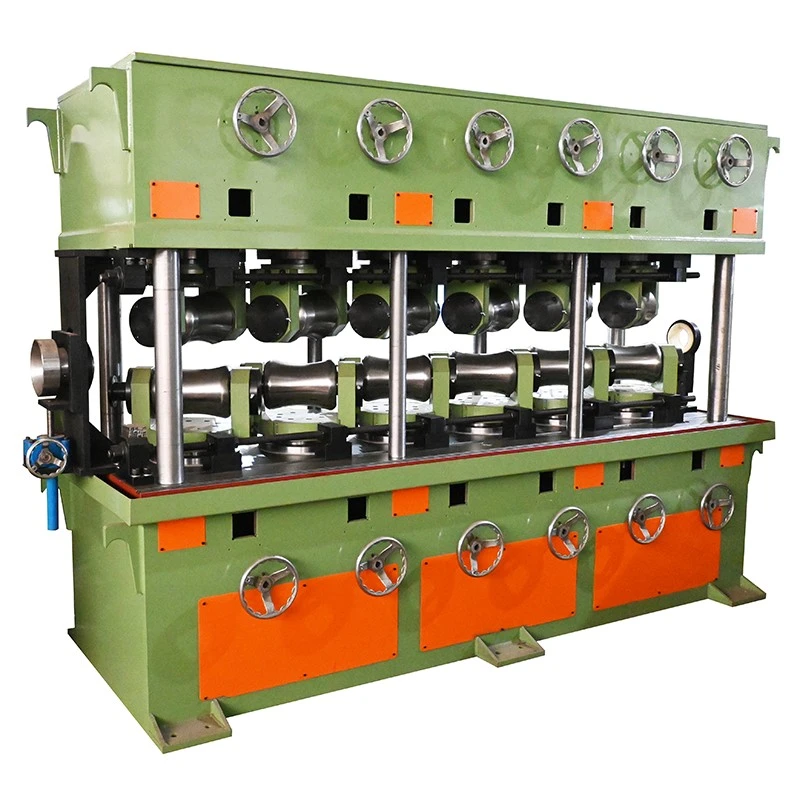
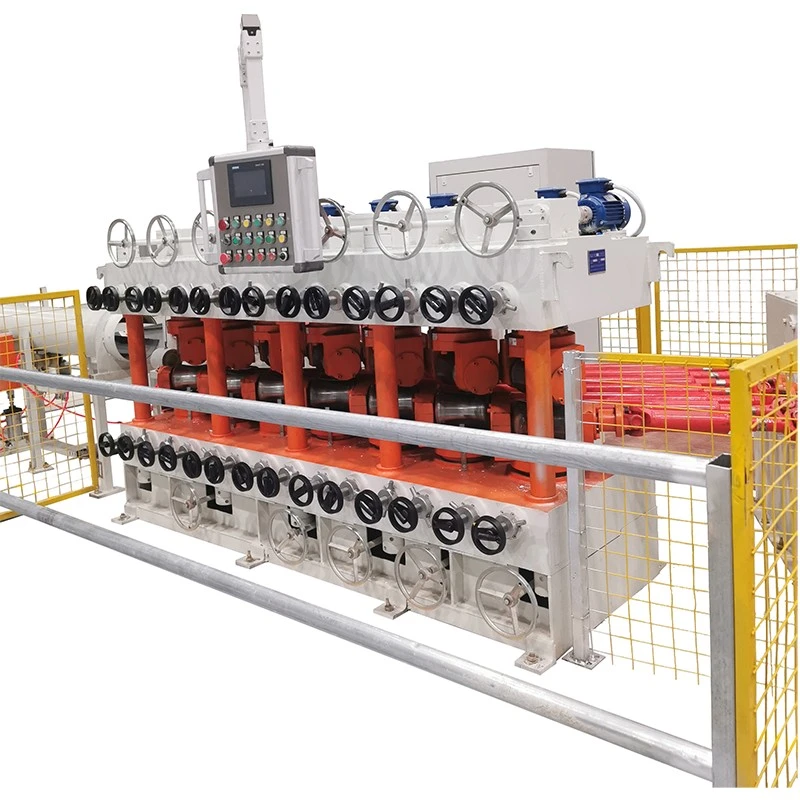
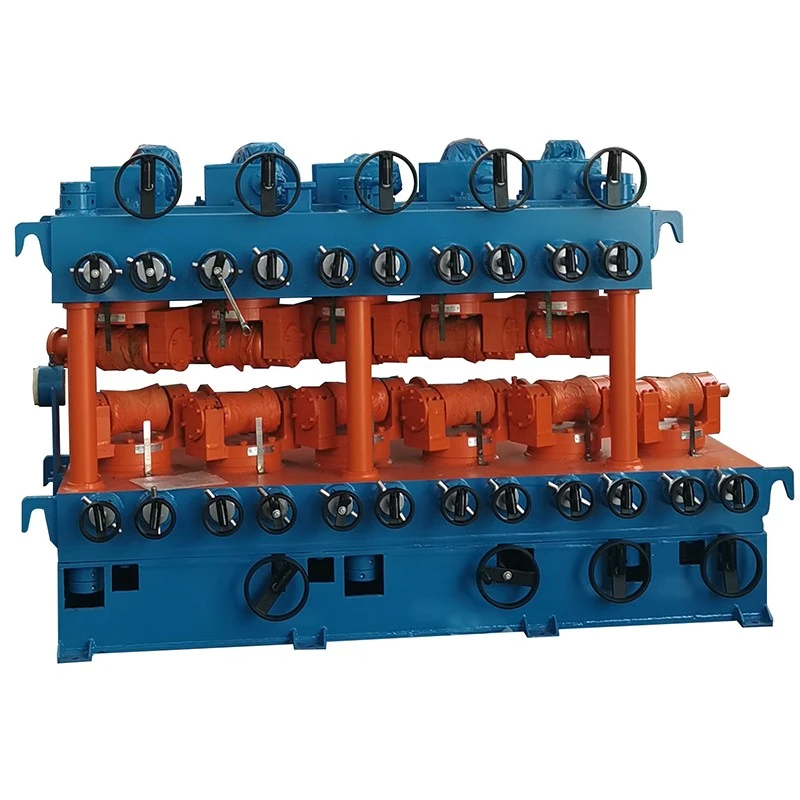
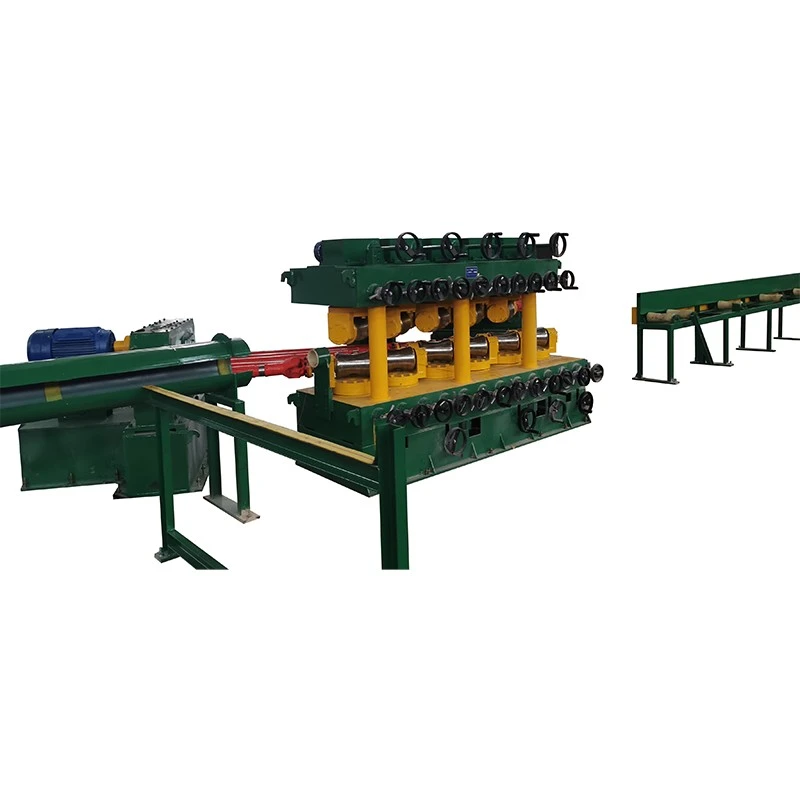
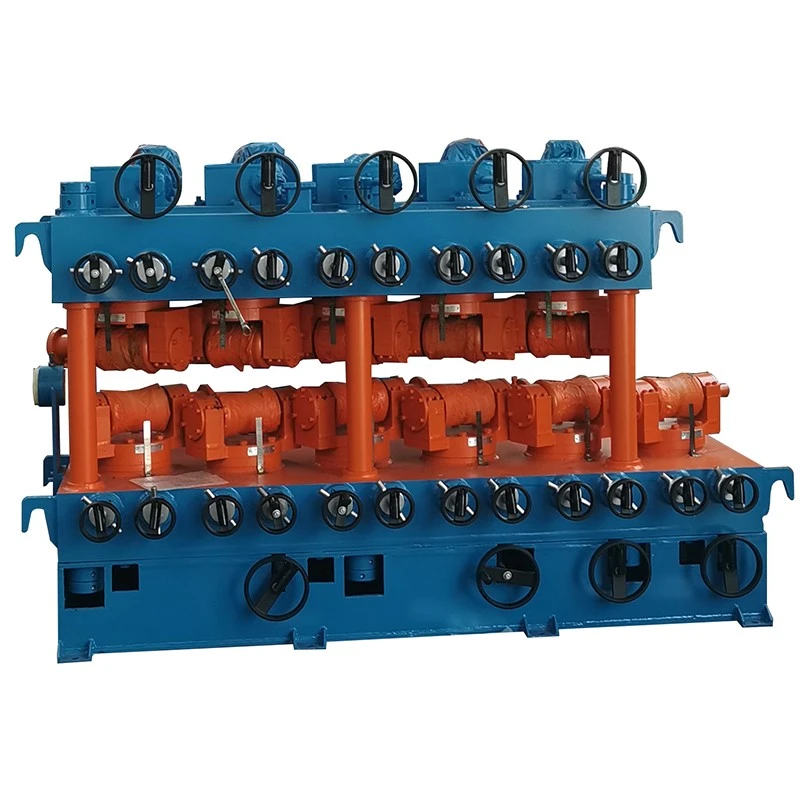
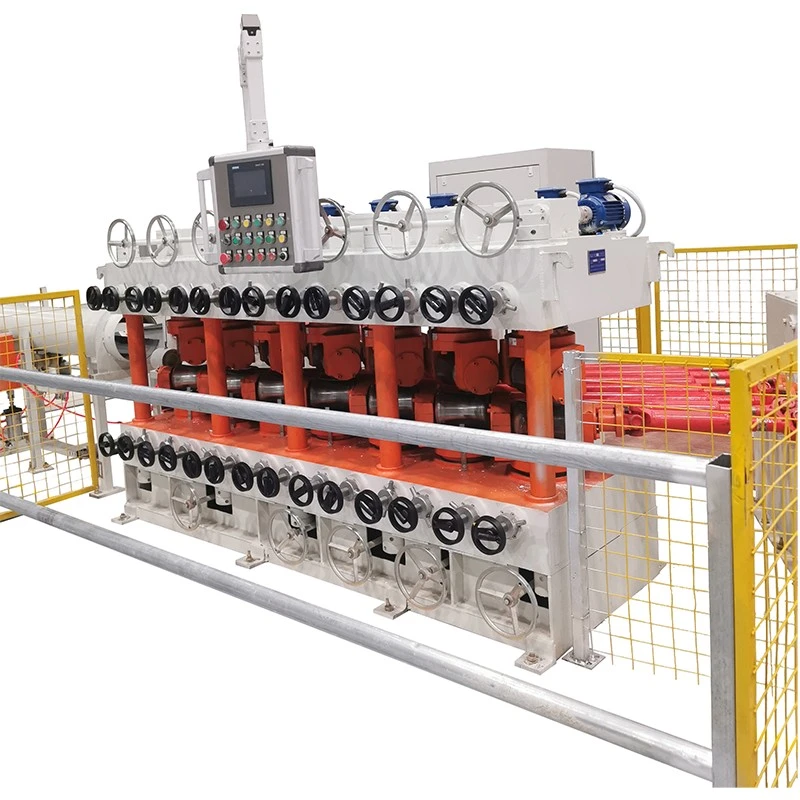
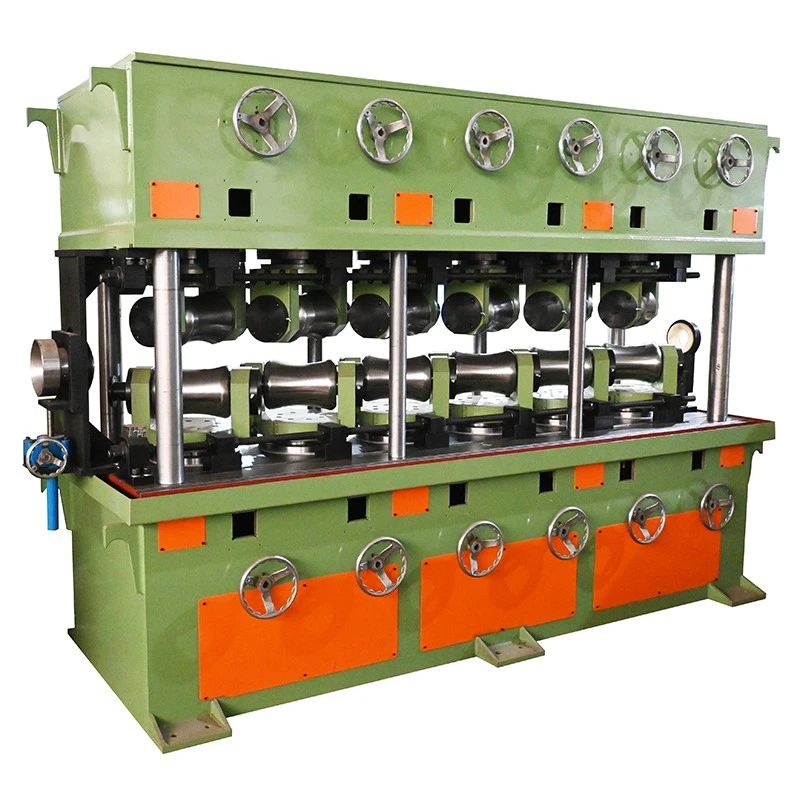
Designed for brass tubes, rods and other non-ferrous metal products, this Brass Vertical Multi-Rollers Straightening Machine corrects bending and deformation through a series of controlled roller contacts. The multi-point correction process is suited to brass because the material is relatively ductile and can be marked or locally deformed if excessive roller pressure is applied.
The machine is used after extrusion, drawing, annealing or other forming processes to prepare straight brass material for cutting, threading, bending, machining and assembly. For tube applications, roller pressure must be matched to the outside diameter and wall thickness to avoid unnecessary ovality or surface marks.
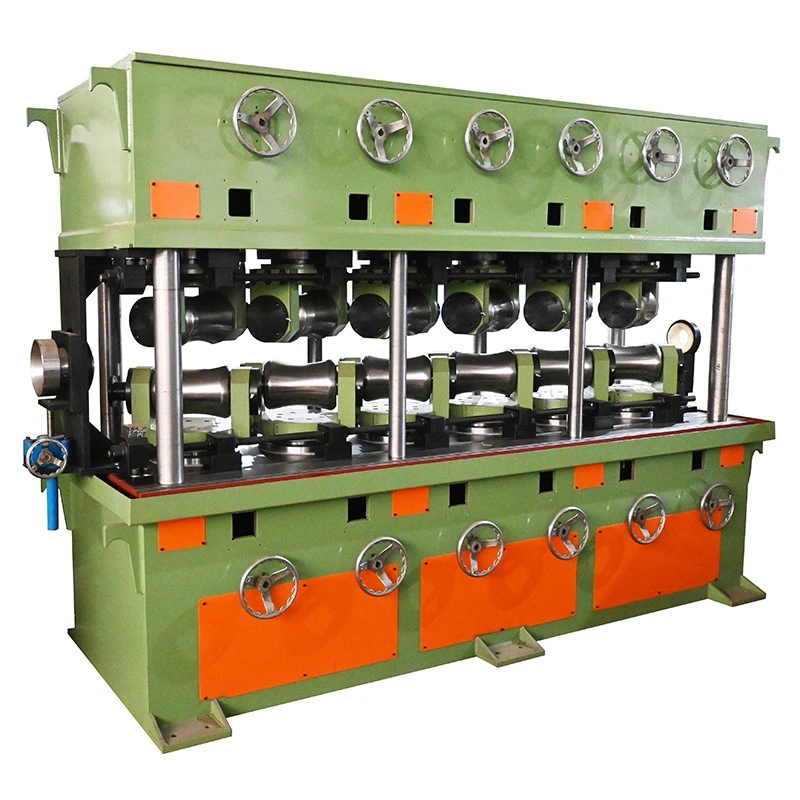
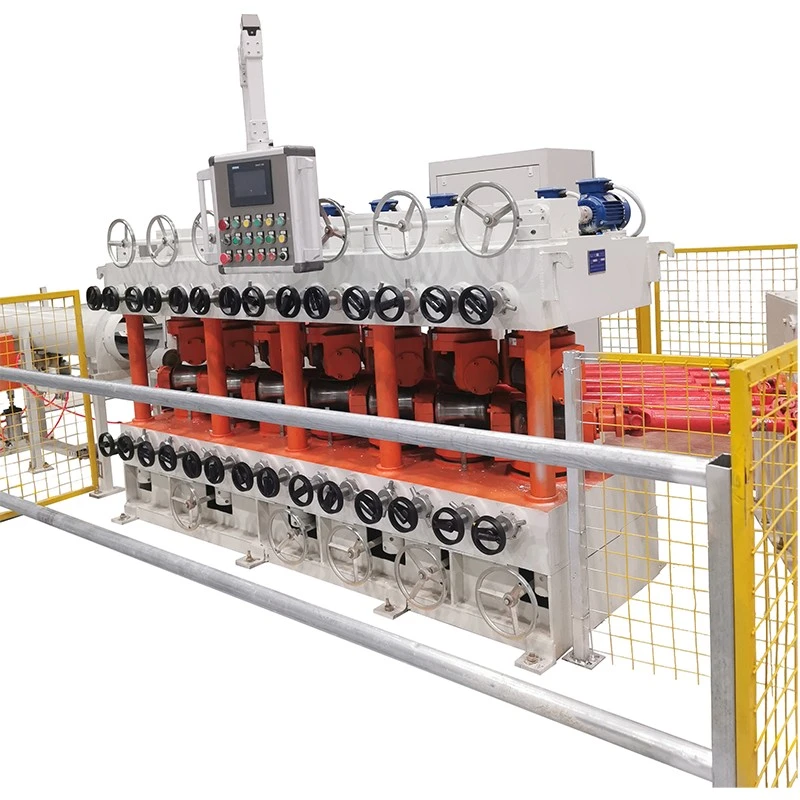
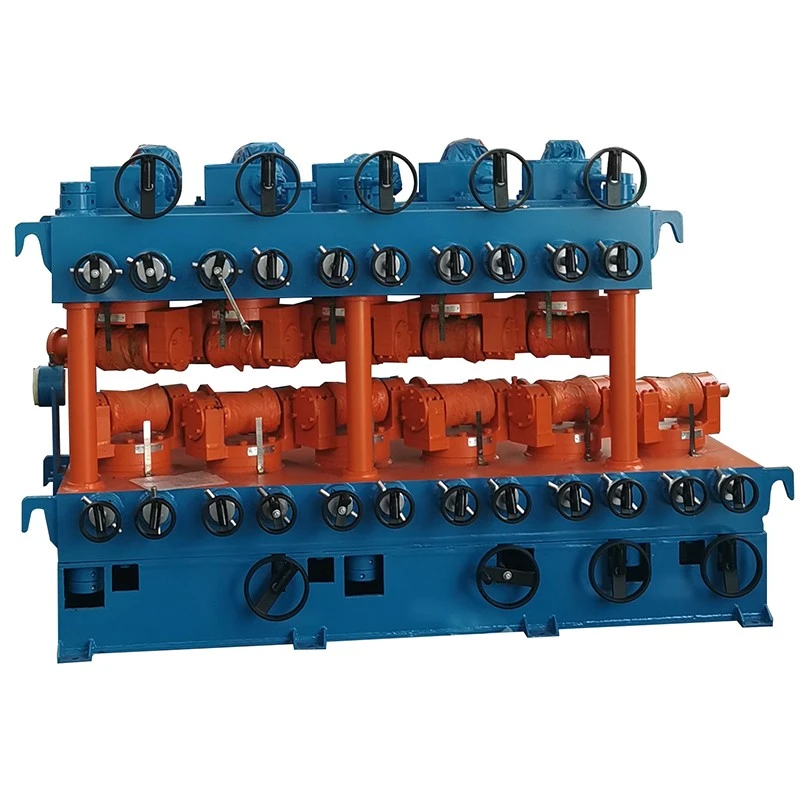
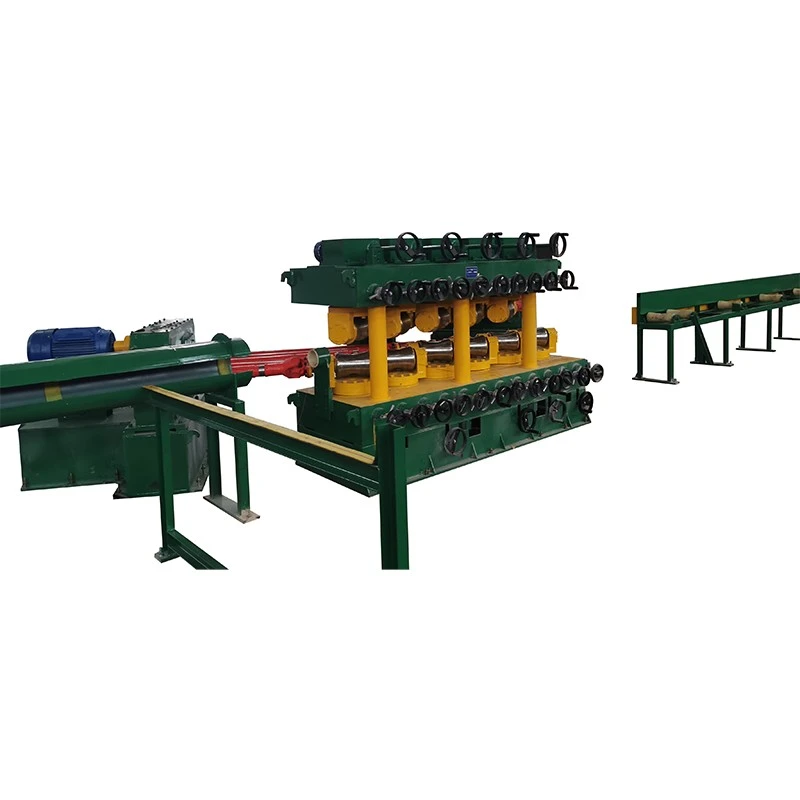
Brass material enters the roller section and passes through multiple adjustable rollers. Each contact point applies a controlled amount of bending in a specific direction. The accumulated correction gradually reduces the original curvature as the tube or rod moves through the machine.
The roller arrangement provides multiple correction points rather than concentrating deformation at one location. This helps control straightness while reducing unnecessary loading on the brass surface and cross-section. Roller angle, opening distance and operating speed are adjusted according to the workpiece size, wall thickness and material condition.
Brass products are commonly used where dimensional consistency, machinability and surface condition are important. A straightening process that corrects the bend but changes the tube roundness or leaves roller marks can create problems in subsequent operations.
The FR series Brass Vertical Multi-Rollers Straightening Machine is available with different roller quantities, roller sizes, opening distances, drive powers and working speeds. Depending on the model, the machine uses 7+7, 10+1 or 6+6 roller arrangements. The listed tube range extends from φ5 mm to φ180 mm, while solid-bar ranges vary by model.
Finished straightness depends on material grade, tube diameter, wall thickness, initial deformation, tensile strength and process adjustment. The following specifications are reference values; final configuration should be confirmed against the actual workpiece.
| Model | FR-20 | FR-30 | FR-40 | FR-50 | FR-60 | FR-80 | FR-100 | FR-130 | FR-150 | FR-180 |
| Rollers Qty. | 7+7 Rollers | 7+7 Rollers | 10+1 Rollers | 6+6 Rollers | 10+1 Rollers | 10+1 Rollers | 10+1 Rollers | 10+1 Rollers | 10+1 Rollers | 10+1 Rollers |
| Raw Material Requirements / Tube Range (mm) | φ5–φ10 / Wall Thickness 1–7 | φ10–φ30 / Wall Thickness 1–7 | φ10–φ40 / Wall Thickness 1–5 | φ18–φ50 / Wall Thickness 1–4 | φ18–φ60 / Wall Thickness 3–12 | φ30–φ80 / Wall Thickness 2–7 | φ40–φ100 / Wall Thickness 2.5–10 | φ50–φ130 / Wall Thickness 2.5–10 | φ40–φ100 / Wall Thickness 2.5–10 | φ80–φ180 / Wall Thickness 3–20 |
| Raw Material Requirements / Solid Bar Range (mm) | φ5–φ10 | φ10–φ15 | φ10–φ25 | φ10–φ25 | φ18–φ30 | φ30–φ45 | φ16–φ55 | φ16–φ60 | φ16–φ55 | φ80–φ95 |
| Raw Material Length (mm) | ≥2000 | >2000 | ≥2000 | ≥2000 | >2000 | >2000 | ≥2000 | ≥2500 | ≥2500 | ≥2000 |
| Raw Material Tensile Strength (MPa) | ≤800 | ≤800 | ≤800 | ≤800 | ≤980 | ≤650 | ≤1000 | ≤1000 | ≤1000 | ≤1000 |
| Raw Material Straightness (mm/m) | ≤20 | ≤20 | ≤20 | ≤20 | ≤20 | ≤20 | ≤20 | ≤20 | ≤20 | ≤20 |
| Finished Straightness (mm/m) | ≤0.3–0.5 | ≤0.3–0.5 | ≤0.3–0.5 | ≤0.3 | ≤0.8 | ≤0.7 | ≤0.6 | ≤0.6 | ≤0.65 | ≤0.7 |
| Roller Size (mm) | φ68 × 90 | φ115 × 160 | φ130 × 210 | φ136 × 260 | φ150 × 260 | φ200 × 300 | φ220 × 300 | φ250 × 360 | φ220 × 300 | φ320 × 460 |
| Roller Diameter (mm) | 200 | 250 | 360 | 360 | 430 | 450 | 600 | 650 | 600 | 780 |
| Upper and Lower Roller Opening Distance (mm) | 35 | 45 | 55 | 65 | 75 | 75 | 85 | 85 | 95 | 95 |
| Adjustable Tilt Range | 27° to -33° | 27° to -33° | 27° to -33° | 27° to -33° | 27° to -33° | 27° to -33° | 27° to -33° | 27° to -33° | 27° to -33° | 27° to -33° |
| Main Motor Power (kW) | 2.2 × 2 | 5.5 × 2 | 11 × 2 | 11 × 2 | 15 × 2 | 22 × 2 | 45 × 2 | 55 × 2 | 75 × 2 | 90 × 2 |
| Variable Frequency Drive (kW) | 5 | 11 | 22 | 30 | 37 | 75 | 90 | 110 | 150 | 180 |
| Lifting Motor Power (kW) | / | / | 0.75 | 0.75 | 1.1 | 1.1 | 1.5 | 2.2 | 2.2 | 3 |
| Working Speed (m/min) | 10–30 | 10–30 | 10–40 | 0–20 | 10–30 | 10–30 | 10–30 | 10–30 | 10–30 | 10–30 |
| Center Height (mm) | 750 | 750 | 790 | 830 | 830 | 830 | 830 | 870 | 890 | 890 |
| Weight (t, Reference) | 4 | 5 | 6 | 8 | 10 | 11 | 12 | 14 | 22 | 27 |
For brass tubes, the most important selection factors are not simply outside diameter. Wall thickness, material temper, tensile strength and incoming deformation affect how much correction force can be applied without changing the tube geometry.
For solid brass rods, diameter, length, material condition and required straightness are the main parameters. When one machine needs to process several sizes, the complete working range and roller adjustment requirements should be checked before ordering.
If the finished product has a tight straightness tolerance, it is recommended to provide a sample, drawing or detailed material specification for configuration confirmation and process testing.
Brass Tube and Rod Manufacturing: Straightening brass products after extrusion, cold drawing, annealing and other forming processes.
Plumbing and Sanitary Components: Preparing brass tubes and rods for faucets, valves, fittings and related components.
HVAC and Refrigeration: Processing brass tubes used in refrigeration systems, heat exchangers and other thermal equipment.
Electrical Components: Producing straight brass rods and tubes for terminals, connectors, conductive components and hardware.
Automotive Components: Preparing brass materials for machined fittings, connectors, sensors and other precision parts.
Industrial Hardware: Straightening brass bars and tubes used for fittings, fasteners, tools and mechanical components.
Precision Machining: Providing straighter feedstock for CNC machining, cutting, threading, drilling and bending operations.
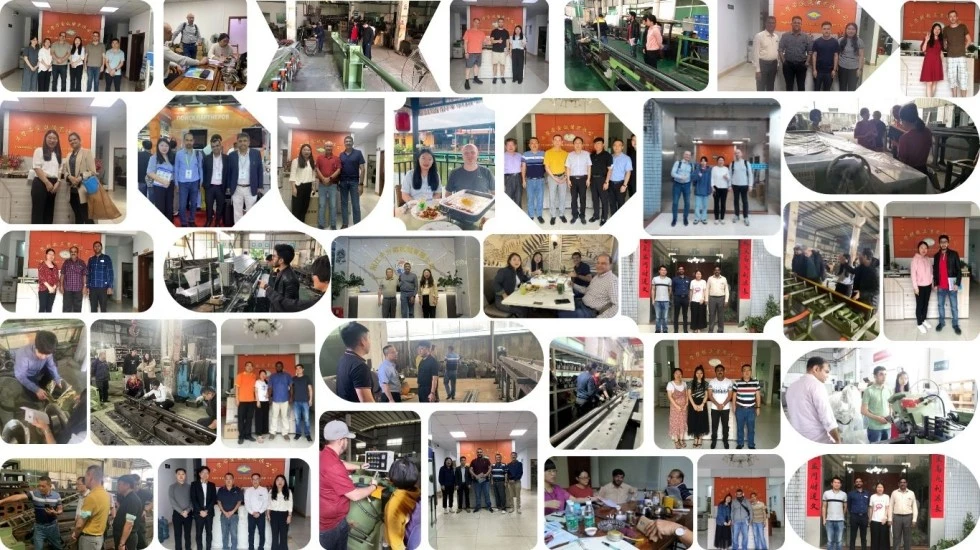
FangRong was established in 1998 and manufactures straightening machines, cold drawing equipment and related metallurgical machinery. The company operates manufacturing facilities in Dongguan and Yangjiang, China.
Our equipment has been supplied to more than 10,000 customers in over 60 countries and regions. The product range covers equipment for tube, bar and other metal-processing applications.
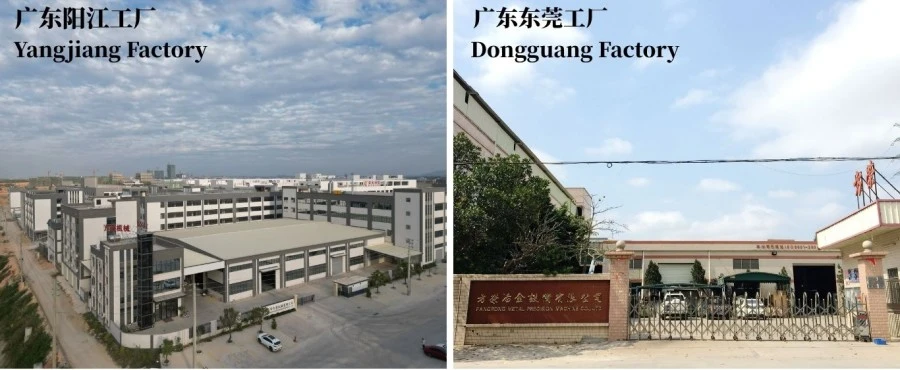
Dongguan Factory: Located in Dalang Town, Dongguan City, this facility focuses on the production of cold drawing machines, straightening machines and related metal-processing equipment.
Yangjiang Factory: Located in Yangdong District, Yangjiang City, this facility provides additional manufacturing capacity for FangRong's machinery range.
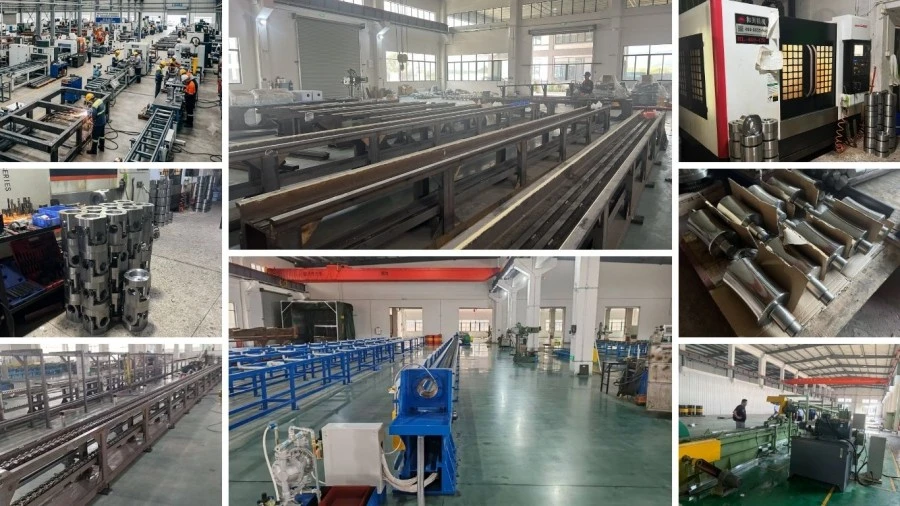
Machine frames and structural components are fabricated and machined according to the approved design. Rollers are machined and finished according to the required working dimensions and surface condition, while drive, adjustment and control components are assembled during final machine integration.
Before shipment, the machine is checked for roller adjustment, drive operation, speed control, electrical functions and overall operating condition. Where agreed, sample tubes or bars can be used to verify the straightening process against the specified requirements.
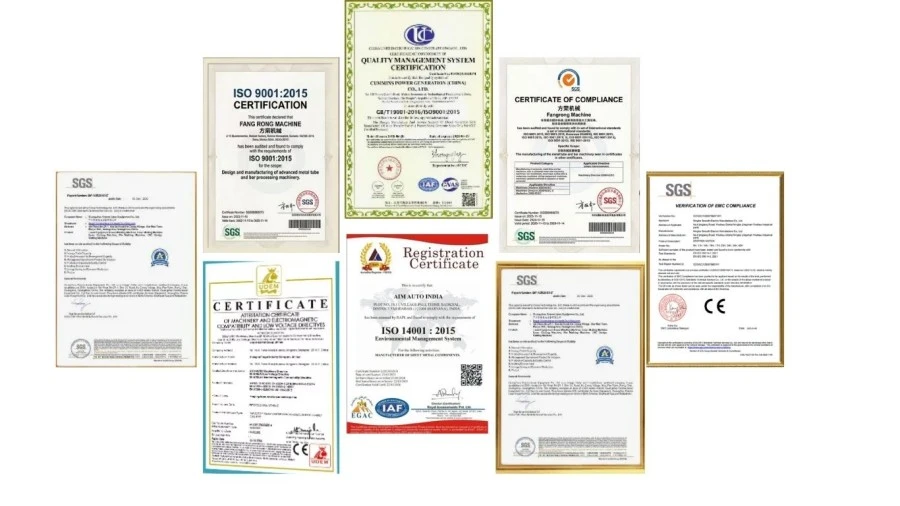
ISO 9001:2015: Quality management system certification, Certificate No. UQ231211R1.
CE Mark: CE-marked equipment is available according to the applicable machine configuration and requirements.
SGS Inspection: Third-party inspection services can be arranged when required by the project or customer.
Patents: FangRong has developed patented technologies for metal-processing equipment, including invention and utility model patents. Examples include 2013207829011, 2008300532117 and ZL2015 2 0842922.7.
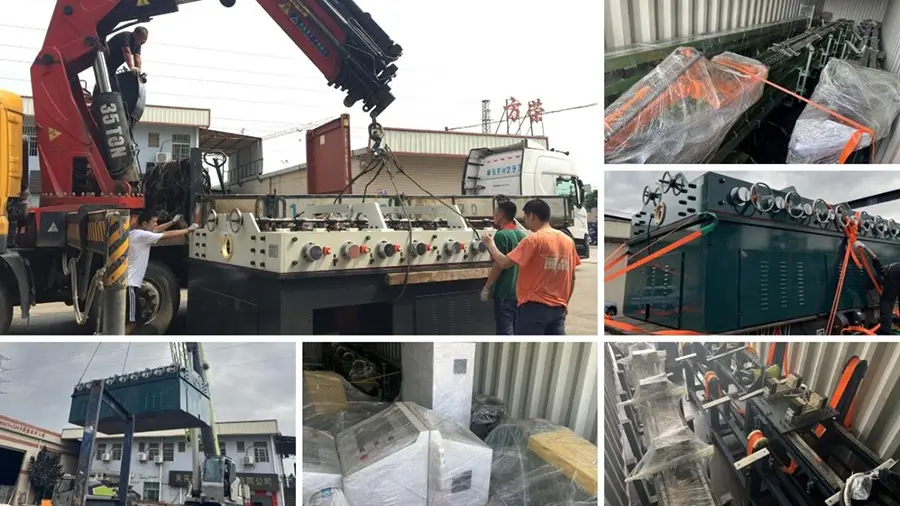
Straightening machines are prepared according to their dimensions, weight and shipping method. Main machine assemblies and loose components are secured and protected before loading, with export packaging and documentation arranged according to the destination and transportation requirements.
Yes. The FR series includes configurations for both tubes and solid bars. The applicable range depends on the model, material condition and workpiece dimensions. Tube applications require particular attention to outside diameter and wall thickness.
Wall thickness affects the tube's resistance to bending and its response to roller pressure. Thin-wall tubes generally require more controlled contact to avoid ovality or local deformation. The machine should therefore be selected using both tube diameter and wall thickness rather than OD alone.
Surface marking depends on roller condition, contact pressure, roller profile, material surface and process adjustment. Because brass is relatively soft, excessive pressure should be avoided. Roller geometry and working conditions can be configured according to the required surface condition.
Depending on the FR model, the listed finished straightness ranges from ≤0.3 to ≤0.8 mm/m. The achievable result also depends on the brass grade, tube or bar dimensions, incoming deformation and machine adjustment. For tight tolerances, sample testing is recommended.
Yes, provided the sizes fall within the applicable working range of the selected model. If frequent size changes are required, roller adjustment range and changeover requirements should be considered during machine selection.
Please provide the brass grade, tube OD and wall thickness or solid-bar diameter, product length, tensile strength or hardness, incoming straightness, required finished straightness, surface requirements and production speed. A product drawing or sample is helpful for non-standard applications.
Yes. FangRong can configure the machine according to the workpiece range and production process. Options may include roller arrangement, drive system, speed control, feeding and unloading equipment, and electrical configuration.
Yes. The straightening machine can be positioned after processes such as extrusion, drawing or annealing and before cutting, threading, bending or machining. The inlet and outlet arrangement can be considered according to the existing production line.
For an accurate quotation, send the brass material grade, tube or rod dimensions, wall thickness for tubes, product length, incoming deformation, required straightness, required production speed and quantity. Photos, drawings or a material sample are recommended when the workpiece has special requirements.
FangRong provides machine commissioning and technical support according to the agreed project scope. Installation guidance, operator training and troubleshooting support can be arranged for the delivered equipment.
```Address
NO.163,Shatong Road,Shabu 2nd Industrial Zone, Dalang Town, Dongguan City, Guangdong, China