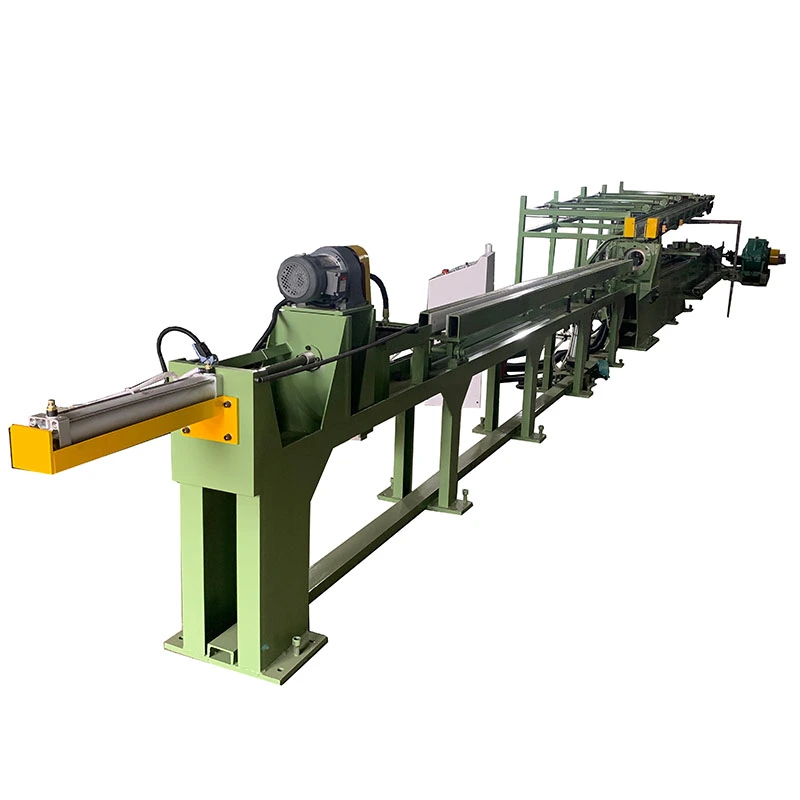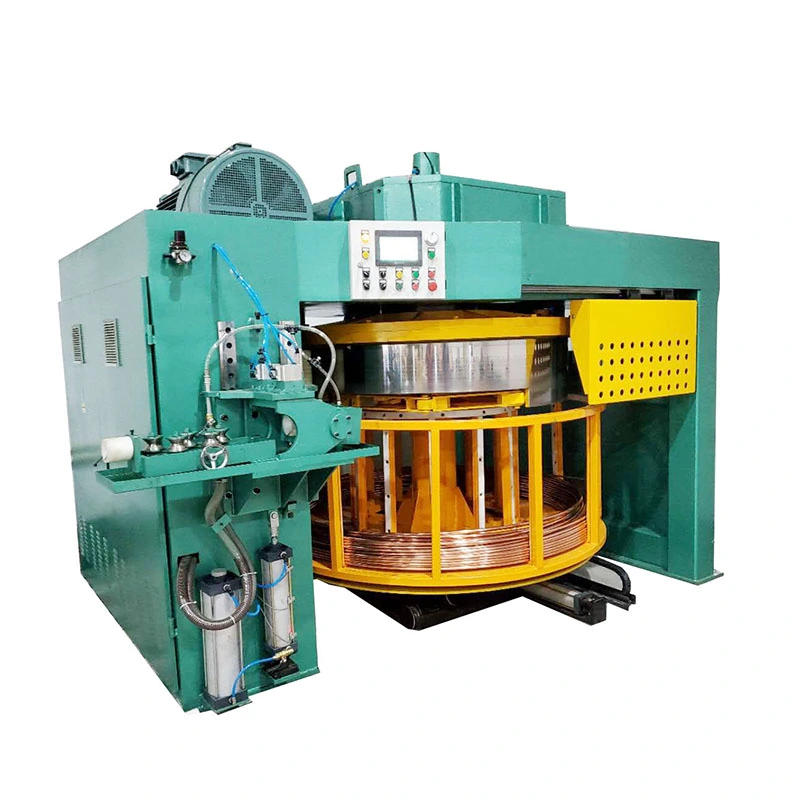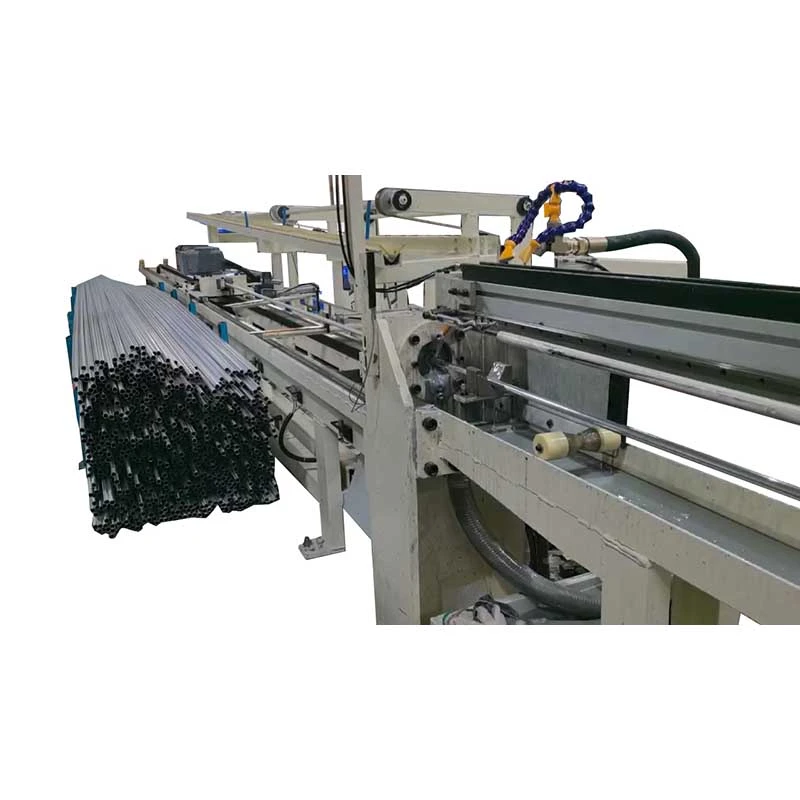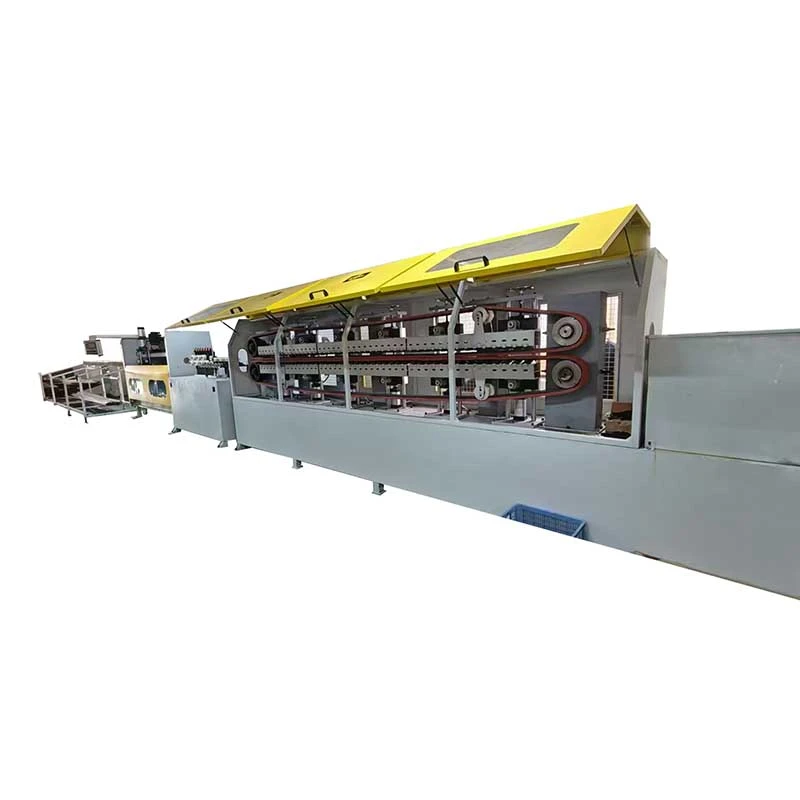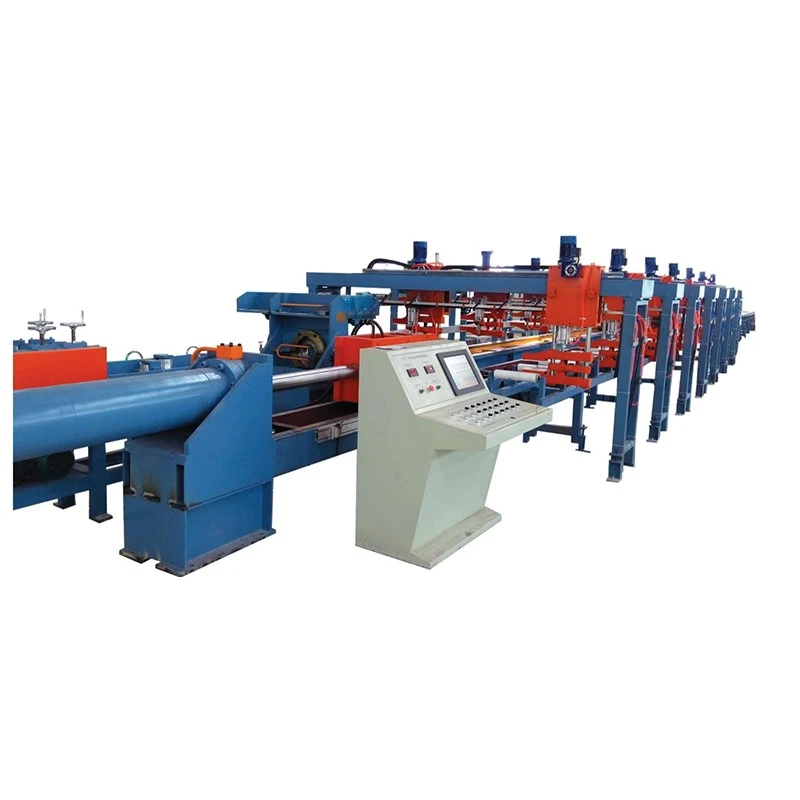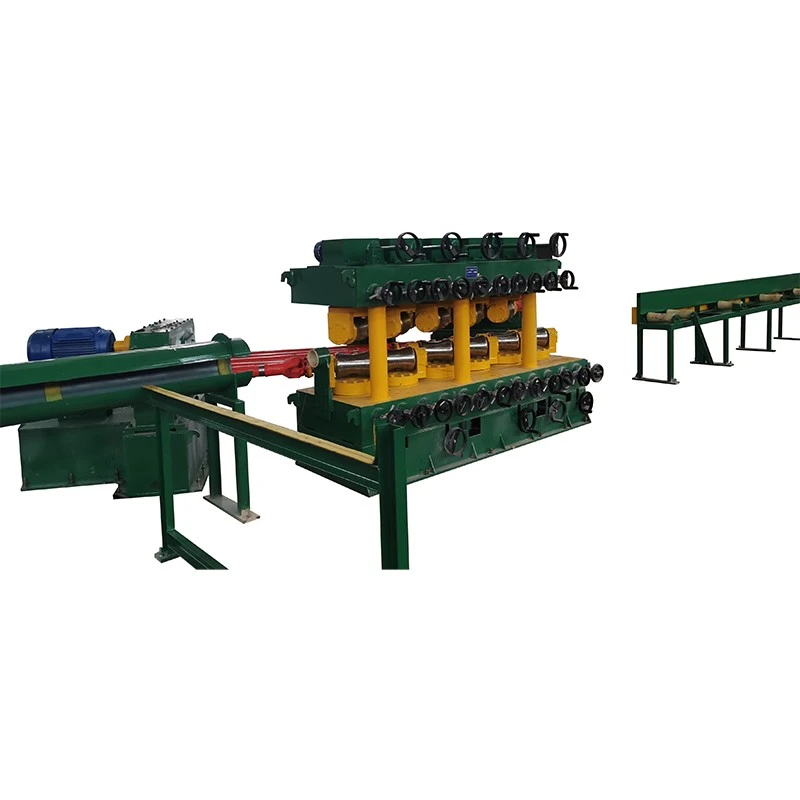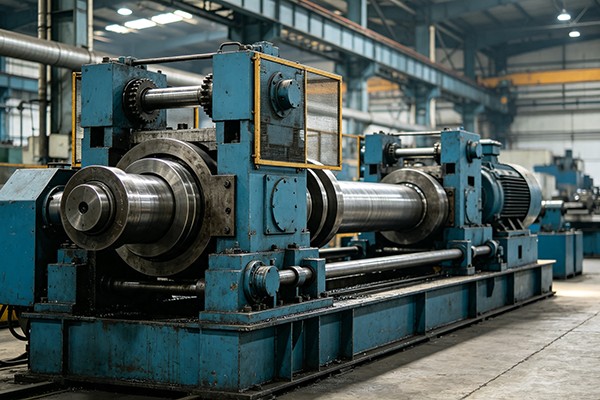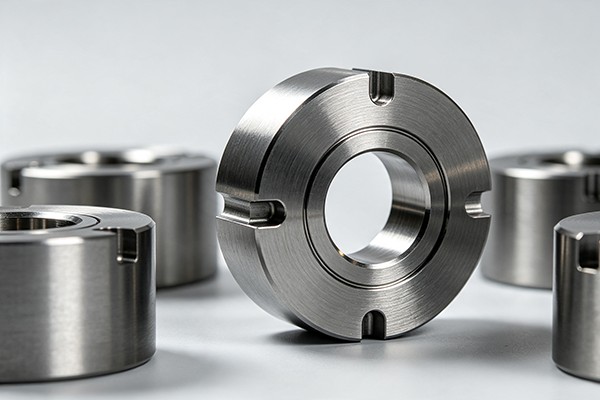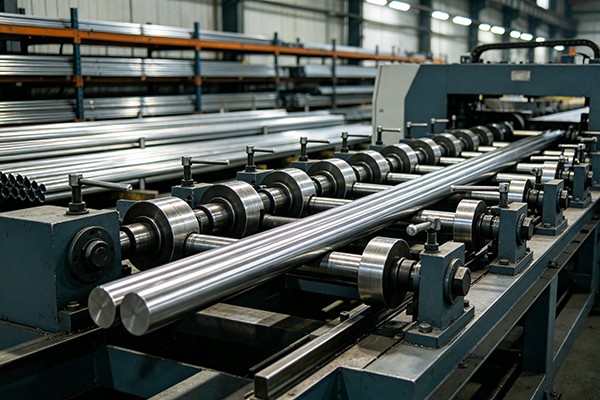

We offer a comprehensive range of precision metal processing equipment, including straightening, cold drawing, pointing, chamfering, cutting, thread rolling machines, and drawing dies, tailored for tube, bar, and wire materials across diverse industries.
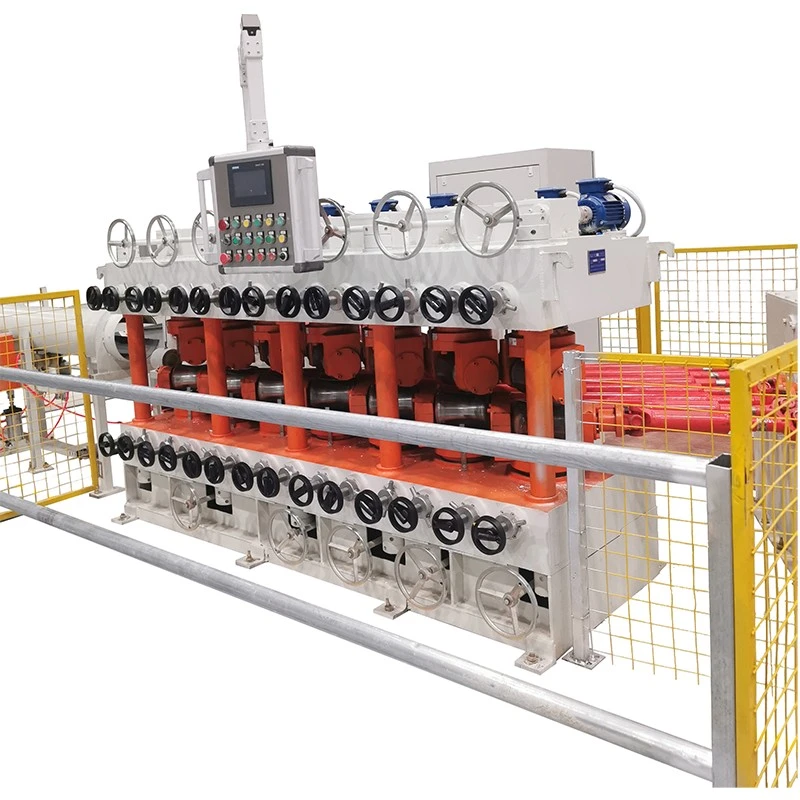
Stainless steel is not difficult to straighten simply because it is strong. The more important issue is how the material responds to repeated deformation. Depending on grade, hardness, wall thickness and previous processing, stainless steel can show springback, work hardening and uneven deformation after drawing, rolling, cutting or heat treatment.
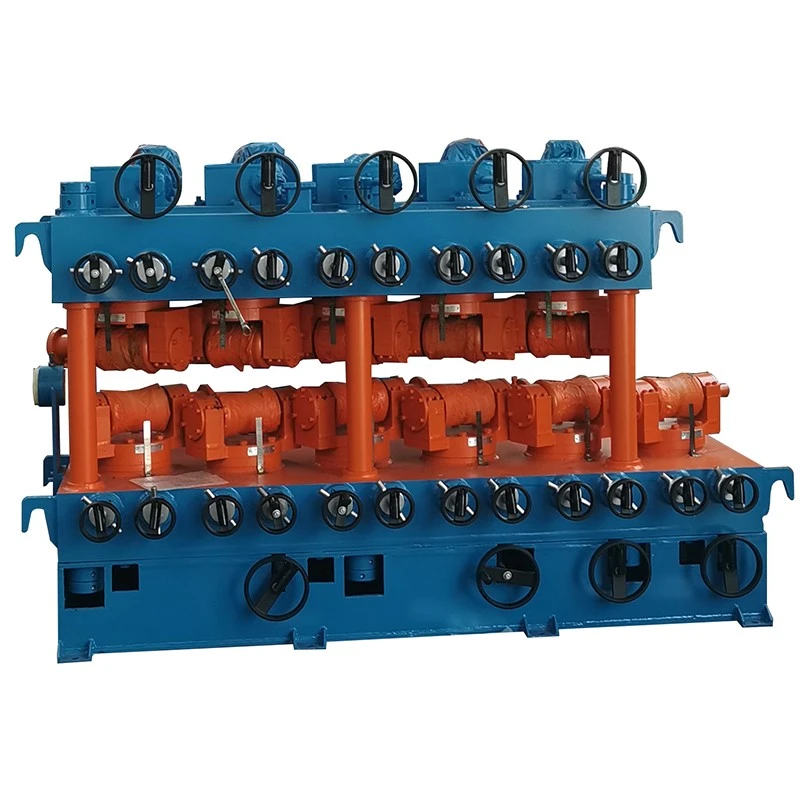
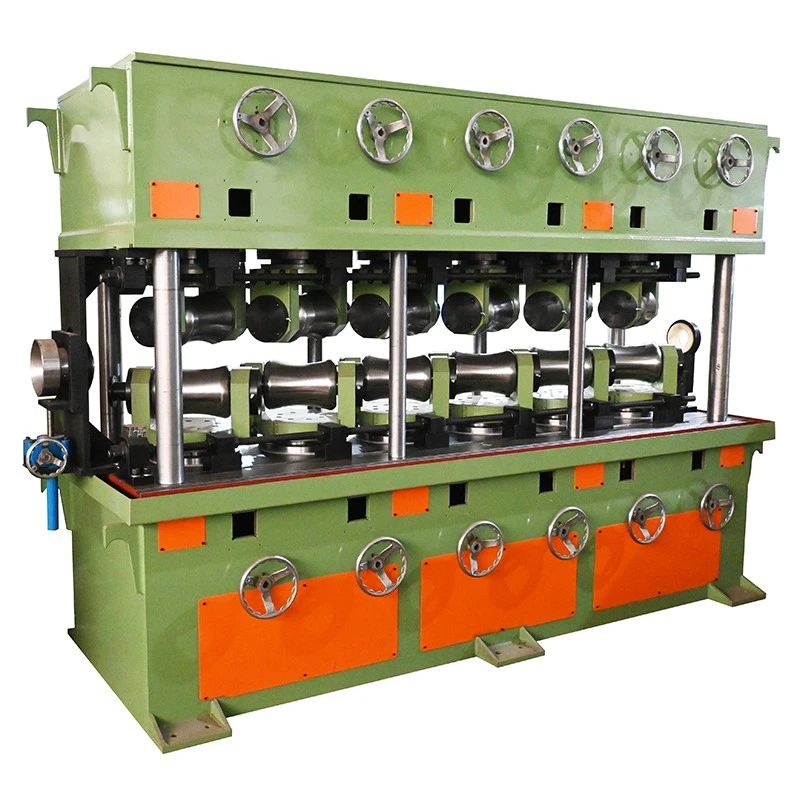
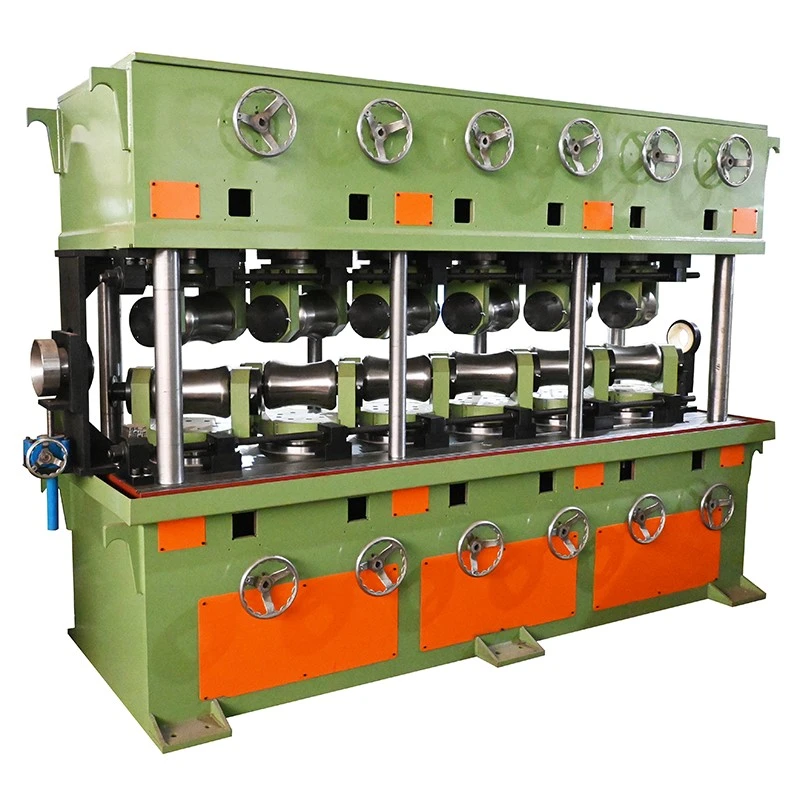
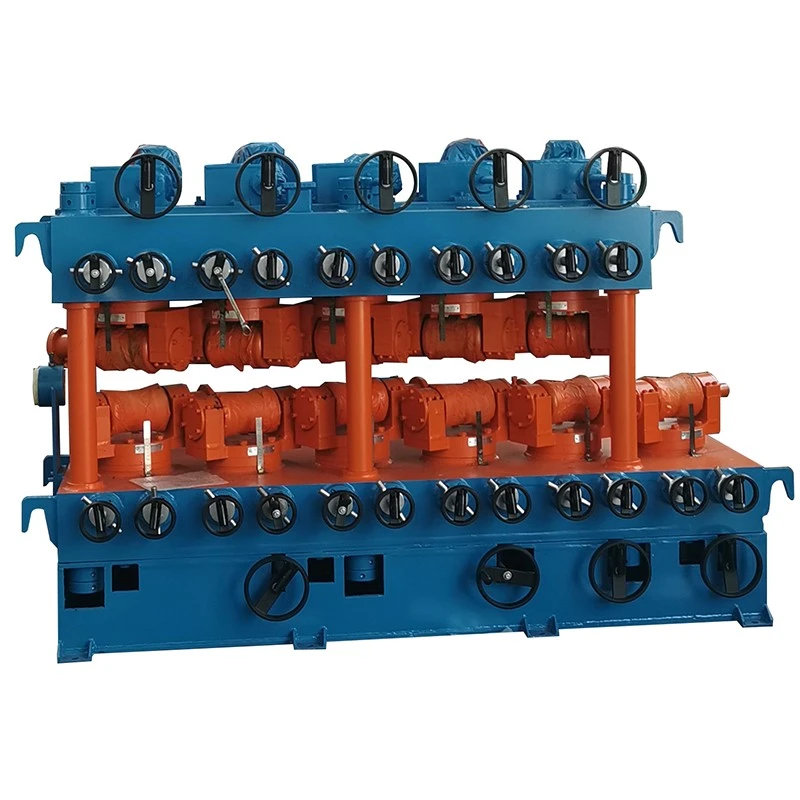
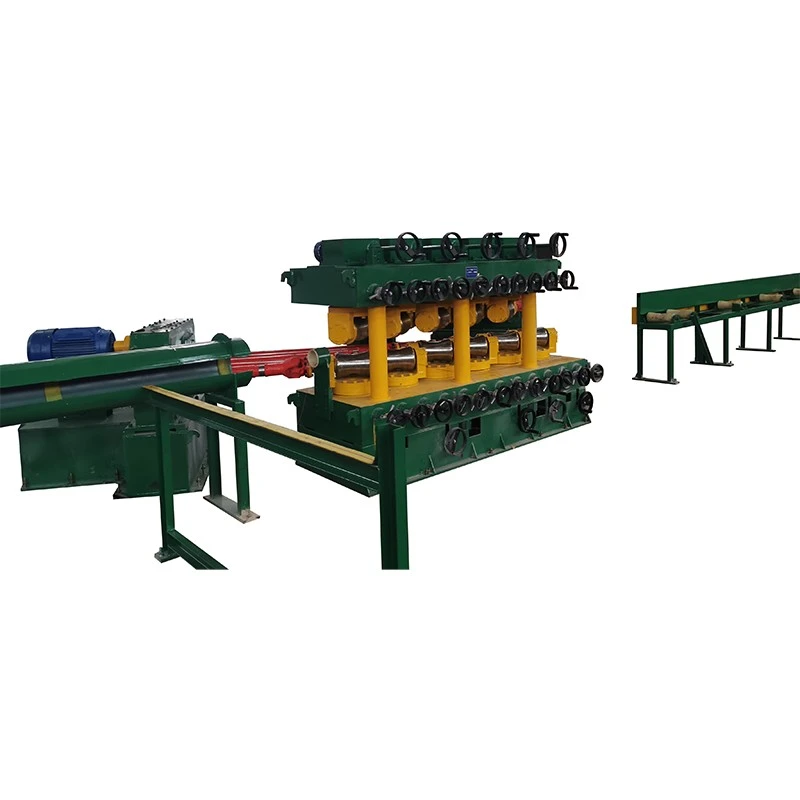
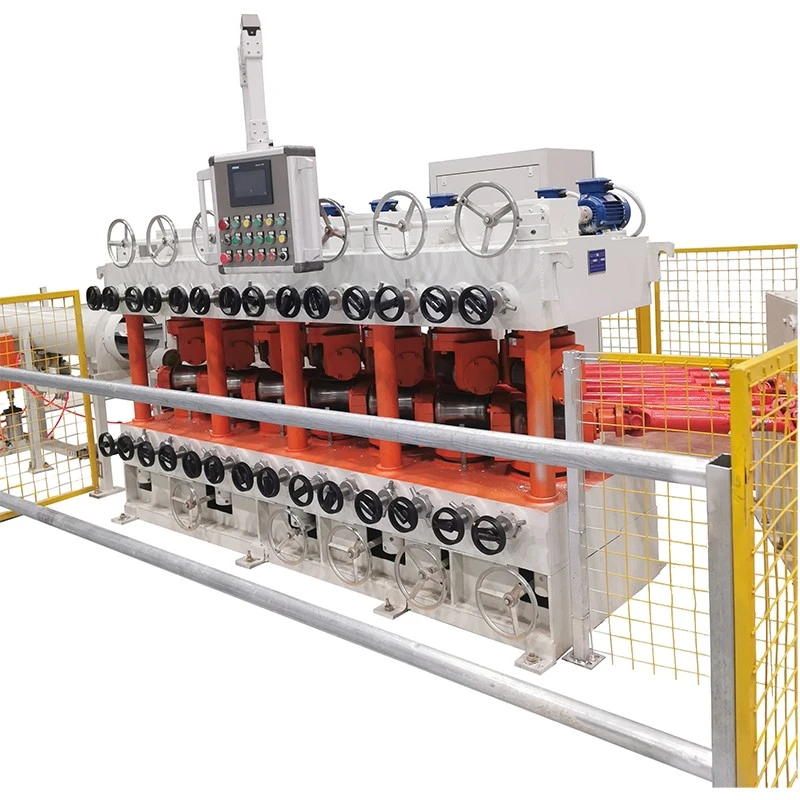
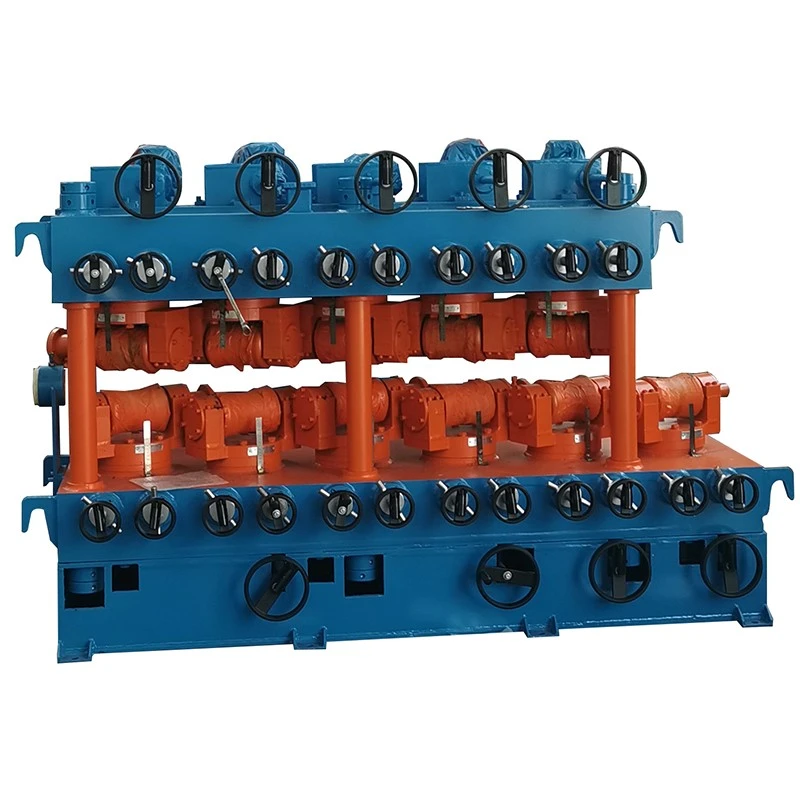
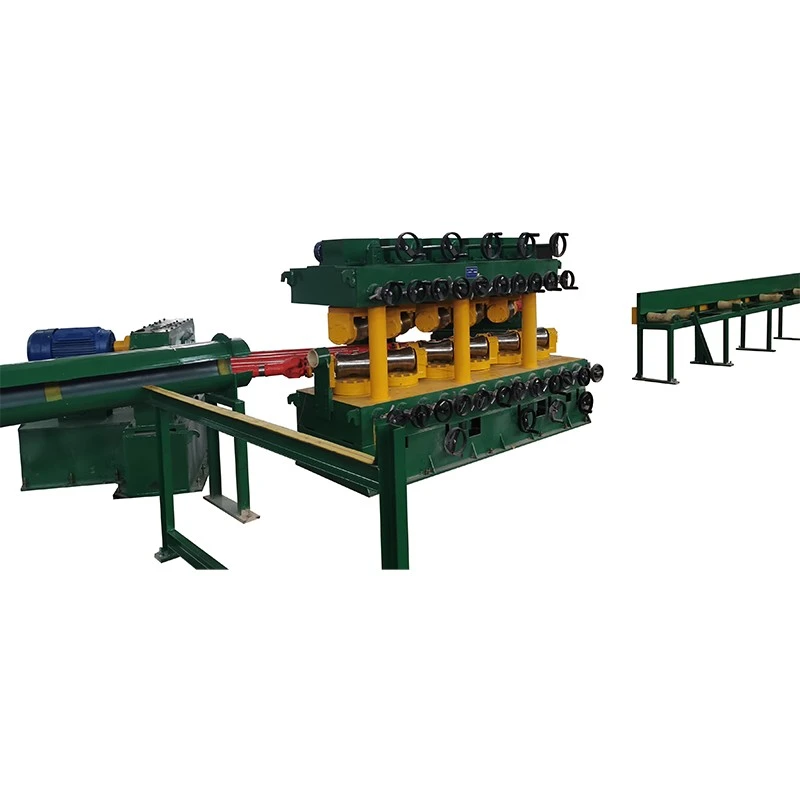
FangRong's Stainless Steel Vertical Multi-Roll Straightening Machines use successive roller contacts to correct these deviations in stainless steel tubes, pipes, bars and rods. The roller position, opening and working speed can be configured according to the material size and required straightness, making the machine suitable for continuous finishing operations rather than one-time manual correction.
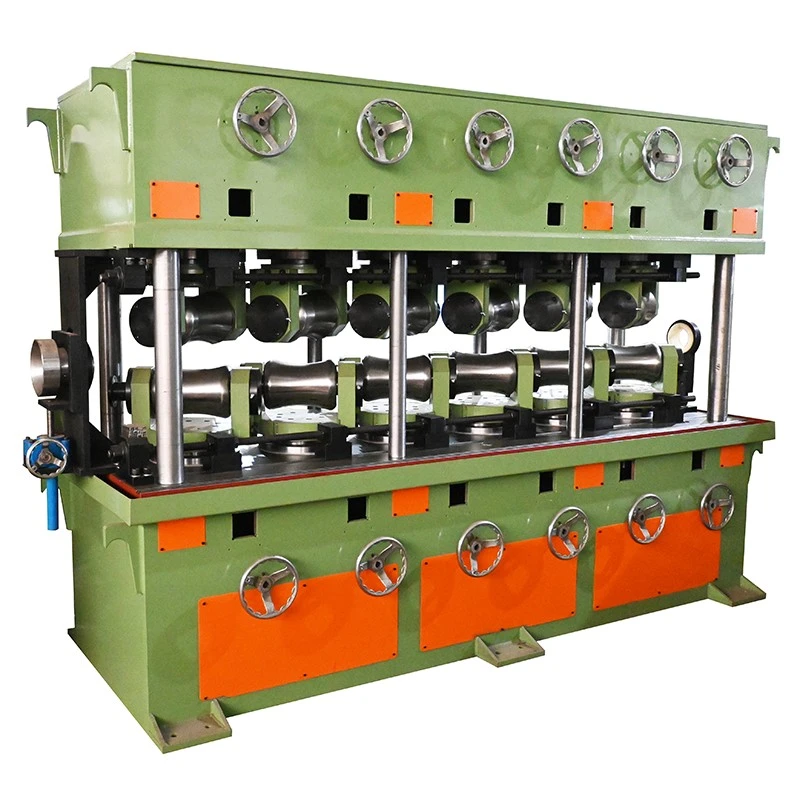
Stainless steel can recover part of the imposed deformation after leaving the rollers. If roller penetration is selected only according to the visible bend, the workpiece may not reach the required final straightness. The straightening setup therefore needs to consider material properties, initial curvature and the amount of correction applied through successive roller contacts.
Some stainless steel grades become harder as they are plastically deformed. This is particularly important when the material has already undergone cold drawing, rolling or other forming operations. Excessive local deformation can make subsequent correction less predictable, so the roller arrangement and contact conditions need to match the actual incoming material.
Stainless steel tubes and bars are often supplied with finished or semi-finished surfaces. Deep roller marks can create additional grinding or polishing work and may affect the appearance of decorative or precision components. Roller profile, surface finish, alignment and applied pressure should therefore be considered together with straightness.
For stainless steel tubes, outside diameter alone is not enough to determine the straightening setup. Wall thickness affects resistance to deformation and the risk of local flattening or ovality. Thin-wall tubes require different roller contact conditions from solid bars or heavy-wall tubes of a similar diameter.
The workpiece passes continuously through a series of upper and lower rollers. Instead of correcting the complete bend at one location, the machine applies controlled bending at multiple contact points. The workpiece is repeatedly deflected and released as it moves through the roller group, gradually reducing the original curvature.
This progressive correction is particularly useful for long stainless steel products where bending may not be uniform along the entire length. Roller opening and tilt are adjusted according to the material and required result, while the variable-frequency drive allows the working speed to be matched to the production process.
The actual roller setting should be established through material trials when tight straightness or surface requirements apply. Stainless steel grade, tensile strength, tube wall thickness, initial straightness and downstream processing requirements can all influence the final setting.
Cold drawing, rolling and other forming processes can leave residual curvature in bars and tubes. Multi-roller correction provides a continuous finishing step before cutting, machining, assembly or packaging.
Cutting, welding and other fabrication operations can introduce local deformation. Where the product dimensions and material condition permit mechanical straightening, the machine can be used to bring the workpiece back within the required straightness range.
A stainless steel bar may be relatively straight at one section and noticeably curved at another. Multiple roller contacts distribute correction along the material instead of relying on a single pressing point.
Manual correction is difficult to standardize when production volume is high or straightness requirements are tight. A controlled roller process provides repeatable adjustment and can be incorporated into a continuous finishing line.
The Stainless Steel Vertical Multi-Roll Straightening Machine uses multiple roller contacts to distribute deformation along the workpiece. Depending on the model, the supplied configurations include 7+7 or 10+1 rollers. The appropriate arrangement depends on the product range and straightening requirements rather than the number of rollers alone.
Roller geometry is important when processing stainless steel because excessive point contact can leave marks or locally deform the section. The roller profile should match the product geometry, particularly for tubes, thin-wall products and profiles with finished surfaces.
The upper and lower roller opening and roller tilt provide the mechanical adjustment required for different product sizes and correction conditions. Final settings should be determined from actual material behavior rather than using one setting across all stainless steel grades.
The working speed can be adjusted through the variable-frequency drive. Slower or faster feeding can be selected according to product size, material condition and the required production rate, subject to the limits of the selected model.
The FR series covers stainless steel tubes and solid bars across different diameter ranges. Model selection depends on tube diameter, wall thickness, solid bar diameter, tensile strength, initial straightness and required finished straightness. The values below are reference specifications; the final machine configuration should be confirmed against the actual material and production requirements.
| Model | FR-20 | FR-30 | FR-40 | FR-50 | FR-60 | FR-80 | FR-100 | FR-130 | FR-150 | FR-180 |
| Rollers Qty. | 7+7 Rollers | 7+7 Rollers | 10+1 Rollers | 6+6 Rollers | 10+1 Rollers | 10+1 Rollers | 10+1 Rollers | 10+1 Rollers | 10+1 Rollers | 10+1 Rollers |
| Raw Material Requirements / Tube Range / mm |
φ5-φ10 Wall thickness 1-7 |
φ10-φ30 Wall thickness 1-7 |
φ10-φ40 Wall thickness 1-5 |
φ18-φ50 Wall thickness 1-4 |
φ18-φ60 Wall thickness 3-12 |
φ30-φ80 Wall thickness 2-7 |
φ40-φ100 Wall thickness 2.5-10 |
φ50-φ130 Wall thickness 2.5-10 |
φ40-φ100 Wall thickness 2.5-10 |
φ80-φ180 Wall thickness 3-20 |
| Raw Material Requirements / Solid Bar Range / mm | φ5-φ10 | φ10-φ15 | φ10-φ25 | φ10-φ25 | φ18-φ30 | φ30-φ45 | φ16-φ55 | φ16-φ60 | φ16-φ55 | φ80-95 |
| Raw Material Length / mm | ≥2000 | >2000 | ≥2000 | ≥2000 | >2000 | >2000 | ≥2000 | ≥2500 | ≥2500 | ≥2000 |
| Tensile Strength / MPa | ≤800 | ≤800 | ≤800 | ≤800 | ≤980 | ≤650 | ≤1000 | ≤1000 | ≤1000 | ≤1000 |
| Raw Material Straightness / mm/m | ≤20 | ≤20 | ≤20 | ≤20 | ≤20 | ≤20 | ≤20 | ≤20 | ≤20 | ≤20 |
| Finished Material Straightness / mm/m | ≤0.3-0.5 | ≤0.3-0.5 | ≤0.3-0.5 | ≤0.3 | ≤0.8 | ≤0.7 | ≤0.6 | ≤0.6 | ≤0.65 | ≤0.7 |
| Roller Size / mm | φ68*90 | φ115*160 | φ130*210 | φ136*260 | φ150*260 | φ200*300 | φ220*300 | φ250*360 | φ220*300 | φ320*460 |
| Roller Size / mm | 200 | 250 | 360 | 360 | 430 | 450 | 600 | 650 | 600 | 780 |
| Upper and Lower Roller Opening Distance / mm | 35 | 45 | 55 | 65 | 75 | 75 | 85 | 85 | 95 | 95 |
| Adjustable Tilt Range | 27°-33° | 27°-33° | 27°-33° | 27°-33° | 27°-33° | 27°-33° | 27°-33° | 27°-33° | 27°-33° | 27°-33° |
| Main Motor Power / kW | 2.2*2 | 5.5*2 | 11*2 | 11*2 | 15*2 | 22*2 | 45*2 | 55*2 | 75*2 | 90*2 |
| Variable Frequency Drive / kW | 5 | 11 | 22 | 30 | 37 | 75 | 90 | 110 | 150 | 180 |
| Lifting Motor Power / kW | / | / | 0.75 | 0.75 | 1.1 | 1.1 | 1.5 | 2.2 | 2.2 | 3 |
| Working Speed / m/min | 10-30 | 10-30 | 10-40 | 0-20 | 10-30 | 10-30 | 10-30 | 10-30 | 10-30 | 10-30 |
| Center Height / mm | 750 | 750 | 790 | 830 | 830 | 830 | 830 | 870 | 890 | 890 |
| Weight / T (Reference) | 4 | 5 | 6 | 8 | 10 | 11 | 12 | 14 | 22 | 27 |
Start with outside diameter and wall thickness. A thin-wall tube and a solid bar with the same outside diameter do not have the same resistance to bending or local deformation. Tube dimensions, material grade, tensile strength and required straightness should all be included when selecting the model.
For solid products, diameter and tensile strength are the primary starting points. Initial curvature also matters because severely bent stock may require a different roller setup from material with only minor deviation.
If one machine will process several diameters or wall thicknesses, the complete production range should be reviewed rather than selecting a model from the largest diameter alone. Roller working range, adjustment method and tooling requirements should be checked against the smallest and largest products.
When the target is below the standard finished straightness range, sample material testing is recommended. Provide the stainless steel grade, dimensions, initial straightness, surface condition and target tolerance so the roller configuration can be evaluated before finalizing the machine.
Stainless Steel Tube and Bar Processing: Straightening is used as a finishing operation after drawing, rolling or other forming processes before cutting, machining or shipment.
Medical and Precision Components: Stainless steel bars and tubes used for precision components may require controlled straightness before further machining or assembly. Applicable product standards and dimensional requirements should be confirmed for each application.
Automotive Components: Stainless steel tubes used in exhaust, fluid-handling and structural applications can require straightness correction after forming or fabrication.
Architectural Stainless Steel: Handrails, decorative tubes, frames and other visible components may require both straightness control and careful surface protection.
Fastener and Hardware Production: Straightened stainless steel rod and bar can be used as incoming material for subsequent heading, threading, machining and forming processes.
Electrical and Industrial Components: Stainless steel rods, tubes and precision sections can be straightened before machining or assembly where dimensional consistency is required.
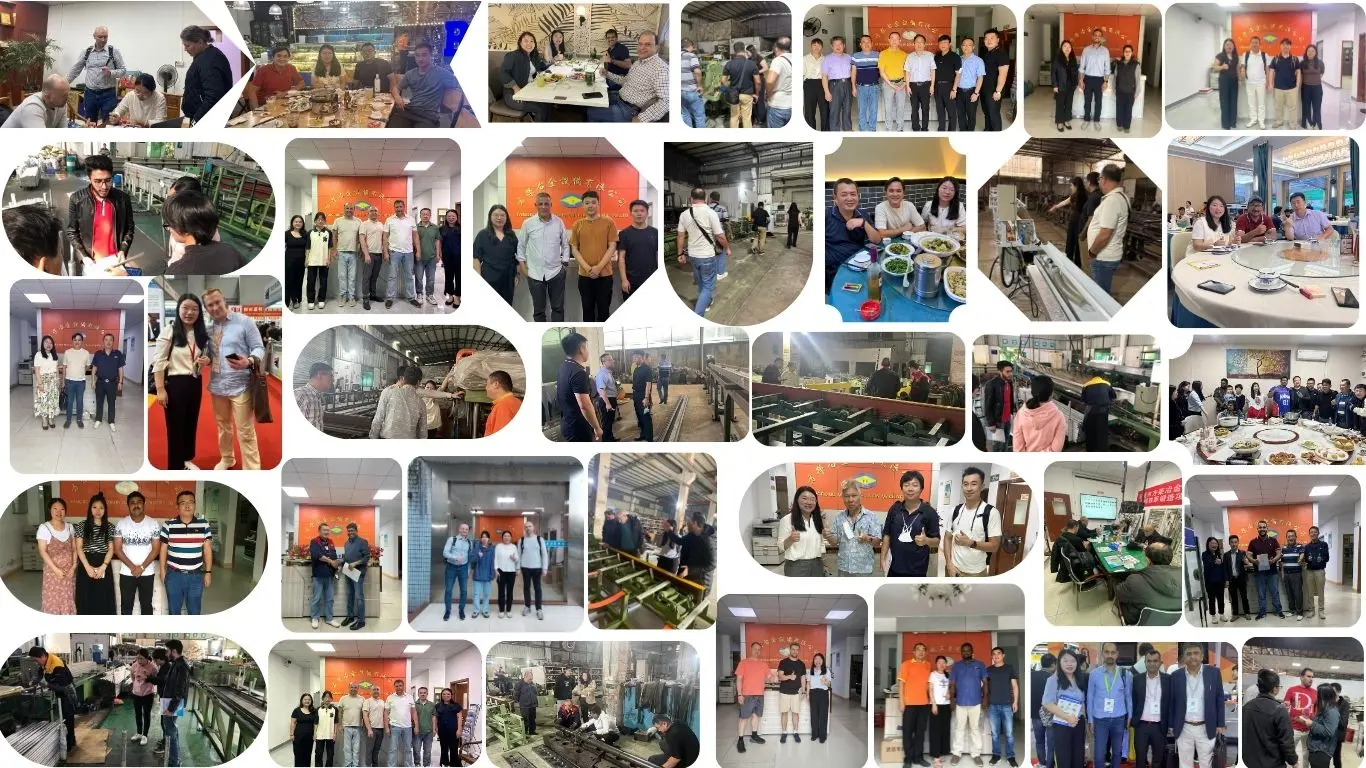
FangRong has manufactured straightening machines, cold drawing equipment and related metallurgical machinery since 1998. The company operates Dongguan Fangrong Metallurgical Equipment Co., Ltd. and Yangjiang Fangrong Machinery Co., Ltd., serving tube and bar processing customers in China and overseas markets.
Our equipment has been supplied to more than 10,000 customers in over 60 countries and regions. Machine design and configuration are based on product dimensions, material condition, required straightness and production requirements rather than using one standard setup for every application.
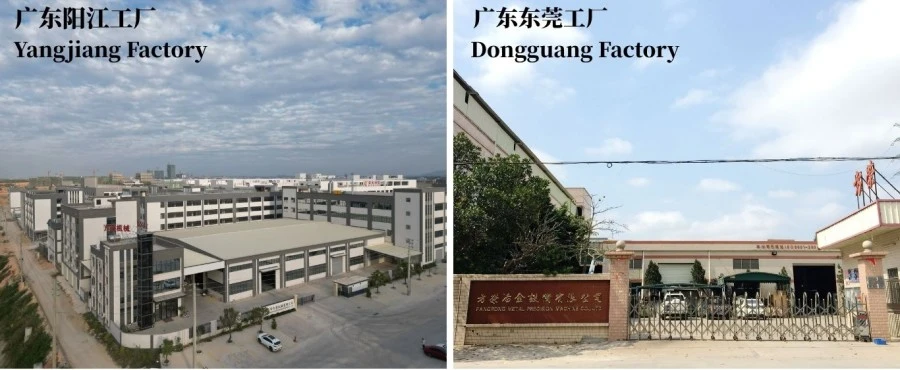
Dongguan Fangrong Metallurgical Equipment Co., Ltd. is located in Dalang Town, Dongguan City and focuses on cold drawing machines, straightening machines and related metal processing equipment.
Yangjiang Fangrong Machinery Co., Ltd. is located in Yangdong District, Yangjiang City and provides additional manufacturing capacity for metallurgical machinery production.
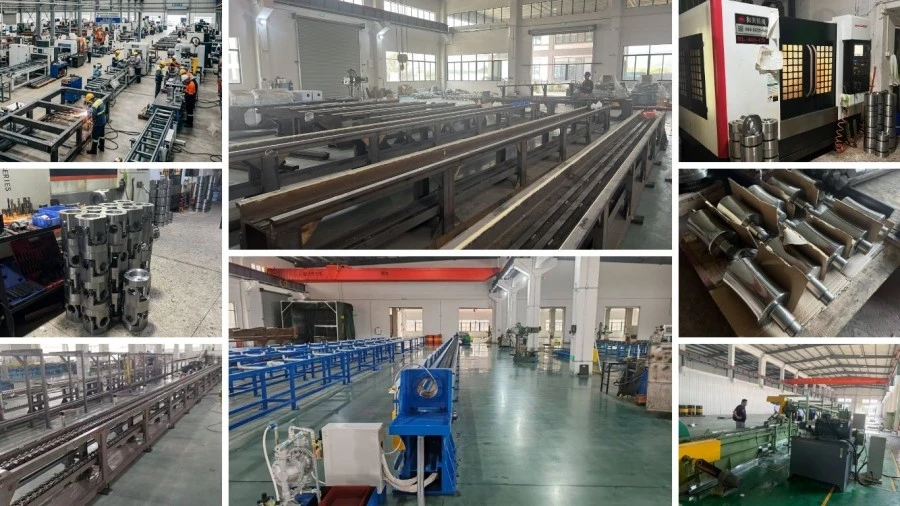
Manufacturing covers structural fabrication, roller machining, drive-system assembly, electrical integration and machine testing. For a customized machine, the roller arrangement and adjustment range are established according to the customer's material and dimensional requirements before production.
Rollers are machined and finished according to the specified geometry. Machine frames, drive components, bearings, adjustment mechanisms and control systems are assembled and checked before shipment.
Machine testing includes drive operation, roller adjustment, speed control, electrical functions and overall mechanical operation. Where required, sample stainless steel tubes or bars can be used to verify the straightening result against the agreed production requirements.
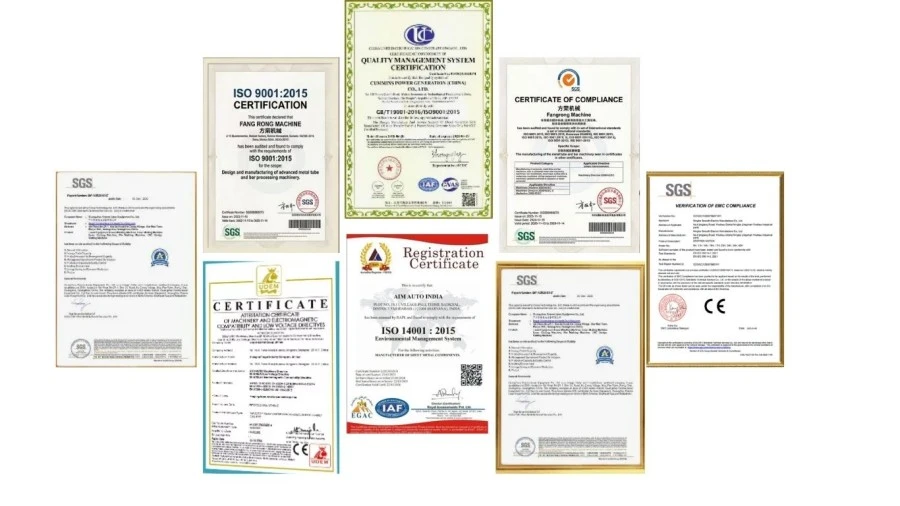
ISO 9001:2015: Quality management system certification, Certificate No. UQ231211R1.
CE Mark: CE-marked equipment is available according to the applicable machine configuration and supply scope.
SGS Inspection: Third-party inspection can be arranged according to project requirements.
Patents: FangRong holds invention and utility model patents covering equipment and mechanical components. Examples include 2013207829011, 2008300532117 and ZL2015 2 0842922.7.
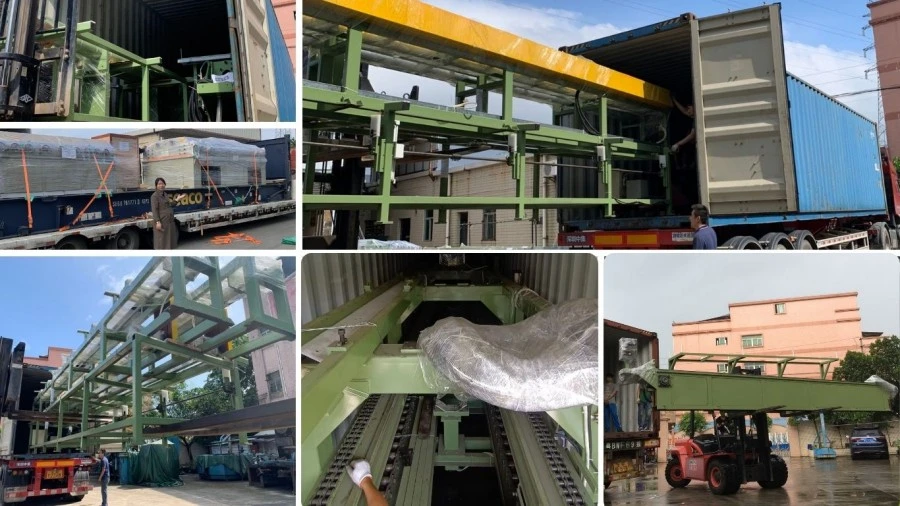
The Stainless Steel Vertical Multi-Roll Straightening Machine is prepared for international transportation according to its structure, dimensions and shipping method. Major assemblies are secured before loading, with export packaging and documentation arranged according to the destination and project requirements.
Provide the stainless steel grade, tube or bar dimensions, wall thickness for tubes, tensile strength or hardness where available, material length, initial straightness, required finished straightness and expected production capacity. Samples or drawings are useful when the tolerance is tight.
Yes. The FR series includes specifications for both tubes and solid bars. However, tube wall thickness and solid bar diameter require different considerations, so the Stainless Steel Vertical Multi-Roll Straightening Machine configuration should be checked against the actual product range.
After passing through the rollers, the material can partially recover its deformation. The amount of springback depends on material properties and processing condition. Roller penetration and arrangement therefore need to be established according to the actual stainless steel being processed.
Yes, provided the tube dimensions are within the selected model's working range. Wall thickness is an important selection parameter because excessive local loading can affect tube roundness or cause flattening. Sample testing is recommended for thin-wall or surface-critical products.
Roller surface condition, roller profile, alignment, contact pressure and feeding conditions all affect surface marking. For products with polished, bright or decorative surfaces, these requirements should be specified before the rollers and machine configuration are finalized.
Yes, within the working range of the selected model. The complete product range should be provided during quotation so that roller adjustment, opening distance and tooling requirements can be evaluated for both small and large sizes.
The reference finished straightness values in the table range from ≤0.3-0.5 mm/m to ≤0.8 mm/m depending on the model. Actual results depend on material properties, initial deformation, dimensions and machine adjustment.
Yes. The straightening machine can be arranged as part of a finishing process, subject to the production-line layout and handling requirements. Automatic loading or unloading equipment can be considered when required by the project configuration.
Standard machines typically require 30-60 days after order confirmation. Customized equipment may require additional time depending on machine size, roller configuration, electrical requirements and other project specifications.
Yes. FangRong provides technical guidance for installation and commissioning. Remote support is available, while on-site installation and operator training can be arranged according to the project agreement.
The standard warranty period is 12 months from acceptance or according to the contract terms, covering manufacturing defects within the agreed warranty scope.
Please provide the stainless steel grade, tube or bar size, wall thickness, material length, tensile strength or hardness, initial straightness, required finished straightness, production capacity and available plant conditions. If possible, send product drawings and sample material information. These details allow the machine model and roller configuration to be evaluated more accurately.
Address
NO.163,Shatong Road,Shabu 2nd Industrial Zone, Dalang Town, Dongguan City, Guangdong, China