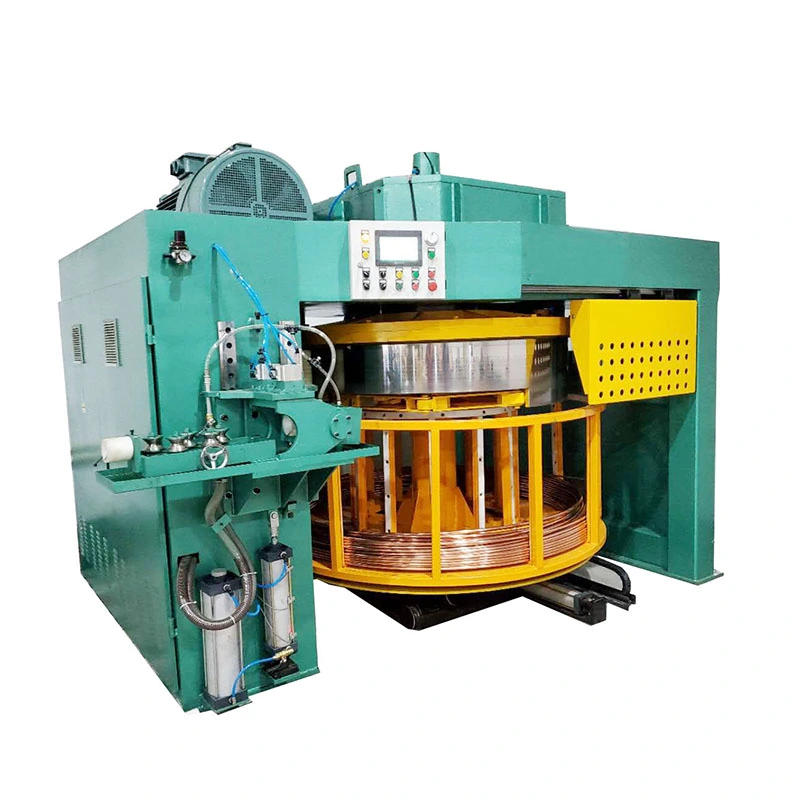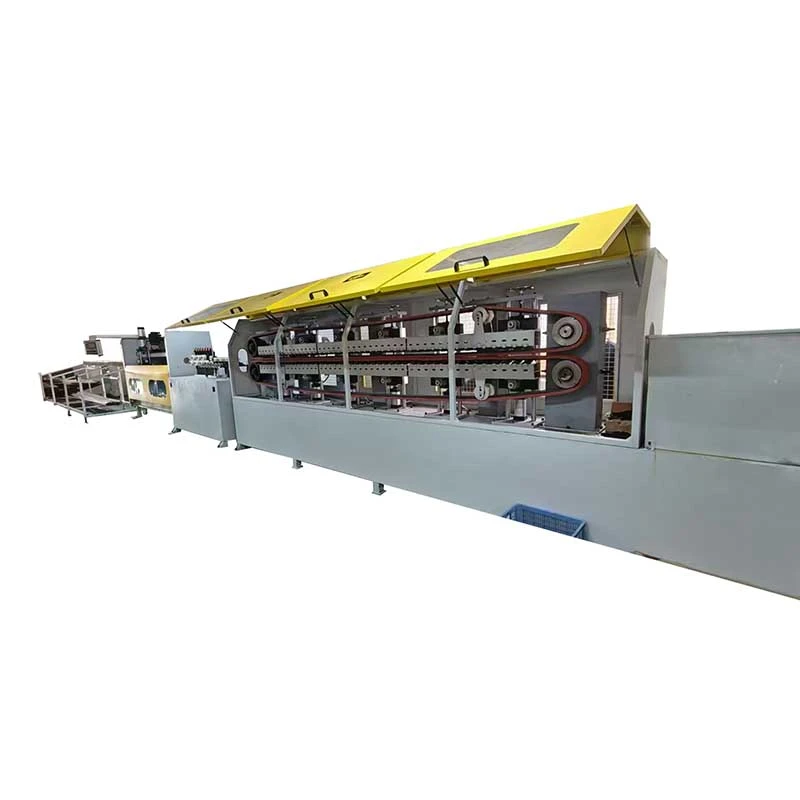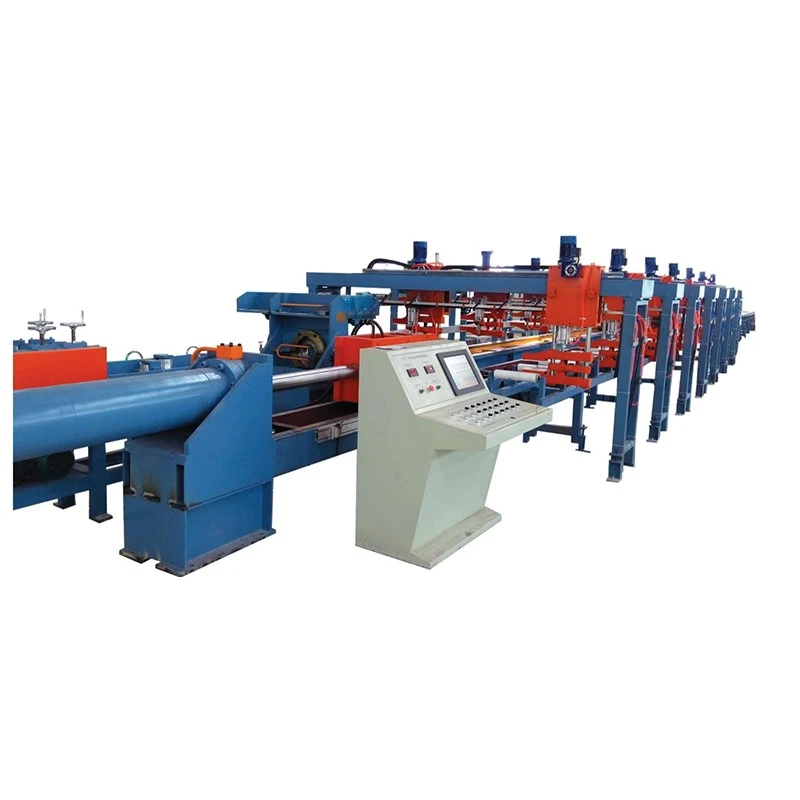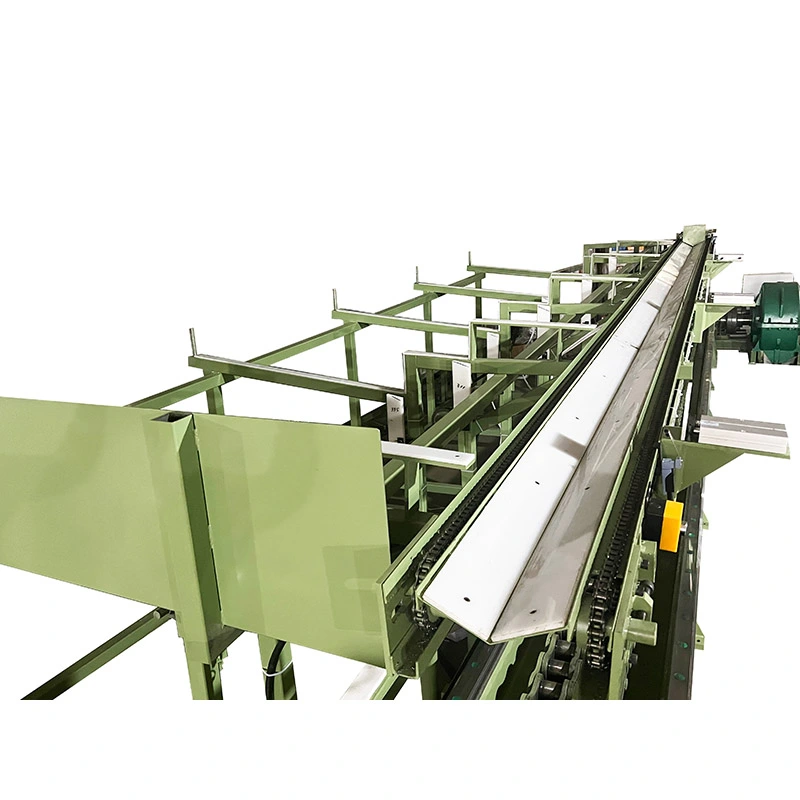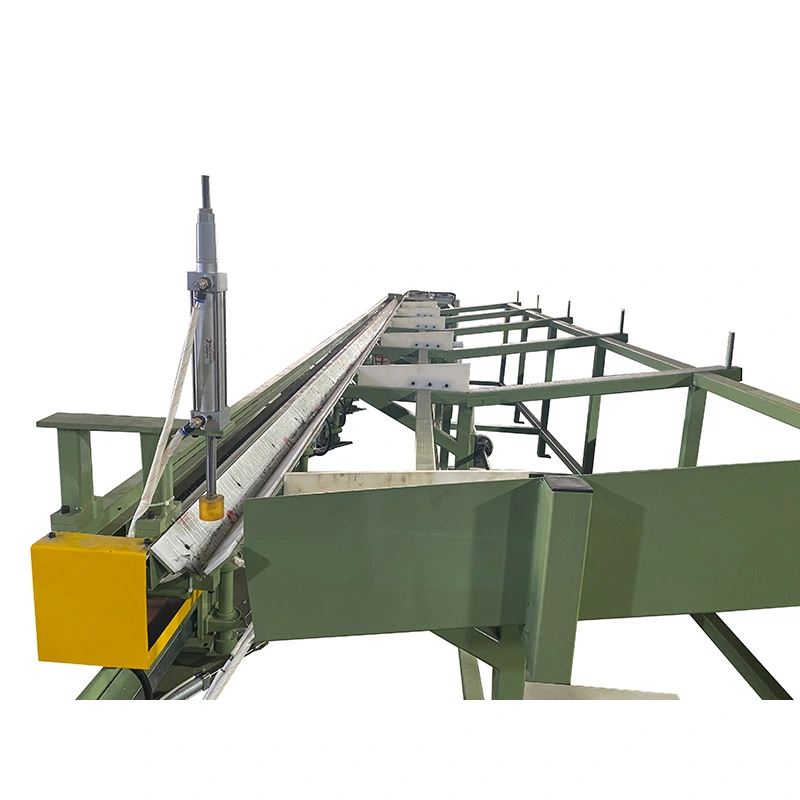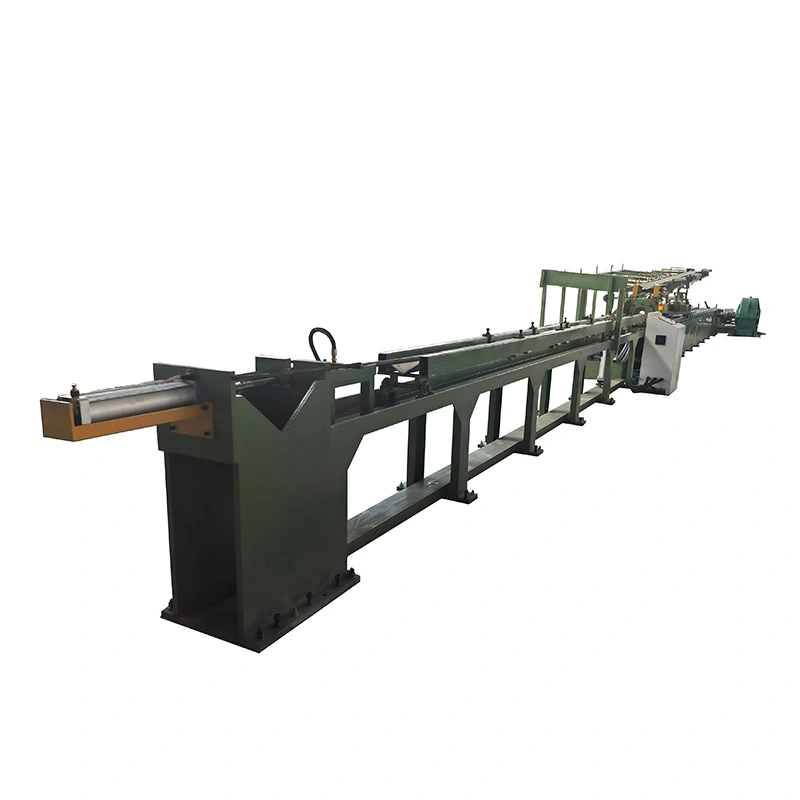

We offer a comprehensive range of precision metal processing equipment, including straightening, cold drawing, pointing, chamfering, cutting, thread rolling machines, and drawing dies, tailored for tube, bar, and wire materials across diverse industries.
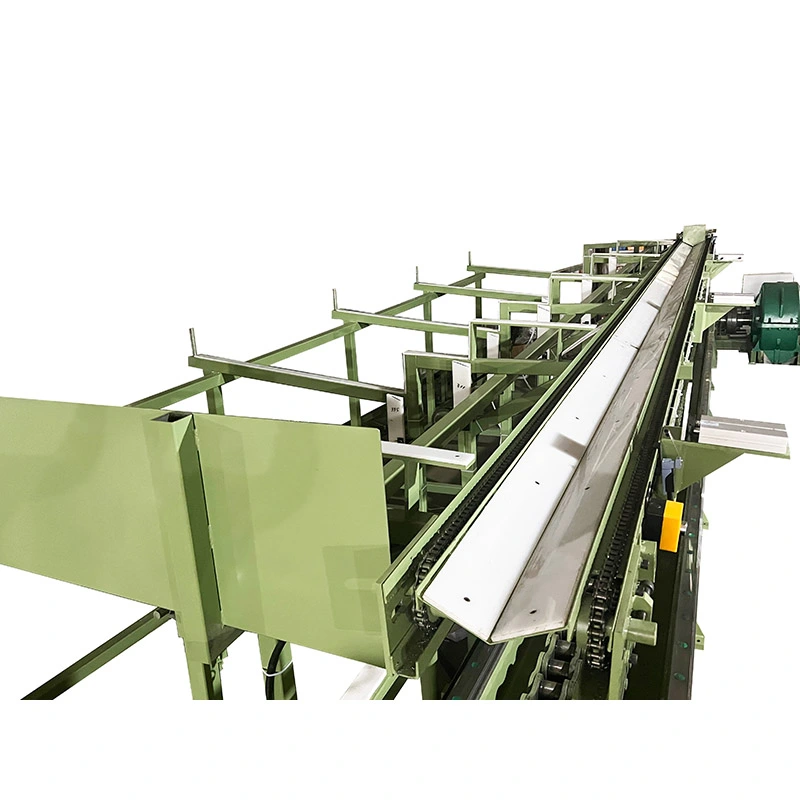
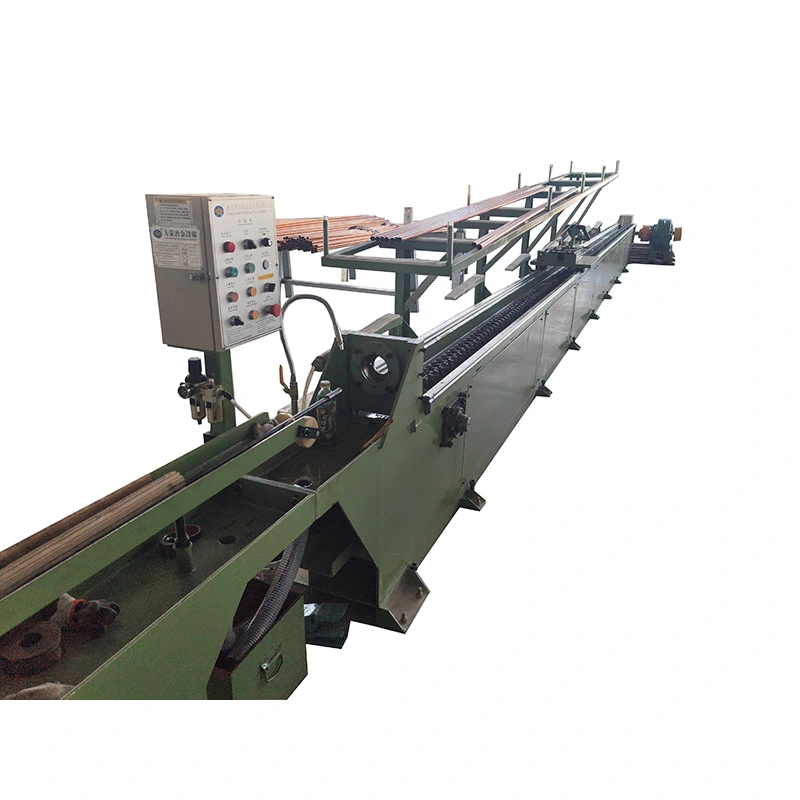
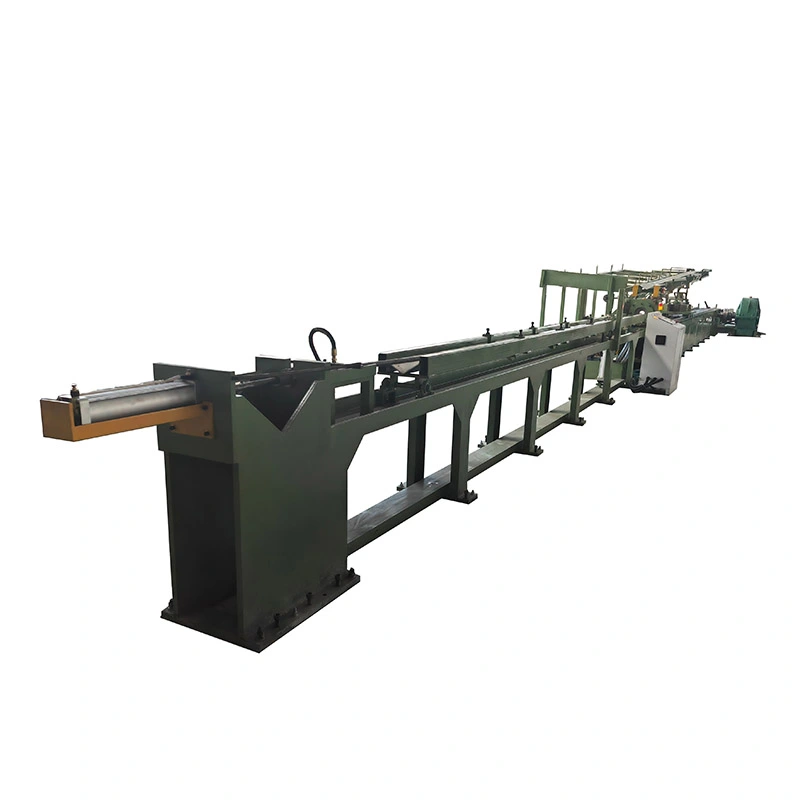
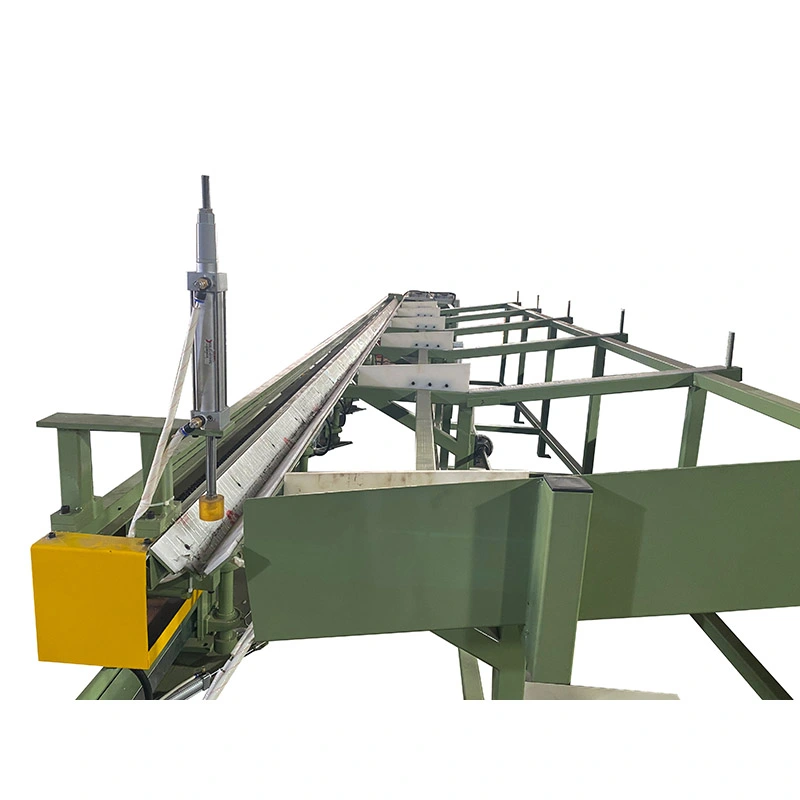
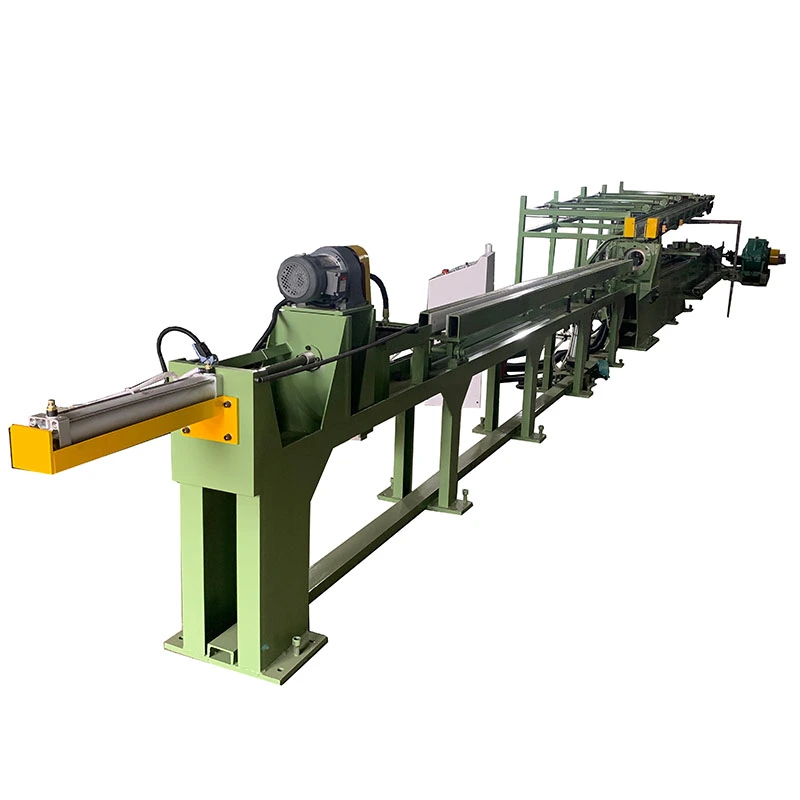
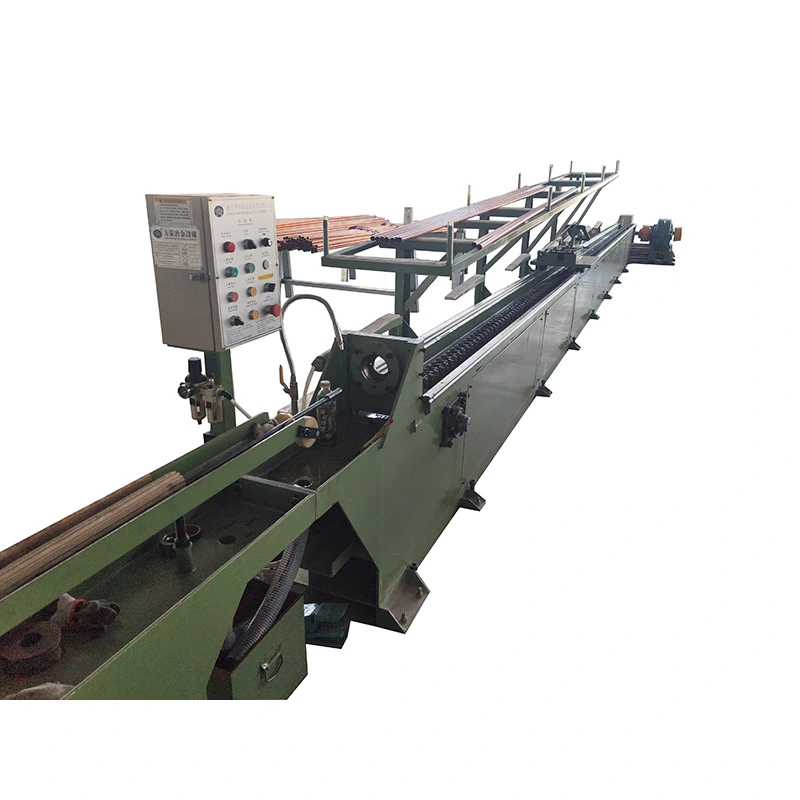
The Automatic Chain Cold Drawing Machine is designed for production lines where tube and bar drawing must run with less manual handling between cycles. Its chain-driven carriage provides 7–1000 kN drawing force, speeds up to 28 m/min, and strokes up to 10 m for products typically up to Ø250 mm. A mandrel controls the internal diameter and wall thickness during tube drawing, while 1–5 strand configurations increase output when several pieces share the same specification. Automatic feeding, cut-off, and receiving can be integrated for carbon steel, stainless steel, copper, aluminum, and alloy tubes and bars.
The Automatic Chain Cold Drawing Machine is a mechanical cold drawbench designed to reduce the diameter of metal tubes or solid bars by pulling the workpiece through a precision die at room temperature. A motor, reduction gearbox and heavy-duty chain transmit the drawing force to the carriage, making the machine particularly suitable for production where repeatable drawing cycles, relatively high speed and multi-piece operation are more important than the flexibility of a hydraulic system.
FangRong's FR series covers 10 standard models from FR-16 to FR-250, with rated drawing forces from 7 kN to 1000 kN and drawing speeds from 10 to 28 m/min. Depending on the model and tooling arrangement, the machine can process 1 to 5 pieces in one drawing cycle. Tube-drawing configurations can be equipped with a mandrel system when control of internal diameter and wall thickness is required.
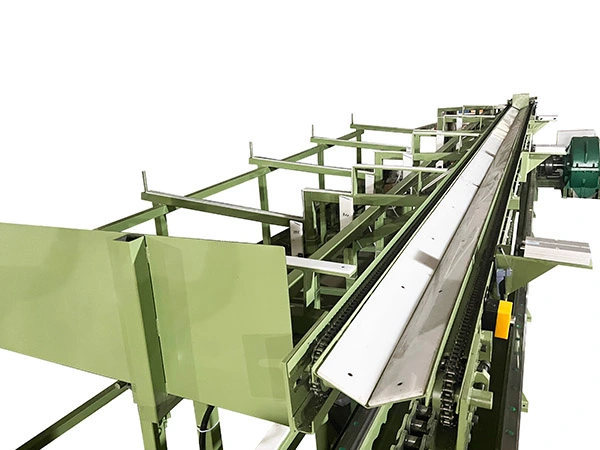
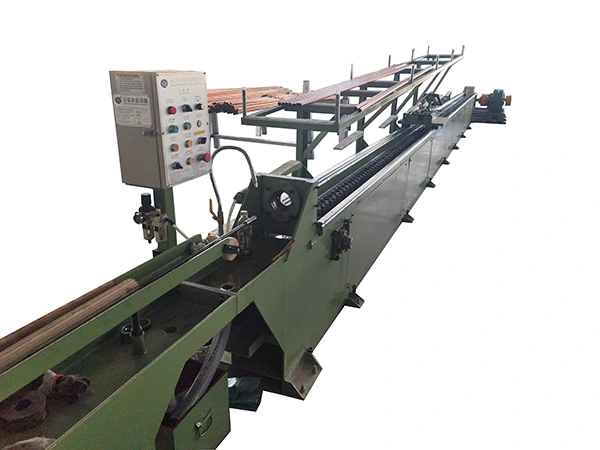
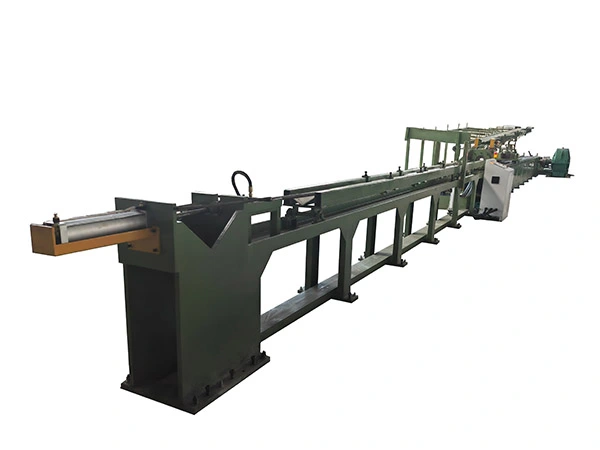
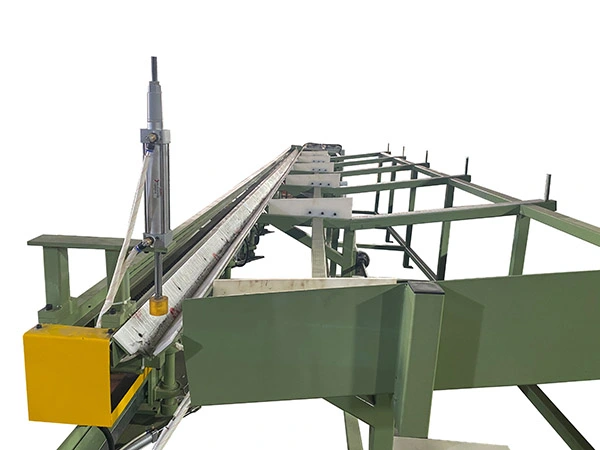
The workpiece is first prepared so that its leading end can enter the die and be gripped by the drawing carriage. Once clamped, the carriage moves along the guide rails while the chain drive pulls the material through the die. The cross-sectional area is reduced during the pass, while the die controls the finished outside dimensions. For tube applications, a suitable mandrel can be used to control the internal geometry.
After the drawing stroke is completed, the carriage returns to its starting position and the next workpiece is loaded. The separate return drive is useful in repetitive production because the carriage does not need to rely on the main drawing motor for its return movement.
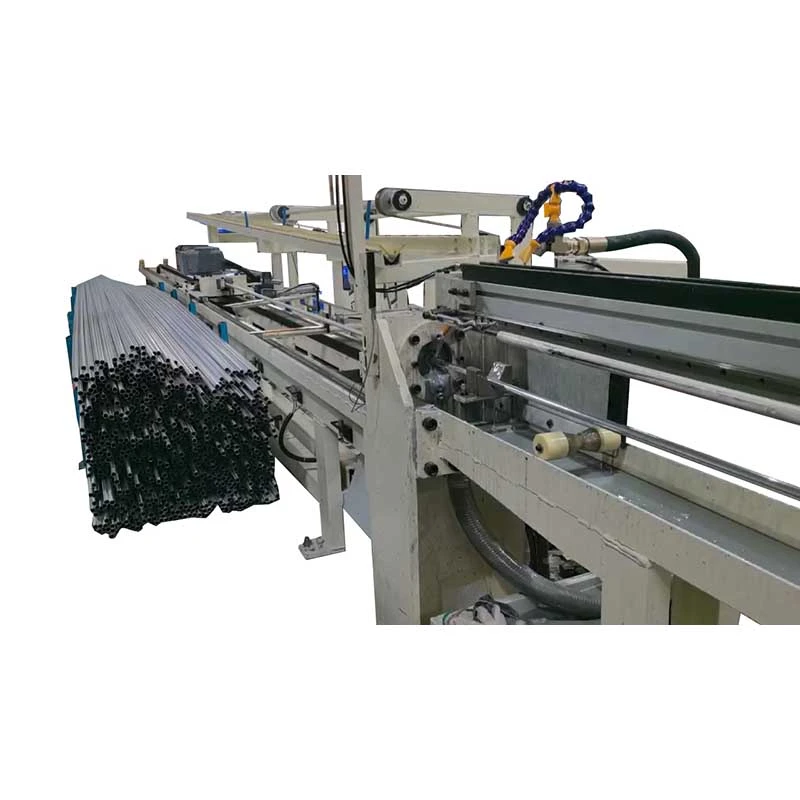
Automation is most useful when the same material and size combination is produced repeatedly. An automatic feeder can reduce manual loading between cycles, while automatic cutting and receiving equipment can simplify handling after drawing. For small batches with frequent size changes, manual loading may be more economical than installing a complete automatic line.
The machine can therefore be configured according to the production pattern rather than forcing every customer into the same automation package. Available options include automatic feeding, automatic cutting and receiving racks, with the number of drawing strands and stroke length specified according to the actual production requirement.
Cold drawing is normally selected when hot-rolled or extruded stock does not provide the dimensional consistency required by the finished component. The die establishes the final outside dimension, while the pass schedule, tooling condition, lubrication and incoming material quality determine the actual result.
This is important for products that subsequently enter grinding, machining, assembly or forming operations. A stable drawn diameter can reduce the amount of material that must be removed in the following process, but cold drawing should not be treated as a substitute for every finishing operation.
Because the material is formed without heating it to a hot-working temperature, the drawing process can produce a cleaner and more uniform surface than the incoming hot-worked stock. At the same time, plastic deformation causes work hardening, which can increase strength and hardness. The magnitude of this change depends on the material grade, reduction and number of passes.
For this reason, customers should define both the required dimensional result and the required mechanical properties when preparing the drawing schedule. Stainless steel, carbon steel, copper alloys and other materials do not necessarily require the same reduction or lubrication conditions.
The chain and gearbox arrangement provides direct mechanical transmission between the drive system and drawing carriage. On suitable small and medium-size products, the relatively high drawing speed can help increase output without using a hydraulic power unit. This configuration is particularly useful when the same drawing operation is repeated throughout the shift.
Depending on the machine model and die arrangement, 1 to 5 tubes or bars can be processed simultaneously. Multi-piece drawing is most valuable when several identical products are required continuously. It is less useful for frequent small-batch production because tooling changes and loading arrangements can offset the theoretical capacity increase.
A dedicated return motor brings the carriage back after the drawing stroke. On high-cycle production, reducing the non-drawing portion of each cycle can improve machine utilization and make the actual output closer to the theoretical drawing capacity.
The FR series provides different drawing forces, chain arrangements, motor powers and stroke lengths so the machine can be matched to the required material and product size. Longer strokes can be specified when the customer needs longer drawn lengths, while multi-strand tooling can be considered when throughput is the primary target.
The required machine model should not be selected from finished diameter alone. Drawing force depends on the starting and finished cross-sectional areas, material strength, reduction per pass, die geometry, lubrication and other process conditions. A larger diameter in a soft material may require less force than a smaller diameter in a high-strength alloy.
For quotation and engineering confirmation, provide the material grade, starting diameter and wall thickness, finished diameter and wall thickness, required length, number of pieces per cycle and target output. FangRong can then determine whether the required drawing force and machine configuration are suitable.
| Model / Technology Parameter | FR-16 | FR-25 | FR-50 | FR-76 | FR-100 | FR-120 | FR-150 | FR-180 | FR-200 | FR-250 |
| Max. Drawing Force (kN) | 7 | 10 | 50 | 100 | 150 | 200 | 400 | 600 | 800 | 1000 |
| Max. Drawing Travel (m) | 7 | 8 | 8 | 9 | 10 | 10 | 10 | 10 | 10 | 10 |
| Drawing Speed (m/min) | 28 | 28 | 25 | 25 | 12 | 12 | 10 | 10 | 10 | 10 |
| Return Motor Power (kW) | 0.75 | 0.75 | 1.1 | 2.2 | 3 | 3 | 3 | 4 | 4 | 4 |
| Reducer Model | ZQ250 | ZQ400 | ZQ500 | ZQ650 | ZQ850 | ZQ850 | ZQ1000 | ZQ1250 | ZQ850*2 | ZQ1450 |
| Chain Pitch | 1.5" | 2" | 2.5" | 3" | 4" | 3" double | 4" double | 5" double | 4" triple | 5" triple |
| Main Motor Power (kW) | 4 | 7.5/11 | 22 | 30/37 | 45 | 55 | 75 | 98 | 55*2 | 132 |
| Dimensions (L*W*H) (mm) | 16000*110*1600 | 17000*1200*1600 | 17000*1300*1600 | 17500*1350*1600 | 18000*1400*1600 | 23000*2200*1800 | 23000*2300*1800 | 23000*2400*2000 | 23000*3000*2000 | 23000*2500*2000 |
Configuration options: tube mandrel system, automatic feeder, automatic cutter, receiving rack, 1-5 strand drawing arrangement and customised stroke length. Final configuration is confirmed according to the customer's material, dimensions and production requirements.
Chain drawbenches can be used for tube and bar products that require controlled diameter and repeatable dimensions, including selected automotive tubes, shafts and other machined component stock. The main benefit is consistency before the next machining or forming operation.
Non-ferrous materials can be cold drawn when tighter dimensions and a controlled surface are required. For copper and aluminium, however, the drawing schedule and lubrication must be matched to the material because excessive deformation in one pass can affect surface quality and dimensional stability.
Stainless and specialty alloys generally require more careful pass design because of their higher deformation resistance and work-hardening behaviour. In these applications, machine force should be selected from an actual drawing calculation rather than simply matching the finished diameter to a machine model.
Solid bar drawing is suitable for applications where the finished bar will be machined into pins, shafts, fasteners or other precision components. When the downstream process already includes substantial turning or grinding, the value of cold drawing should be evaluated against the amount of stock that would otherwise be removed.
Each project is configured around the customer's drawing material and production target. Die holder dimensions, mandrel arrangement, carriage configuration, chain system, motor power and optional automation are confirmed before manufacturing. This prevents a machine from being selected only by nominal diameter while overlooking the actual drawing force.
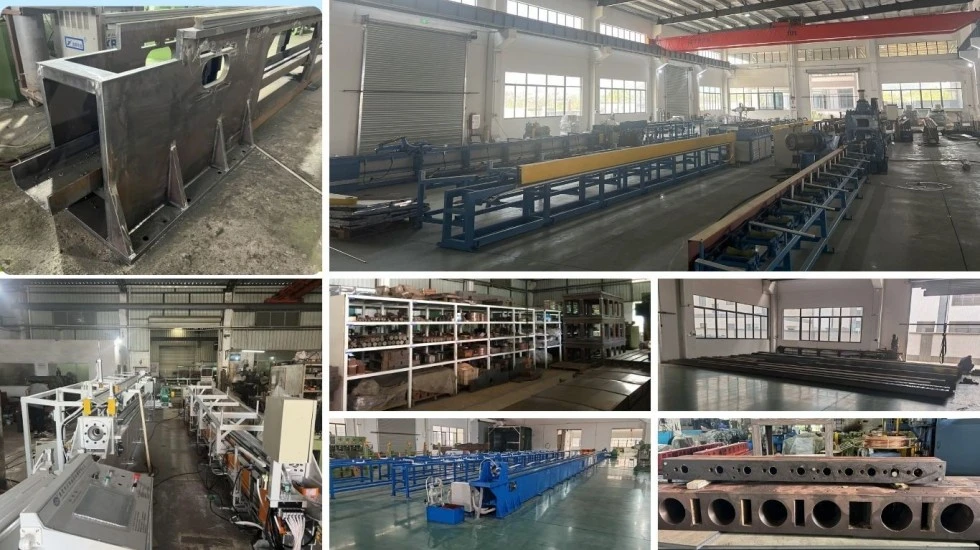
The production process includes raw-material inspection, machining, gearbox and chain assembly, carriage installation, electrical integration and final alignment. Guide rails are processed to the stated straightness requirement of ≤0.3 mm/m.
Factory testing includes an idle running test followed by a rated-force load test. When customer samples are available, actual drawing trials can be used to check the machine's force, movement and process suitability before shipment. This is especially useful for customized machines and multi-strand configurations.
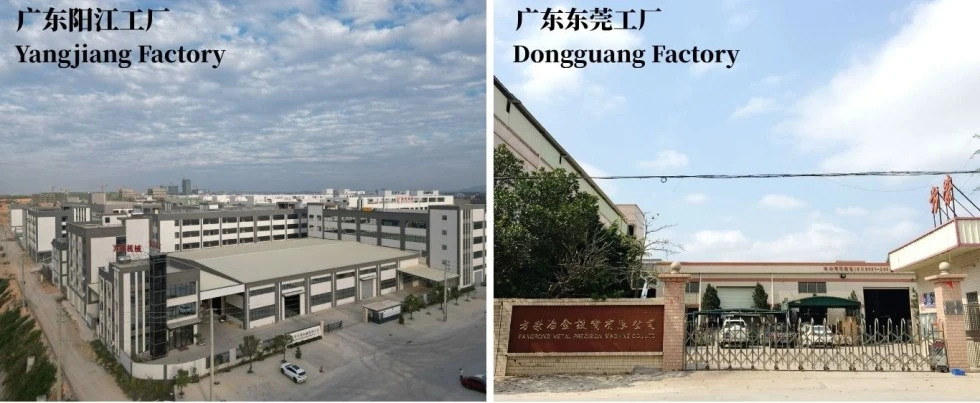
FangRong has been involved in chain-type drawbench engineering since 1998 and manufactures the FR series through its production facilities in Dongguan and Yangjiang, China. The company reports exports to more than 70 countries and an annual production capacity of more than 650 machines.
The engineering team supports machine selection, drawing-force calculation, die configuration, pass-schedule development and automation planning. After installation, commissioning and operator training can also be arranged according to the project scope.
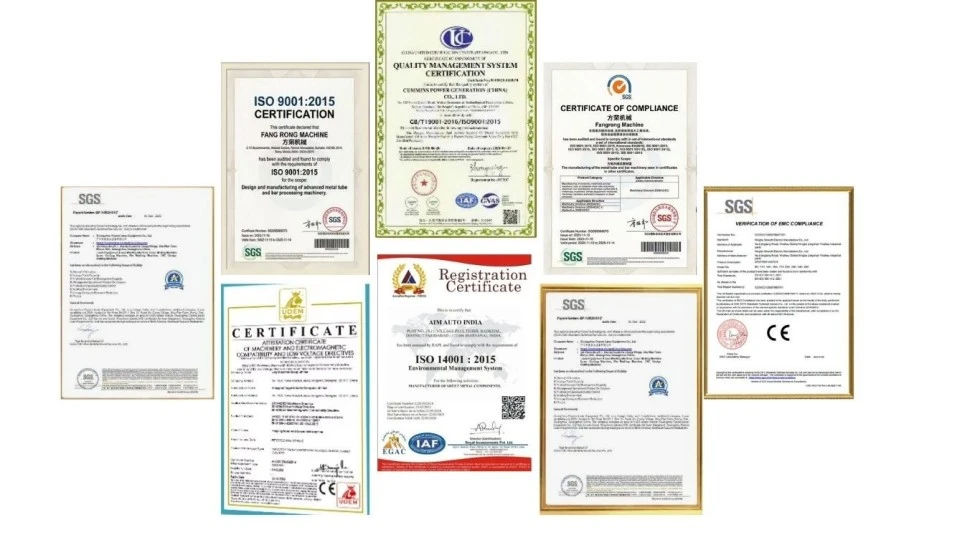
ISO 9001:2015 quality management documentation is applied to the company's manufacturing and service processes. Certificate No. UQ231211R1.
CE Mark is provided for the applicable standard machine configuration based on the stated Machinery Directive 2006/42/EC requirements.
SGS inspection can be arranged where independent inspection is required as part of the customer's purchasing or factory acceptance process.
FangRong also reports a portfolio of national invention and utility-model patents covering elements of its drawing-machine technology.
The standard machine configuration is supplied according to the confirmed quotation and normally includes the main drive system, reduction gearbox, chain mechanism, drawing carriage, die holder, control system and required machine assemblies. Tube-drawing projects can include the corresponding mandrel arrangement.
Dies, special tooling, automatic feeding, cutting and receiving equipment should be confirmed separately because these components depend on the customer's product dimensions and production layout.
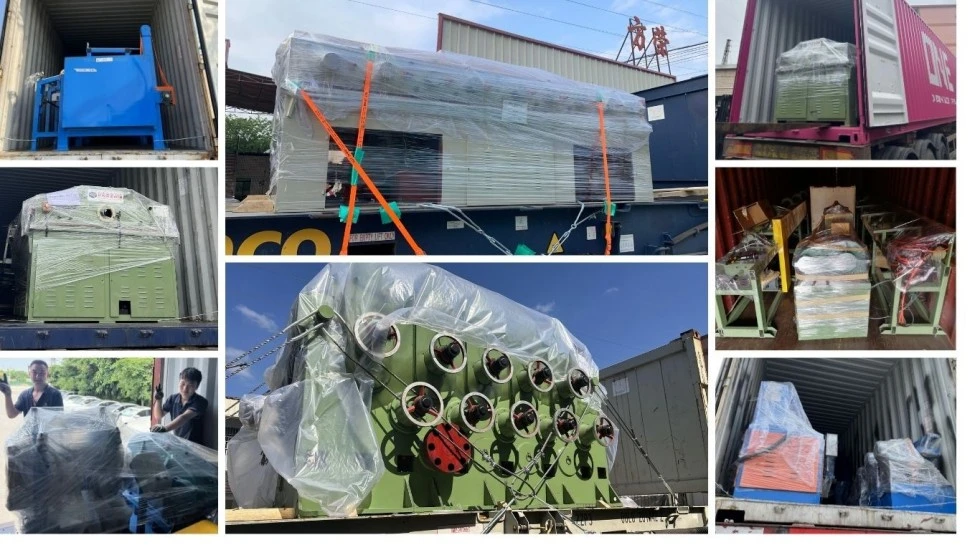
The Automatic Chain Cold Drawing Machine is prepared for export shipment with packaging suitable for long-distance transportation. Before delivery, the customer should confirm workshop space, electrical supply, material flow and the foundation or anchoring requirements shown in the supplied installation documentation.
MOQ: 1 set. For one machine, the quotation is based on the selected FR model and confirmed configuration. For 2-4 sets, quantity-based pricing can be quoted after model and delivery requirements are confirmed. For 5 sets or more, project or volume pricing is available based on the final machine configuration.
Standard orders: approximately 30-60 days for standard FR-16 to FR-100 configurations.
Large or customized orders: approximately 90-120 days for FR-150 and larger machines or projects involving special automation.
Expedited orders: an accelerated schedule may be considered when production capacity and component availability allow it. The confirmed expedited delivery date should be stated in the sales contract rather than assumed from the standard lead time.
The standard payment arrangement is 30% deposit upon order confirmation and 70% before shipment after factory acceptance testing. The standard warranty period is 12 months from commissioning, subject to the final sales agreement.
The FR series can be configured for different metal materials, including carbon steel, stainless steel, copper, aluminium and selected alloy products. The suitable machine model depends on material strength, starting size, finished size and reduction rather than material name alone.
Yes, the Automatic Chain Cold Drawing Machine platform can be configured for tube or solid-bar drawing. Tube applications may require a mandrel system, while solid-bar drawing uses the corresponding die and tooling arrangement. The required tooling should be confirmed with the product dimensions before ordering.
The FR series can be configured for 1 to 5 pieces per drawing cycle, depending on the model, product dimensions and die layout. Multi-piece drawing is most suitable for repeated production of the same size rather than frequent small-lot orders.
Compare the required drawing force with the rated force of each model. Send the material grade, starting and finished dimensions, reduction per pass and required output to the manufacturer for a drawing-force calculation. Choosing only by finished diameter can result in an unnecessarily large machine or insufficient drawing capacity.
For conventional drawing, the leading end normally needs to be prepared so that it can enter the die and be gripped by the carriage. Whether a separate pointing machine is required depends on the incoming material and the selected feeding and preparation method. Pointing equipment can be discussed when an integrated production line is required.
Not necessarily. Automatic feeding, cutting and receiving systems are optional configurations and should be listed separately in the quotation. They are most valuable for stable, high-volume orders where reducing manual handling has a measurable effect on production efficiency.
Provide the material grade, starting OD and wall thickness or bar diameter, finished dimensions, required drawing length, target production volume, number of pieces per cycle and available power supply. Product drawings or sample material are also useful for confirming tooling and process requirements.
Standard FR-16 to FR-100 machines generally require 30-60 days. Larger FR-150 and above models or machines with customized automation generally require 90-120 days. Expedited delivery is evaluated according to current production capacity and component availability.
Address
NO.163,Shatong Road,Shabu 2nd Industrial Zone, Dalang Town, Dongguan City, Guangdong, China