News
News

Stay updated with FangRong’s latest innovations, certifications, global expansions, and successful project deliveries in automotive, aerospace, new energy, and other high-precision sectors.

How Can a Stainless Steel Rod Pointing Machine Improve Cold Drawing Efficiency and Production Quality

2026-11-13 0 Leave me a message

Article Summary: A Stainless Steel Rod Pointing Machine is an essential piece of equipment for preparing stainless steel rods before cold drawing. By reducing and shaping the leading end of a rod through roller forming, it makes die entry and material gripping easier while reducing manual preparation work. Fangrong provides FR-10 to FR-100 models covering rod pointing diameters from 2 mm to 100 mm, offering different roller configurations, motor powers, and machine capacities to meet diverse industrial production requirements. This guide explores the working principle, technical specifications, applications, selection criteria, and manufacturing considerations that help buyers choose the right equipment.

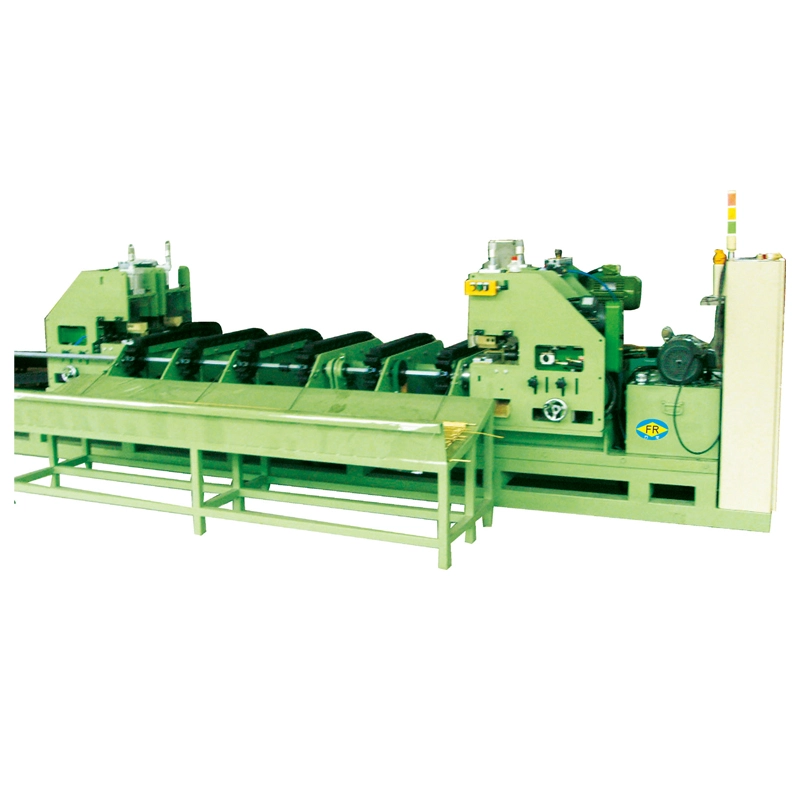
Stainless Steel Rod Pointing Machine

Table of Contents

  1. 1. What Is a Stainless Steel Rod Pointing Machine?
  2. 2. How Does the Rod Pointing Process Work?
  3. 3. What Are the Main Advantages of Roller Pointing?
  4. 4. What Models and Technical Specifications Are Available?
  5. 5. Which Industries Use Stainless Steel Rod Pointing Machines?
  6. 6. How to Choose the Right Machine for Your Production Line
  7. 7. Manufacturing Quality and Engineering Assurance
  8. 8. Maintenance Tips for Reliable Machine Performance
  9. 9. Frequently Asked Questions
  10. 10. Conclusion: Investing in the Right Pointing Solution

1. What Is a Stainless Steel Rod Pointing Machine?

In modern metal processing, preparing rod ends correctly is an important step before cold drawing. Fangrong manufactures the Stainless Steel Rod Pointing Machine to help metalworking companies form and reduce the leading ends of stainless steel rods, making them suitable for entering drawing dies and being securely gripped by drawing equipment.

During cold drawing, the rod must pass through a drawing die to achieve the required diameter, dimensional accuracy, and surface characteristics. However, an untreated rod end may be too large to enter the die or may not provide a suitable gripping section for the drawing mechanism.

A rod pointing machine solves this preparation problem through controlled roller forming. Instead of relying on extensive cutting or grinding, the machine progressively reduces the diameter of the rod end using specially grooved rollers.

This equipment can operate independently or be incorporated into manual and automatic cold drawing production lines. It is particularly useful for manufacturers processing stainless steel rods in multiple sizes or handling continuous production requirements.

For more information about related equipment, explore Fangrong's metal processing machinery solutions.


2. How Does the Rod Pointing Process Work?

Understanding the working principle helps manufacturers evaluate whether a Stainless Steel Rod Pointing Machine matches their production requirements.

Roller Forming Technology

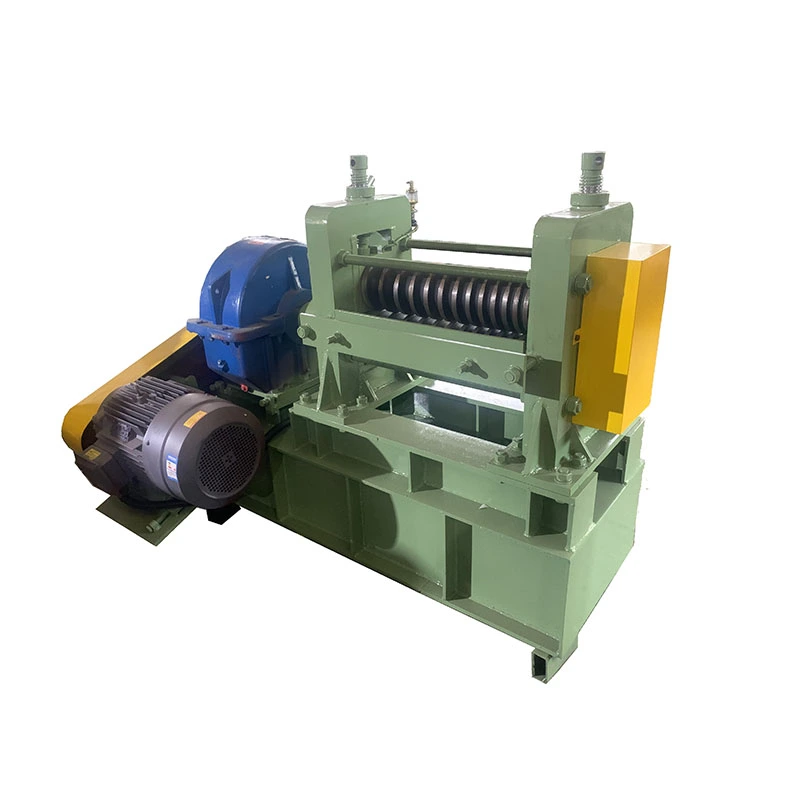
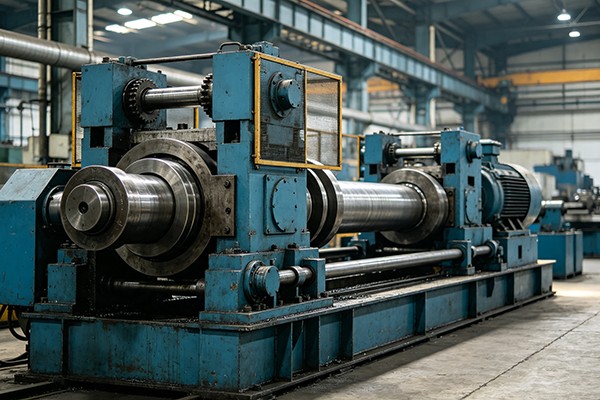
The machine primarily consists of two hardened alloy steel rollers with specially machined grooves. An industrial motor drives the rollers through a gearbox and reducer, providing the mechanical force required for forming.

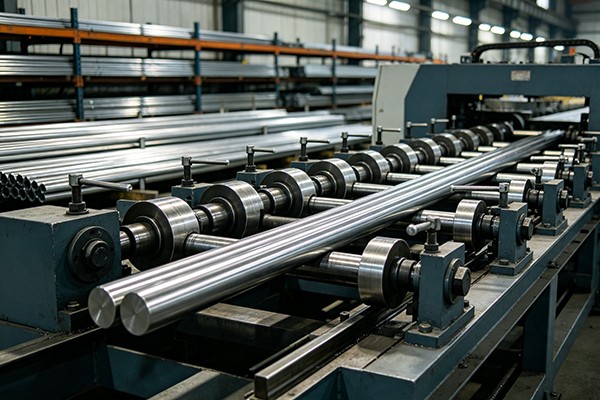
During operation, the operator feeds the stainless steel rod into the working area. As the rod passes between the rotating rollers, successive groove profiles progressively reduce the diameter of its leading section, producing a tapered or pointed end suitable for the next drawing operation.

Key Processing Stages

  1. Material preparation: Inspect the stainless steel rod and confirm its diameter, grade, and surface condition.
  2. Machine adjustment: Select the appropriate roller groove configuration according to the rod dimensions.
  3. Rod feeding: Position the rod correctly and feed its leading end into the roller working area.
  4. Progressive forming: The rotating rollers reduce and shape the rod end through controlled deformation.
  5. Point inspection: Check the formed section to ensure that its dimensions and shape are suitable for die entry and gripping.
  6. Cold drawing preparation: Transfer the pointed rod to the drawing machine for subsequent processing.

Because the process primarily reshapes the existing material rather than removing it, roller pointing can help reduce material waste associated with extensive grinding or cutting. Actual results depend on the material grade, rod dimensions, roller configuration, and operating conditions.


3. What Are the Main Advantages of Roller Pointing?

For stainless steel rod manufacturers, the quality of end preparation directly influences the convenience and consistency of subsequent drawing operations. A properly configured pointing machine offers several practical advantages.

3.1 More Consistent Rod End Preparation

Manual hammering and grinding can produce variations in the shape and dimensions of rod ends. Roller forming provides a more repeatable preparation method, helping operators achieve consistent profiles when machine settings and material conditions are properly controlled.

3.2 Reduced Manual Processing

Traditional end preparation often requires considerable operator involvement. Mechanized roller pointing reduces dependence on manual shaping and helps manufacturers organize a more efficient production workflow.

3.3 Better Material Utilization

Unlike extensive grinding and cutting, roller pointing primarily relies on material deformation. This approach can reduce the amount of stainless steel removed during end preparation and support more efficient material utilization.

3.4 Flexible Diameter Processing

Fangrong offers multiple machine models and roller configurations for different rod diameters. Manufacturers processing various product specifications can select suitable groove arrangements instead of automatically requiring a separate machine for every rod size.

3.5 Integration with Cold Drawing Equipment

The machine can function as an independent processing unit or work as part of a larger cold drawing system. This flexibility helps manufacturers adapt their equipment layout to existing production facilities.

Main operational benefits include:

  • More consistent rod end shaping.
  • Reduced reliance on manual preparation.
  • Improved material utilization potential.
  • Multiple rod diameter processing options.
  • Convenient integration into cold drawing workflows.
  • Adaptability to different industrial production requirements.

4. What Models and Technical Specifications Are Available?

Machine selection should begin with the actual diameter range of the stainless steel rods being processed. Fangrong's FR-series Stainless Steel Rod Pointing Machine covers pointing diameters from approximately 2 mm to 100 mm.

Different models are equipped with corresponding roller diameters, motor powers, reducers, and mechanical structures to accommodate different production requirements.

Fangrong Stainless Steel Rod Pointing Machine Specifications

Model Pointing Range (mm) Roller Diameter (mm) Motor Power (kW) Reducer Weight
FR-10 2–10 81 2.2 ZQ200 160 kg
FR-15 3–16 126 5.5 ZQ350 550 kg
FR-20 6–20 126 7.5 ZQ350 580 kg
FR-25 10–25 135 11 ZQ400 600 kg
FR-30 10–30 156 11 ZQ400 1.4 ton
FR-40 15–40 168 15 ZQ500 1.7 ton
FR-50 15–50 175 18.5 ZQ500 2 tons
FR-60 30–60 203 22 ZQ500 2.8 tons
FR-70 40–70 224 30 ZQ650 3 tons
FR-80 40–80 224 37 ZQ750 3.5 tons
FR-100 50–100 224 45 ZQ850 4 tons

Additional dimensional information: Standard machine dimensions range from 750 × 550 × 1100 mm for FR-10 to 2000 × 2100 × 1550 mm for FR-100. Center heights vary by model, generally between 850 mm and 910 mm.

Important: The specifications are reference values. Final machine selection and configuration should be confirmed according to stainless steel grade, actual rod dimensions, processing conditions, and production requirements. Customized configurations can also be discussed.

Understanding the Model Differences

  • FR-10 to FR-20: Suitable starting options for manufacturers processing relatively small-diameter stainless steel rods.
  • FR-25 to FR-40: Designed for medium-diameter rod preparation and different industrial processing requirements.
  • FR-50 to FR-70: Offer higher mechanical capacity for larger rod diameters.
  • FR-80 to FR-100: Designed for heavy-duty applications involving larger stainless steel rods.

5. Which Industries Use Stainless Steel Rod Pointing Machines?

A Stainless Steel Rod Pointing Machine is mainly used in industries where metal rods require end preparation before drawing, forming, or further processing.

Common Industrial Applications

  • Stainless steel rod manufacturing: Prepares rod ends before dimensional reduction and finishing.
  • Cold drawing production: Helps ensure that rod ends can enter drawing dies and be gripped by drawing equipment.
  • Stainless steel wire production: Supports the preparation of rod materials before wire drawing.
  • Bright steel bar processing: Provides end preparation for subsequent metal forming operations.
  • Fastener manufacturing: Supports the preparation of metal materials used in bolt, screw, and related component production.
  • Spring material processing: Helps prepare metal stock before drawing and subsequent spring manufacturing processes.
  • Automotive component manufacturing: Supports upstream material preparation for metal components.
  • Metal processing service centers: Provides flexible end preparation for different rod specifications.

For manufacturers handling several rod dimensions, choosing a suitable pointing machine can simplify material preparation and improve coordination between different processing stages.


6. How to Choose the Right Machine for Your Production Line

Choosing the right Stainless Steel Rod Pointing Machine requires more than comparing motor power or purchase prices. Buyers should evaluate the entire production process and the characteristics of their materials.

6.1 Confirm the Rod Diameter Range

Identify the minimum and maximum stainless steel rod diameters that need to be processed. The selected machine must cover the actual working range without exceeding its rated capacity.

6.2 Consider Stainless Steel Material Characteristics

Different stainless steel grades can have different hardness, strength, and deformation characteristics. Material information is important when determining roller groove configurations and suitable machine capacity.

6.3 Evaluate Production Volume

Manufacturers with frequent production runs or larger processing volumes should consider machine durability, motor capacity, workflow arrangement, and the expected operating schedule.

6.4 Check Existing Drawing Line Compatibility

If the pointing machine will be installed in an existing cold drawing line, evaluate feeding direction, center height, available installation space, and the connection between upstream and downstream equipment.

6.5 Compare Technical Support and Customization

Reliable equipment suppliers should be able to discuss roller configurations, installation requirements, commissioning, operator training, and spare parts support.

Selection Factor What Buyers Should Confirm Why It Matters
Rod diameter Minimum and maximum dimensions Determines the appropriate machine model
Material grade Stainless steel type and hardness Influences forming requirements
Production volume Expected daily or monthly output Helps determine equipment capacity
Roller configuration Groove sizes and roller specifications Supports suitable rod end forming
Production layout Installation space and center height Ensures compatibility with existing equipment
Technical support Installation, commissioning, and spare parts Supports long-term operation

Providing these details to the manufacturer before requesting a quotation helps reduce selection errors and makes technical communication more efficient.


7. Manufacturing Quality and Engineering Assurance

The performance of a pointing machine depends not only on its design but also on the manufacturing quality of its frame, rollers, drive system, and assembled components.

Fangrong was established in 1998 and has more than 26 years of experience in designing and manufacturing cold drawing machines, straightening machines, and related metallurgical equipment. The company operates two manufacturing facilities in Guangdong Province and has supplied equipment to more than 10,000 customers across more than 60 countries and regions.

Key Manufacturing and Inspection Processes

  1. Frame fabrication: Steel plates and structural sections are cut and welded according to approved engineering drawings. Stress-relief treatment can be applied to reduce residual welding stress.
  2. Precision machining: Important mechanical components are machined to their specified dimensions and fitting requirements.
  3. Roller heat treatment: High-strength alloy steel rollers receive heat treatment to improve wear resistance during repeated forming operations.
  4. Mechanical assembly: Motors, reducers, rollers, frames, and control components are assembled into an integrated machine system.
  5. Operational testing: Roller rotation, drive performance, mechanical operation, and overall assembly condition are checked before shipment.
  6. Export packaging: Reinforced wooden crates or steel-frame packaging can be selected according to machine weight and transportation requirements.

Quality Management and Technical Credentials

Fangrong maintains ISO 9001:2015 quality management certification and provides CE-marked equipment configurations designed to meet applicable machinery safety requirements. Depending on the equipment configuration, safety features can include emergency stops, two-hand controls, and light curtains.

Independent SGS inspection services can also be arranged for equipment verification when required.

For industrial buyers, these manufacturing and inspection arrangements provide important information when evaluating a long-term equipment supplier.


8. Maintenance Tips for Reliable Machine Performance

Regular maintenance helps maintain the mechanical condition of a Stainless Steel Rod Pointing Machine and reduces the risk of unexpected production interruptions.

Recommended Maintenance Practices

  • Inspect rollers regularly: Check groove surfaces for abnormal wear, damage, or material buildup.
  • Monitor the drive system: Check motor operation, gearbox condition, and reducer lubrication according to the manufacturer's maintenance instructions.
  • Check mechanical alignment: Inspect roller positioning and relevant mechanical connections to maintain stable operation.
  • Keep the working area clean: Remove metal debris and accumulated contaminants from accessible machine areas.
  • Inspect electrical components: Check wiring, control devices, and safety protection systems periodically.
  • Follow operating procedures: Ensure operators understand the correct feeding method, machine settings, and safety requirements.
  • Maintain spare parts: Keep suitable replacement components available according to production needs.

The actual maintenance schedule should be determined by operating hours, material characteristics, production intensity, and the equipment manufacturer's recommendations.


9. Frequently Asked Questions

Q1: What is the main function of a Stainless Steel Rod Pointing Machine?

Its main function is to reduce and shape the leading end of a stainless steel rod before cold drawing. This allows the rod end to enter the drawing die more easily and provides a suitable section for the drawing equipment to grip.

Q2: What diameter range can Fangrong's machines process?

Fangrong's standard FR-10 to FR-100 series covers pointing diameters from approximately 2 mm to 100 mm. Each model has a different working range, so buyers should select according to their actual rod dimensions.

Q3: How does roller pointing differ from manual grinding?

Roller pointing uses specially grooved rotating rollers to deform and reduce the rod end. Manual grinding removes material through abrasion and depends more heavily on operator technique. Roller forming can provide a more repeatable preparation process while reducing extensive material removal.

Q4: Can one machine process different stainless steel rod diameters?

Yes. Different groove configurations can accommodate multiple rod sizes within the applicable machine range. The required roller arrangement and adjustments should be confirmed before processing different specifications.

Q5: Can the machine be integrated into an automatic cold drawing production line?

Yes. It can operate independently or be incorporated into a manual or automatic cold drawing line. Integration requirements depend on feeding arrangements, installation dimensions, production speed, and the overall line configuration.

Q6: What materials can be processed by this machine?

This machine series is intended for stainless steel rods and bars. The actual material grade, hardness, and dimensions should be provided to the manufacturer to confirm the appropriate equipment configuration.

Q7: Does Fangrong offer customized machine configurations?

Yes. Customized solutions can be discussed according to rod diameter, material characteristics, roller requirements, production volume, and existing equipment layout.

Q8: What information is needed to obtain a quotation?

Buyers should provide the stainless steel grade, minimum and maximum rod diameters, rod length, expected production volume, and whether the machine will operate independently or connect to an existing drawing line.

Q9: What after-sales services does Fangrong provide?

Fangrong provides installation guidance, commissioning support, operator training, spare parts supply, and long-term technical assistance. The equipment also carries a 12-month warranty against manufacturing defects.

Q10: How can manufacturers determine the most suitable FR model?

The best starting point is to identify the actual rod diameter range and production requirements. Fangrong can then evaluate the material characteristics, machine capacity, roller configuration, and production-line layout to recommend an appropriate model.


10. Conclusion: Investing in the Right Pointing Solution

A reliable Stainless Steel Rod Pointing Machine plays an important role in preparing stainless steel rods for cold drawing and other downstream metal processing operations. By using controlled roller forming technology, manufacturers can improve the consistency of rod end preparation, reduce manual processing requirements, and create a more organized production workflow.

Fangrong's FR-10 to FR-100 product series provides different machine capacities for rod diameters ranging from 2 mm to 100 mm. Combined with engineering experience, manufacturing capabilities, quality inspection procedures, and technical support, Fangrong offers practical equipment solutions for stainless steel rod manufacturers and industrial metalworking facilities.

Whether you are upgrading an existing cold drawing line or planning a new stainless steel processing facility, selecting the correct machine configuration is essential for achieving stable and efficient production. If you are looking for a dependable Stainless Steel Rod Pointing Machine manufacturer, explore Fangrong's product specifications and contact us today with your material details, rod diameter range, and production requirements. Our engineering team can help you evaluate the appropriate model and discuss a customized solution for your manufacturing needs.

Related News
Leave me a message
X
We use cookies to offer you a better browsing experience, analyze site traffic and personalize content. By using this site, you agree to our use of cookies. Privacy Policy
RejectAccept